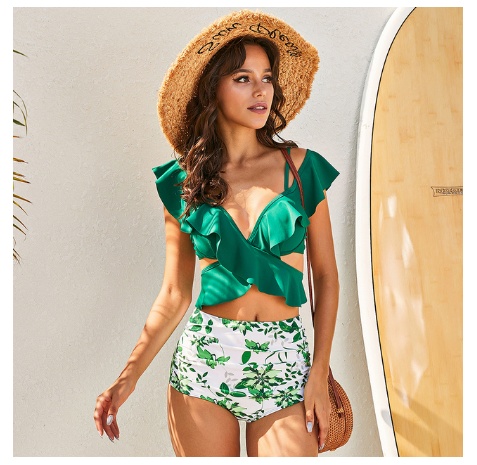
Swimwear for Big Bust: 9 Best Bikinis That Stay Put
Roughly 28% of women in the US wear a D-cup or larger, yet most bikini racks still cap their sizing at a 36C. That math alone explains why shopping for swimwear for big bust can feel like a minor sport — the right top exists, it just rarely lives at the front of the store. The fix is to stop chasing whatever’s on the mannequin and start filtering by three things: cup construction, strap design, and underband width. Get those right and a D, DD, or G cup can move, swim, and breathe without a single side-eye at the changing-room mirror.
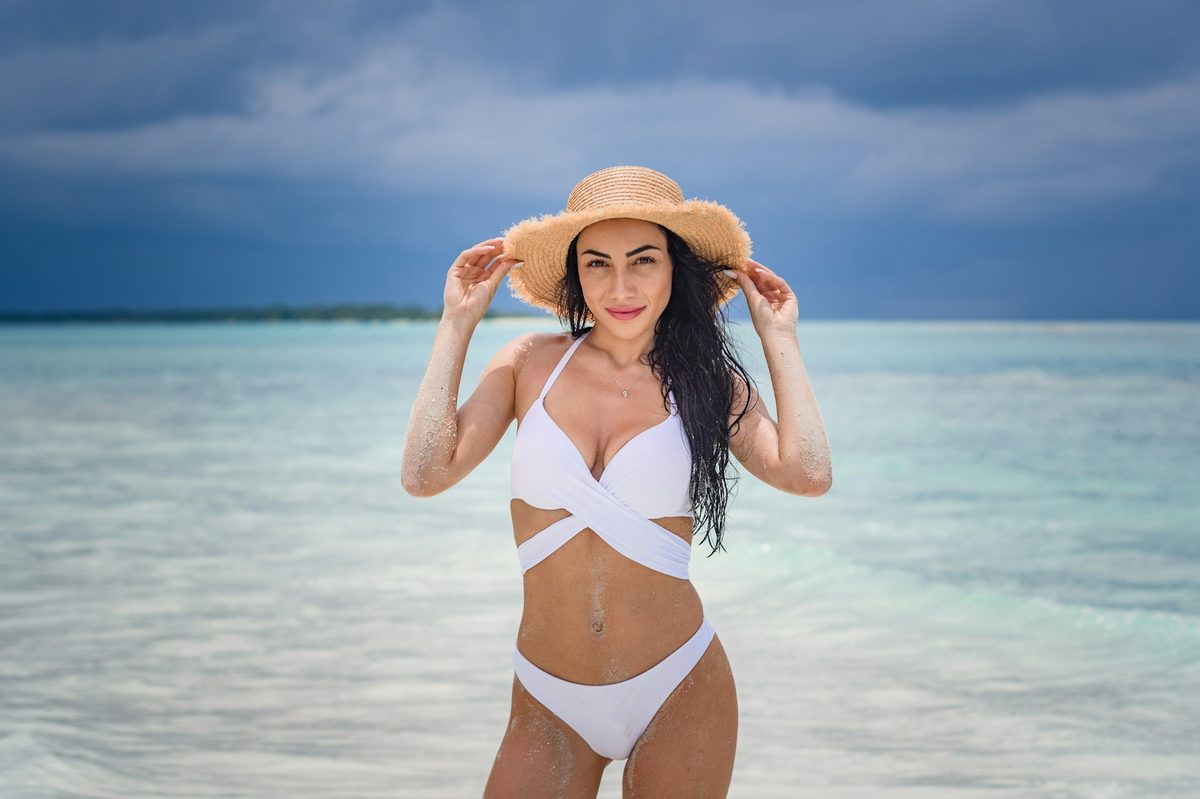
Why Fit Beats Pretty Every Time
The most common mistake with swimwear for big bust shoppers is buying based on the print and hoping the fit works itself out. It almost never does. A bikini top has to do the same job a well-fitting bra does — distribute weight across the shoulders and rib cage so the band, not the straps, carries most of the load. When that ratio flips, the straps dig, the band rides up, and everything spends the day creeping toward your collarbone.
Sizing in standard XS–XL swimwear is built around a B cup. That’s fine if you’re a B cup. If you’re anything past a C, you need either bra-sized swimwear (32D, 36DD, 38G) or a top engineered with underwire, power mesh, and a wide elastic underband. The good news: 2026 has more brands offering both than any year on record. The bad news: you have to know what you’re looking for, because the marketing rarely spells it out.
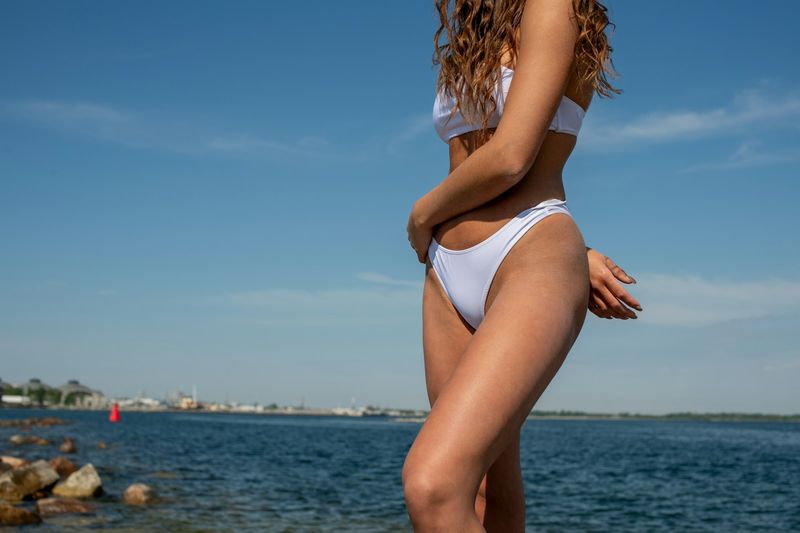
1. Underwire Bikini Tops: The Quiet Workhorse
An underwire bikini top isn’t fashion-forward. It isn’t trendy. It’s also the single most reliable style for a full bust, which is why it never goes away. The metal or plastic wire sits under the breast tissue and stops the side spillage that plagues wireless triangle tops. Paired with molded foam cups and a wide back band, it gives you bra-level support without sacrificing the bikini silhouette.
Look for hooks at the back, not a tie. Tie-back tops on a bigger bust loosen as you swim and need constant adjusting. A two-row hook closure with adjustable straps will hold its shape for the full afternoon. Brands like Panache and Freya have built their reputations on this exact construction, and their cup sizes routinely run from D through K.
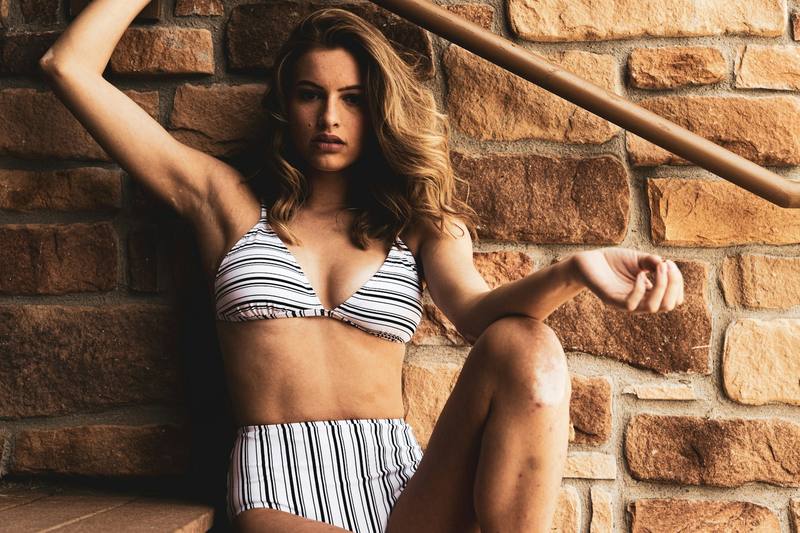
2. Halter Bikinis That Lift Without Strangling
A halter is the most popular bikini for big bust shape for a reason. The single strap behind the neck transfers weight from the shoulders to the upper trapezius, which is a stronger muscle group and less prone to that pinching feeling after a few hours. Lift is built into the geometry — the higher the strap, the more upward force on the cup.
The strangling complaint is usually a sign of two things: the strap is too thin, or the underband is too loose. A wide halter strap (1.5 inches or thicker) spreads the load across the back of the neck instead of concentrating it on a single vertebra. If you can slide three fingers under the underband and feel slack, the band size is wrong. Drop a band size and go up a cup size — same volume, better lift.

3. Bra-Sized Bikini Tops (D, DD, DDD and Beyond)
Bra-sized swim is the single biggest upgrade most full-bust shoppers can make. Instead of guessing whether you’re an L or an XL, you order a 34D, 36DD, 38F — the same numbers you already know from your everyday bra drawer. The cups are constructed with separate panels, not stretched-out triangles. The result is a top that lifts each breast individually instead of squashing them together into uniboob territory.
The catch: bra-sized swim costs more, usually $60 to $120 per top. The math works out anyway, because a bra-sized top tends to hold its shape for two to three seasons, while a stretched-out triangle is usually toast by the end of one summer. Treating your swim like lingerie — hand wash, lay flat, never wring — extends that lifespan even further.
4. Scoop-Neck Sporty Tops with Wide Underbands
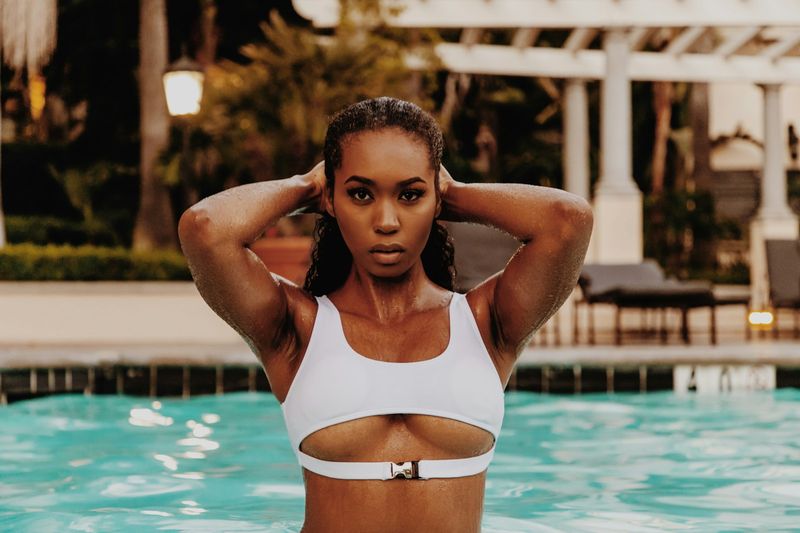
The scoop-neck sport top is the unsung hero of full-bust swim. It looks athletic, but it’s secretly engineered exactly like a high-impact sports bra: wide underband, thick straps, and a high front cut that keeps everything contained when you actually move. If you swim laps, paddleboard, or chase kids in the surf, this is the style that won’t betray you.
The trade-off is coverage — scoop necks show less cleavage than a halter or push-up, which some shoppers love and others don’t. The honest answer is that scoop-neck tops photograph beautifully on every body type because the silhouette is clean and the proportions are balanced. Pair one with high-waisted bikini bottoms for a retro-pinup vibe that flatters curves without revealing more than you’d like.
5. Wrap, Twist, and Plunge Styles That Add Lift
Wrap-front and twist-front tops use a clever bit of fabric engineering: the crossover creates a lifting effect across the bust line without needing a heavy underwire. The twist gathers fabric at the center, which adds visual structure and minimizes the gap between cups. For a softer, wireless support option, this is the second-best choice after a true bra-sized top.
Plunge styles work too, but only if there’s an underwire involved. A wireless plunge on a big bust just flops open and becomes a costume malfunction waiting to happen. Look for plunge tops with a bridge — the strip of fabric between the cups — that sits flat against the sternum. If there’s daylight between the bridge and your chest, the cups are too small.

6. Wide-Band Bandeau (Yes, Really)
A standard bandeau is the worst pick for a full bust, but a wide-band bandeau — meaning the band of fabric is at least four inches deep and includes molded cups — actually performs well. The wide vertical surface area acts like a built-in support panel, similar to the construction of a strapless bra. Most include removable halter or crossback straps for when you want extra security.
If you compare construction, a wide-band bandeau will sit very differently than the classic strapless bandeau styles built for a smaller bust. The wide band locks the top in place under the breast tissue rather than relying on suction. Wear it strapless for the pool deck and clip the straps in before you actually swim — that’s the move.

7. Tankinis: The Underrated Choice
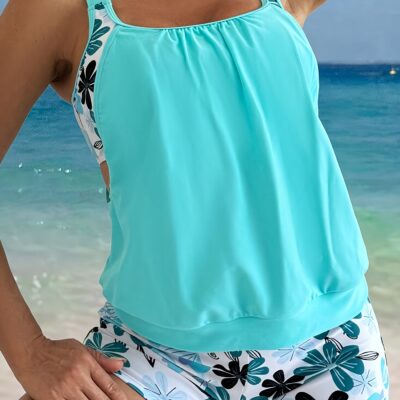
The tankini gets a bad rap as a “mom suit,” which is unfair and also wildly out of date. A modern tankini with a built-in shelf bra, adjustable straps, and a structured underband gives you full-bust support plus tummy coverage, which lots of full-bust shoppers also want. Two-piece convenience for the bathroom, one-piece silhouette for the pool deck.
The newer cuts sit closer to a regular bikini than the boxy tankinis of 2010. Look for a longline cami style that ends at the natural waist or slightly below — it elongates the torso instead of cutting you in half. Wide V-necks are the most flattering. Avoid square necklines, which can make a full bust look wider than it is.
8. The Three-Piece Set Approach
A three-piece set — top, bottoms, plus a shorts or skirt layer — solves the “I want support and coverage” puzzle without forcing you into a one-piece. The third piece functions as a built-in cover-up, which means you can walk from the parking lot to your beach chair without grabbing a sarong. Many of the better three-piece bikini sets are designed with halter or wrap tops, which already nail the support side of the equation.
The convenience factor is real. One purchase, one matching set, multiple beach-day looks. The downside is that the top in a three-piece set is usually built for the average bust, so a true D+ shopper may still need to size up or buy the top separately. Worth it for the styling versatility, especially on a vacation where overpacking is a real risk.

9. Convertible Tops with Removable Padding and Wires
Convertible tops give you optionality — convertible straps, removable inserts, hook-front closures that double as racerback adjusters. For a full bust, this matters because no two beach days require the same level of support. A morning pool float doesn’t need the same construction as an afternoon snorkel session.
The best convertible bikini tops include four strap configurations: traditional, halter, crossback, and one-shoulder. That’s not marketing fluff — each configuration redistributes weight differently, and a full-bust wearer benefits from having all four available. A halter for visual lift, a crossback for swimming, traditional for a no-fuss pool day.
The Fit Tests You Can Run in the Dressing Room
Three quick checks separate a top that will work all summer from one that ends up in the donation pile by July. First, the underband should be parallel to the floor when you look in the mirror — not riding up in the back. If it’s hiking up, the band is too big. Second, raise both arms overhead. The cups should stay in place. If the band slides up to your bra strap area, drop a band size. Third, the cups should fully contain the breast tissue with no spillage at the top edge, the sides, or the gap between cups. If you see double-bubble or sideboob, the cup is too small.
According to a widely-cited Healthline guide to bra fitting, around 80% of women wear the wrong size, and the same problem translates directly to swimwear. The lesson: if it feels off, it probably is, and adjusting straps won’t save a bad band. Sizing down a band and up a cup is the single most useful trick for getting the lift right.

Styling Supportive Swimwear Without Looking Boring
Supportive doesn’t mean shapeless. Bold prints and dark colors both work, just for different reasons. A bold print across a structured cup draws the eye to the bust as a feature rather than a problem to hide. Dark colors — navy, plum, deep emerald — read as sleek and slimming for shoppers who want their bust to read in proportion to the rest of their frame. Mix and match across sets to pair a printed supportive top with a solid high-waisted bottom for visual balance.
Accessories carry weight too. A wide-brim hat balances a strong upper silhouette. A long open kaftan or kimono adds a vertical line that flatters every body type. Bigger hoops, a chunky anklet, woven sandals — the styling vocabulary of a full-bust beach look should be confident, not apologetic. The whole point of a well-engineered top is that you stop thinking about it five minutes after you put it on.
See It On: Big-Bust Swimsuit Try-On
Marketing photos lie. Real movement, real water, and real adjusting in the changing room tell you what a top will actually do. This try-on video walks through specific styles with full-bust commentary, so you can see how an underwire, halter, and bra-sized cut behave on different cup sizes before you spend a dollar.
What to Buy First If You’re Starting From Zero
If your swim drawer is empty and you need one top to do everything, buy an underwire halter in a solid dark color in your true bra size. That single piece will cover 80% of beach scenarios — pool, ocean, casual swim, light snorkeling — without forcing a second purchase. Once you’ve worn it a season and learned what you actually want more of (sportier? sexier? more coverage?), add a second top that fills the specific gap. Two tops, three pairs of bottoms, and a kaftan will outperform a closet of mediocre triangle sets every time.
The biggest win isn’t the right brand or the right print — it’s the willingness to spend an extra $20 on a top that actually fits. Full-bust swim is one of the rare cases where price correlates pretty directly with construction quality. A $25 bikini top that doesn’t fit costs more in regret than a $75 top that does.
Sources
- Healthline — How to Find Your Correct Bra Size — Reference on the 80% wrong-fit statistic and how band/cup relationship works.
- Vogue — The Best Swimsuits for Larger Busts — Editorial roundup of bra-sized swim brands.
- Good Housekeeping Institute — Best Swimsuits for Big Busts — Lab-tested fit and construction comparisons.
Shop our full range of bikinis and swimwear at the BikiniCool store →