Strapless Bikini: 7 Best Picks for 2026
A size-C bust puts roughly three times more downward pull on a bikini band than an A cup does, which is why the same bandeau that stays glued to one friend slides down another within twenty minutes of swimming. Strapless swimwear got a bad reputation in the 2010s because most of it was a stretchy tube with nothing structural inside. That’s changed. Brands now build strapless tops with the same engineering that goes into strapless bras — boning, silicone tape, adjustable bands — and the difference in wear time is not subtle. Below are seven styles that actually hold, broken down by what makes each one work and who it fits best.

What Actually Keeps a Strapless Bikini From Sliding
Support in a strapless top comes entirely from the band, since there are no straps to carry weight upward. That means band width, elastic tension, and grip material do all the work that shoulder straps normally share. A band under two inches wide concentrates pressure into a thin strip of skin and slips faster; a wider band spreads that same tension over more surface area and holds longer without digging in.
Side boning — thin, flexible plastic strips sewn into the side seams — stops the fabric from rolling or bunching at the ribcage, which is usually the first sign a bandeau is about to fail. Boning and molded cups work together in better-constructed tops: the boning holds vertical shape while the cup handles lift, so neither piece is doing a job it wasn’t built for. Silicone grip tape lining the inside of the band is the other major factor — it creates friction against skin the way a phone case grips a table, and it’s the single feature that separates a top that survives a pool day from one that needs constant tugging. We covered why a plain bandeau slips in the first place in more depth elsewhere, but the short version is that most failures trace back to a missing one of these three features, not bad luck or the wrong size.
Fabric choice plays a quieter role than most shoppers assume. A band cut from a low-elastane blend loses its recoil after a handful of wears, which is why a strapless top that fit perfectly out of the box can start sliding by its third or fourth outing even though nothing about your body changed. This is also where a full strapless styling guide is worth a read before you buy — pairing the right top with the right bottom weight actually changes how the whole suit sits, since a heavier bottom can pull the eye (and occasionally the fabric) down if the proportions are off.
The 7 Best Strapless Bikini Styles
1. Underwire Bandeau

An underwire bandeau puts a curved wire under each cup, the same structure used in strapless bras, so the bust is lifted and separated instead of pressed flat against a stretchy band. This is the strongest option for a D cup or larger — the wire carries weight the fabric alone can’t. Fit matters more here than with any other style: the wire needs to sit flat against the ribcage on all sides. If it pokes out at the center or the sides, size up in the band rather than the cup.
2. Silicone-Grip Band Top
A silicone-grip band lines the entire inside edge of the top with a thin strip of tacky silicone, the same material used in the waistbands of high-end leggings. It works best on smaller to medium busts where the main risk is horizontal slipping rather than downward pull. One caveat worth knowing before you buy: oil-based sunscreen and tanning oil break down that grip within a few hours, so mineral or gel sunscreens are the better pairing if you’re wearing this style for a full beach day.
3. Convertible Strap Bandeau

A convertible bandeau ships with detachable straps that clip on as a halter, a one-shoulder, or a classic crossback when you need extra insurance — diving off a boat, playing beach volleyball, chasing a kid into the surf. The base top still needs to hold on its own for the strapless look to be worth buying in the first place, so check that it has boning or grip tape before assuming the straps will do the work. Think of the straps as backup, not the primary support. If your beach day involves any real movement, it’s worth reading how strapless styles actually perform once you’re active rather than just standing at the shoreline — the gap between a top’s poolside photo and its performance during volleyball or bodysurfing is bigger than most product pages let on.
4. Push-Up Padded Strapless Top

Removable molded padding gives a strapless top a fixed shape that doesn’t collapse or fold when it gets wet, which is the failure point of thin, unpadded bandeaus. The molded cup also acts as a mild structural support on its own, similar to what boning does on the sides. This is the style to reach for if you’ve tried a flat bandeau before and found it went shapeless within the first swim — the padding fixes that specific problem rather than the slipping problem, so pair it with a grip band if staying up all day is the main goal.
5. Ruched Strapless Top
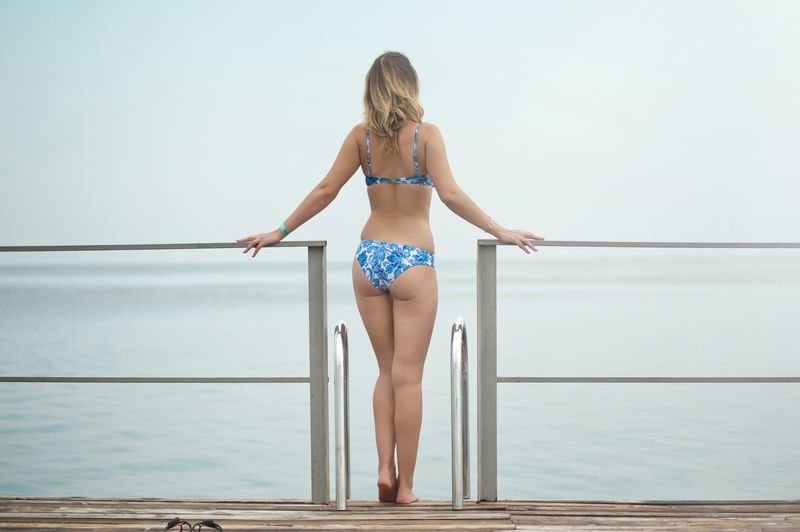
Ruching gathers the fabric into vertical folds across the front, which does two things: it adds a small amount of built-in stretch recovery that a flat panel doesn’t have, and it hides minor shifting that would be obvious on a smooth surface. This is the most forgiving style on the list for day-to-day wear, but it’s also the weakest performer for real activity — the gathered fabric has less structural backbone than boning or a molded cup. Save it for lounging, not laps.
6. Tie-Front or Corset-Back Top
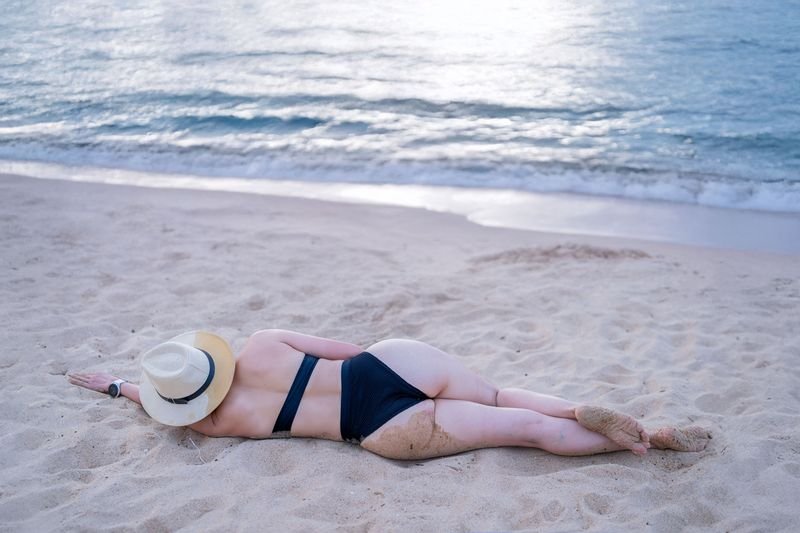
A tie-front or lace-up corset-back top lets you set the exact tension yourself instead of relying on a fixed elastic band — pull it tighter after the first swim once the fabric has relaxed slightly, which every knit fabric does. This is the style that adapts best over the course of a long day, since you can retie it rather than live with whatever fit it shipped in. The trade-off is a slightly bulkier silhouette than a seamless bandeau, since there’s a knot or lacing detail sitting at the center front or back.
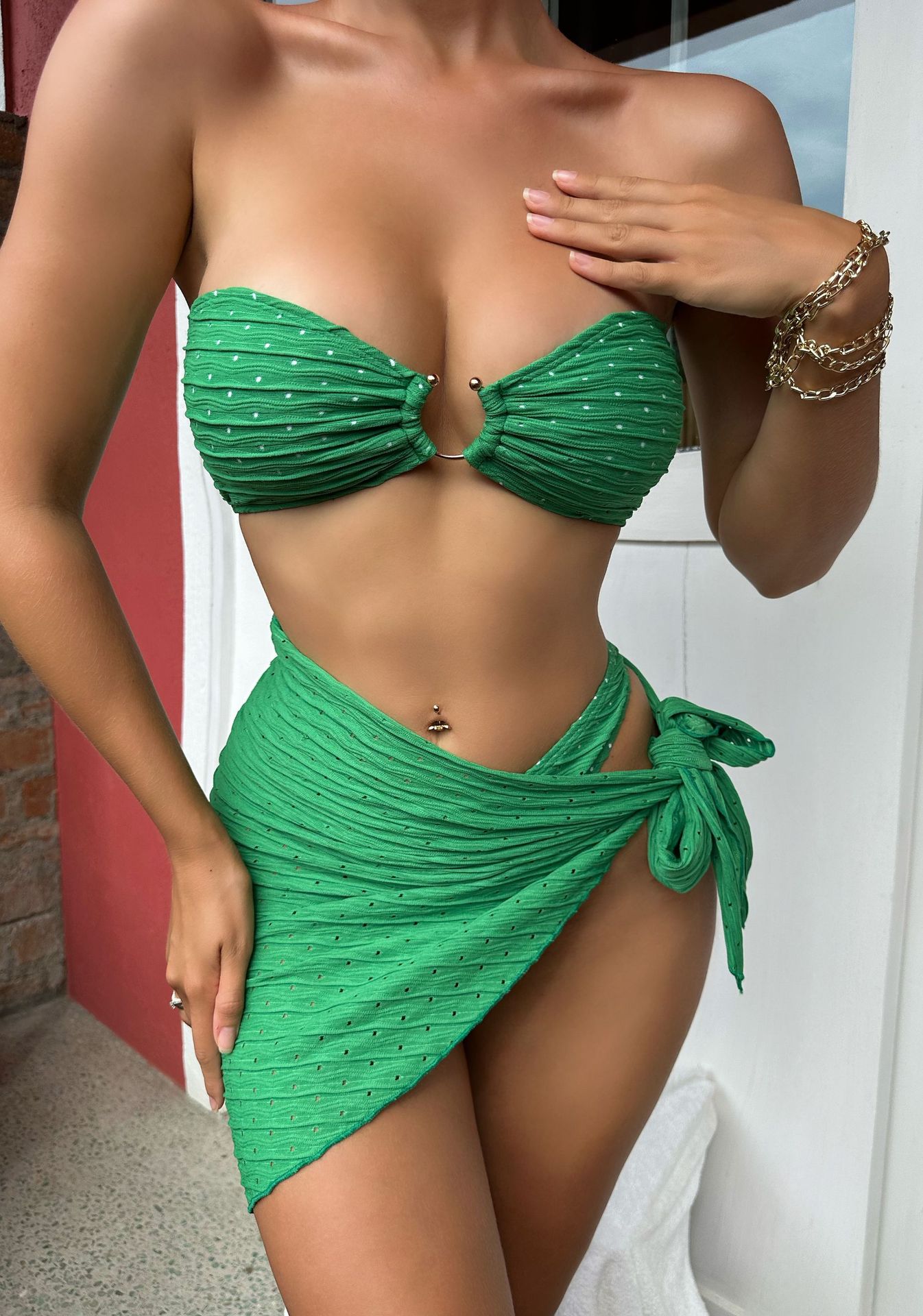
7. Strapless One-Piece With Molded Cups

A strapless one-piece spreads the same band-and-boning construction across a full torso instead of just a top, which adds more surface area to grip and makes it the most secure option here by a wide margin. The waist and hip sections anchor the suit the way a two-piece bottom never could, so the bandeau section at the top has less work to do on its own. It’s the right call for a beach day built around actual swimming rather than posing at the water’s edge.
Does Chest Size Really Change Which Style You Should Buy
Yes, and it’s the single biggest factor in whether a strapless top works for you. A B cup or smaller can wear almost any style on this list, including the lower-support ruched and tie-front tops, because there’s simply less weight pulling the band down. A D cup or larger narrows the field to underwire bandeaus, silicone-grip bands, or the strapless one-piece — styles with real structural backbone. Buying a ruched or unlined bandeau at a larger cup size is the most common reason people give up on strapless swimwear entirely and assume it “just doesn’t work” for their body. It’s not the body; it’s the construction.
Common Strapless Bikini Mistakes That Cause Slipping
Most complaints about strapless bikinis trace back to a handful of repeat mistakes rather than a flaw in the concept itself. Fixing these first solves more problems than switching styles entirely.
- Sizing up for comfort. A looser band feels nicer in the fitting room but has less tension to grip with once it’s wet — strapless tops should fit snugger than a strapped bikini top in the same size.
- Skipping the stretch test. Trying a top on and standing still tells you nothing; raise your arms, bend forward, and sit down before deciding it fits.
- Applying oil-based sunscreen or tanning oil directly under the band. Both break down silicone grip tape within a couple of hours, which is the single fastest way to turn a secure top into a loose one.
- Wearing a worn-out suit past its lifespan. Chlorine and salt water degrade elastane over a season of regular wear; a band that used to snap back and now just stretches is done, regardless of how it looks.
- Choosing print or color before construction. A gorgeous bandeau with no boning, no grip tape, and a thin elastic band will disappoint no matter how flattering the pattern is.
How to Test a Strapless Top Before You Buy It
Stretch the inside band between your fingers before trying it on. A quality elastane blend snaps back to its original shape instantly; if it stays stretched out even slightly, that same fabric will stretch further after an hour in chlorinated or salt water and stay there. Swimwear fabric built for real wear typically runs 18 to 22 percent elastane, enough to hold shape through repeated stretching without the sagging that shows up in cheaper blends after a few wears. Once it’s on, raise both arms overhead and lean forward — if the band shifts more than an inch in either move, it will move more in the water.
The honest version of this guide is that no strapless top holds as reliably as one with straps, full stop. What changes with good construction is how much you notice the difference. A well-built underwire bandeau or grip-band top gets close enough that most people forget they’re not wearing straps at all — which is really the only bar that matters. Pick the style that matches your bust size and how active your day actually is, not the one that photographs best on a hanger.
Sources
- Adding Bust Support to a Swimsuit: Boning & Cups — Curvy Sewing Collective — construction details on how boning and molded cups add structural support to strapless swimwear.
- Swimwear Fabric Stretch & Recovery: Elastane Content & Specs — Yitai Fabrics — technical specifications on elastane percentages and stretch recovery in swimwear fabric.
- Spandex (Elastane) in Swimwear: Properties, Blends, Care — Joy Sportwear — fabric care guidance including how oils and sunscreen affect swimwear materials.