Beach Volleyball Swimwear: 7 Best Picks
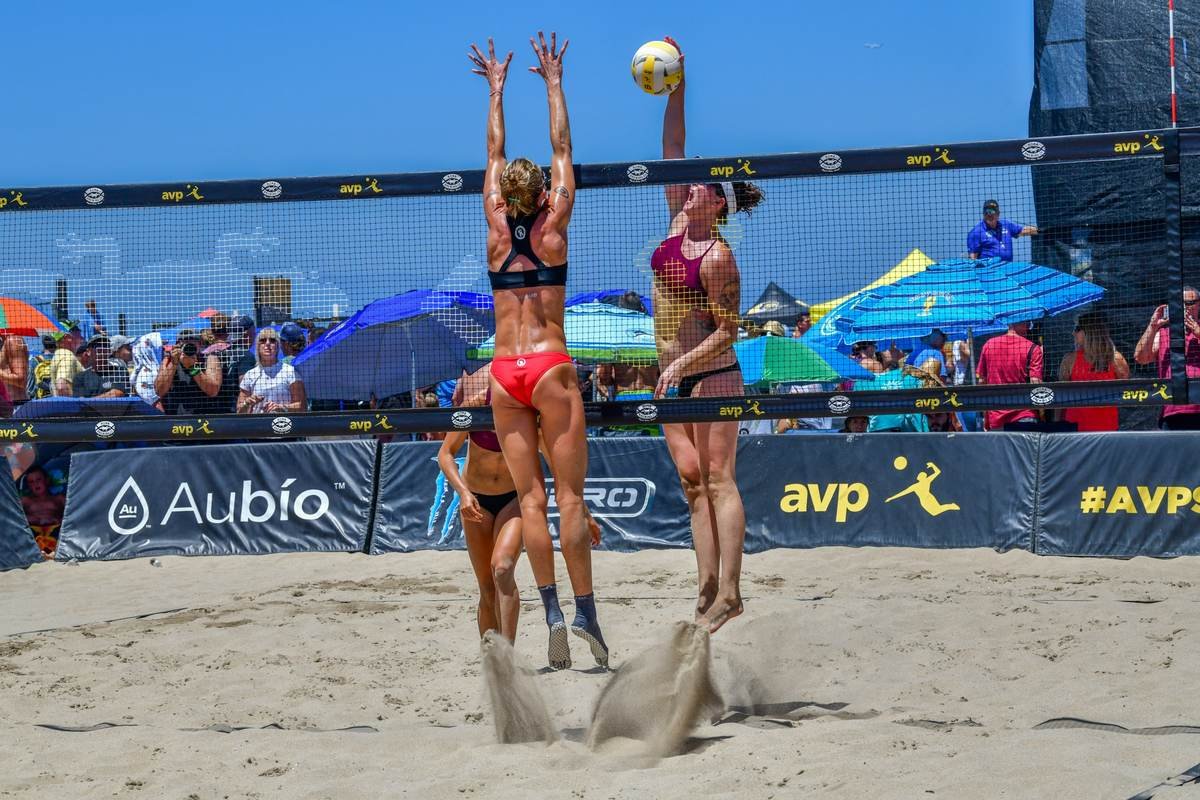
A serve toss goes up, you plant to block, and the first thing that moves isn’t the ball — it’s your top. Beach volleyball puts a swimsuit through overhead reaches, hard dives into sand, and two-plus hours of direct sun with zero water breaks to cool the fabric down. A suit built for floating in a pool has none of that in mind. Beach volleyball swimwear built for a tournament bracket does.
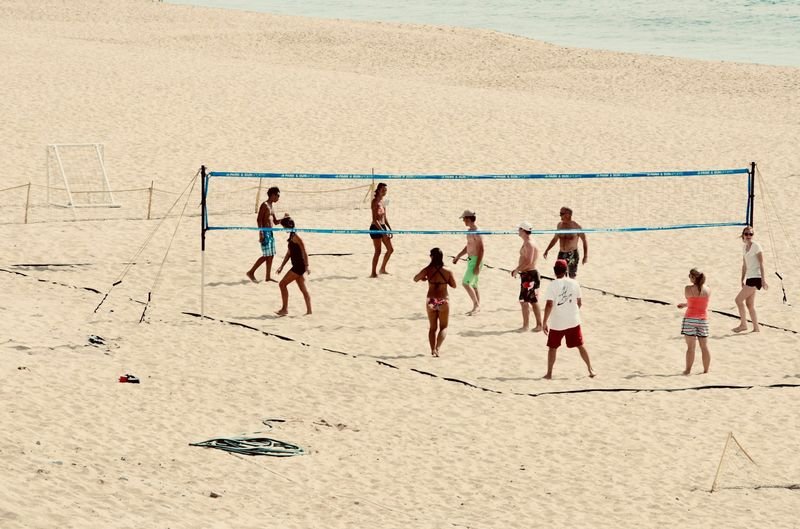
Beach volleyball runs on diving, jumping, and full-extension reaching — a different load than a lap pool.
Why a Pool Bikini Fails as Beach Volleyball Swimwear
Chlorinated-pool swimwear is engineered to survive one thing: repeated chemical exposure. That’s the wrong design brief for sand. On a court, the suit needs to survive lateral dives, a ball coming in overhead at speed, and sweat and salt air instead of chlorine. The AVP’s own rulebook treats swimwear as part of the uniform, not an accessory — teammates have to wear matching colors, and officials will stop a match over a wardrobe issue the way they’d stop it for a scoring dispute. That’s a small detail, but it tells you how seriously competitive players take fit: a suit that needs constant adjusting isn’t just annoying, it’s a disadvantage.
Heat matters just as much as motion. A two-hour tournament block under direct sun is a different exposure than a 45-minute pool session, and most swimwear fabric isn’t rated for it. That’s where UPF becomes relevant for a sport suit in a way it rarely does for lounging poolside.
There’s also the friction problem nobody mentions until they’ve lived it. Dry sand against wet fabric is abrasive in a way pool tile never is — every dive drags grit across the suit’s seams and elastic edges. A bikini rated for a hundred pool sessions can wear through its leg elastic in a single sand season if the construction wasn’t built for it. That’s less about the fabric blend and more about how the edges are finished, which is why the seam detail matters as much as the material label on the tag.
Halter Tops Beat Bandeau Once the Ball Is Live
A bandeau looks clean and tans evenly, and it’s genuinely fine for sunbathing. It is not fine for a dive. With no strap running over the shoulder, a bandeau’s entire hold depends on elastic grip around the ribcage — grip that loosens the moment you’re sweating and sprinting. A halter redistributes that load up through the neck and shoulders instead of asking one elastic band to do all the work, which is why you’ll see it far more often on actual competitive courts than on a beach towel.
Wider straps help more than most buyers expect. A thin string halter still shifts under a hard overhead swing; a inch-plus strap with an adjustable slider stays anchored through the same motion. If you’re choosing between two halter tops and can’t decide, take the one with the wider strap — it’s the detail that separates “stayed in place” from “needed three mid-game adjustments.” For a side-by-side on how strapless styles specifically hold up in motion, this breakdown of bandeau swimwear in motion is worth reading before you rule either style out entirely.

A halter neckline moves the support load off a single elastic band and onto the shoulders.

What Underwire and Removable Padding Actually Do
Underwire isn’t about shape in a sport suit — it’s about keeping the cup from folding or shifting mid-dive. A soft-cup top with no structure can fold inward when you hit the sand, which is exactly the moment you don’t want to be thinking about your top. Removable padded cups solve a different, smaller problem: they stop show-through on wet or white fabric without adding bulk, and you can pull them for a plain training session and put them back in for game day.
None of this means every player needs underwire. Smaller busts can get away with a well-made soft-cup halter and barely notice the difference. The honest rule is: if you’ve ever had to stop mid-rally to fix your top, go structured. If you haven’t, don’t fix a problem you don’t have.
Underband tension is the detail buyers skip over and shouldn’t. A band that’s too loose shifts the moment you raise your arms to block; one that’s too tight digs in after twenty minutes of play and becomes its own distraction. Try the overhead-reach test before buying: raise both arms straight up like you’re going for a block. If the band rides up toward your ribs or the cups gap at the top, that suit isn’t going to hold through a real match no matter how secure it feels standing still.

Bottom Coverage for Diving, Sliding, and Jump Serves
The bottom matters more than most buyers expect, because it’s the piece that takes direct sand contact every time you drop for a dig. A few cuts handle that differently:
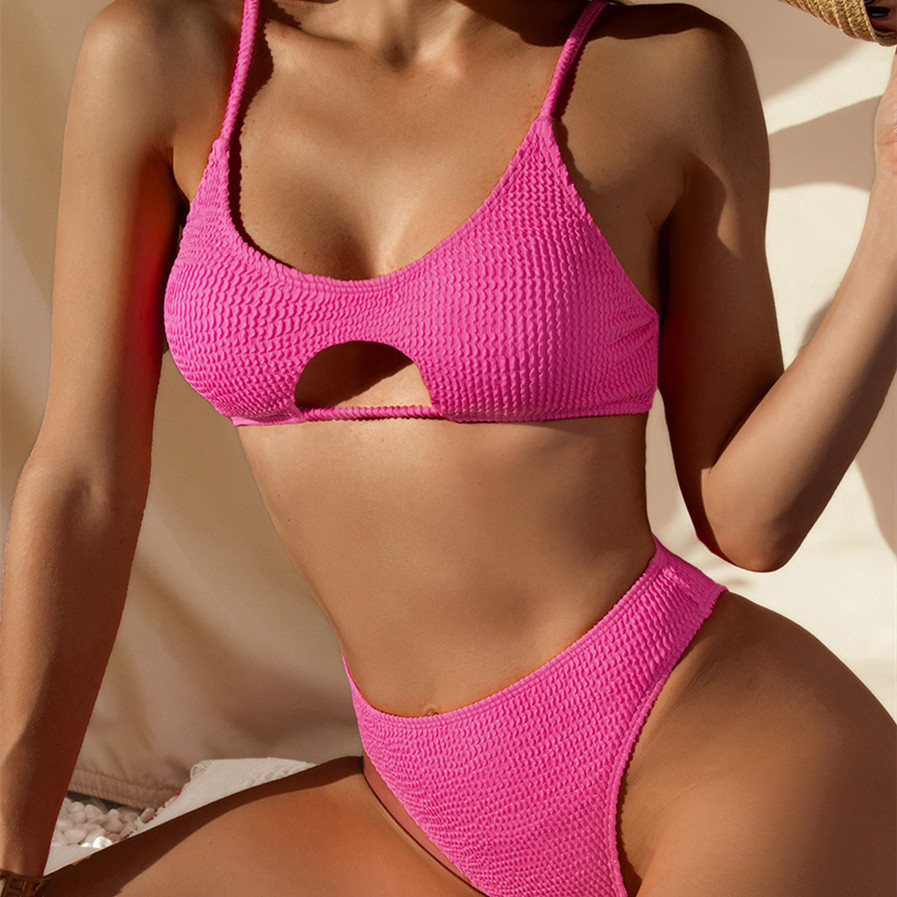
- High-cut bottoms — leg openings sit higher on the hip, which means less fabric to catch and drag during a slide, and they’re the closest match to what you’ll see on a competitive court.
- Cheeky bottoms — moderate rear coverage with a secure waistband; a reasonable middle ground for players who want more coverage than high-cut without sacrificing range of motion.
- Boyshort bottoms — full coverage, less chance of shifting on a dive, and the best option if you’re newer to the sport and more focused on comfort than minimal tan lines.
- Brazilian-cut bottoms — sits between cheeky and high-cut; fine for casual pickup games, less ideal once you’re diving regularly since the narrower sides have less to anchor against.
Whatever cut you pick, check the waistband and leg elastic before the fabric pattern. A wide waistband that sits flat against the skin will survive a tournament. A thin cord-tie bottom will not survive a dive into dry sand — the friction alone works it loose.
Fabric: Why Chlorine Resistance Is the Wrong Spec
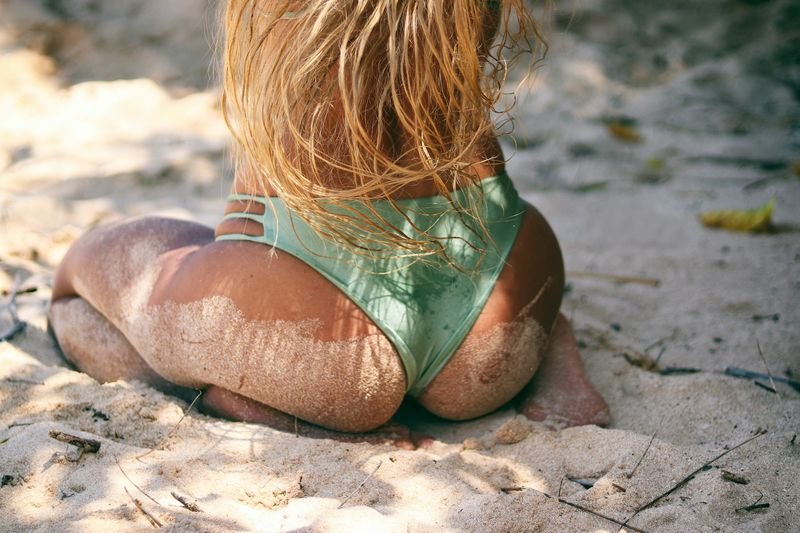
A lot of swimwear marketing leads with chlorine resistance, and for beach volleyball that’s close to irrelevant. You’re not swimming laps — you’re in dry heat, sand, sweat, and sun. Nylon-spandex blends resist sand abrasion better than the polyester-PBT blends built for chlorine durability, and they dry faster between points, which matters when you’re not getting back in water to cool off. The tradeoff is that nylon degrades faster under heavy chlorine exposure — a non-issue if the suit never sees a chlorinated pool.
UV exposure is the spec worth paying attention to instead. A UPF 50 fabric blocks 98 percent of the sun’s rays, versus roughly 2 percent getting through at that rating — a meaningful difference across a full tournament day outdoors. Dark or saturated colors also block more UV than pale ones, so a bright suit isn’t just a style choice on a sand court; it’s doing a little more work for your skin too.
When a One-Piece Is the Smarter Call
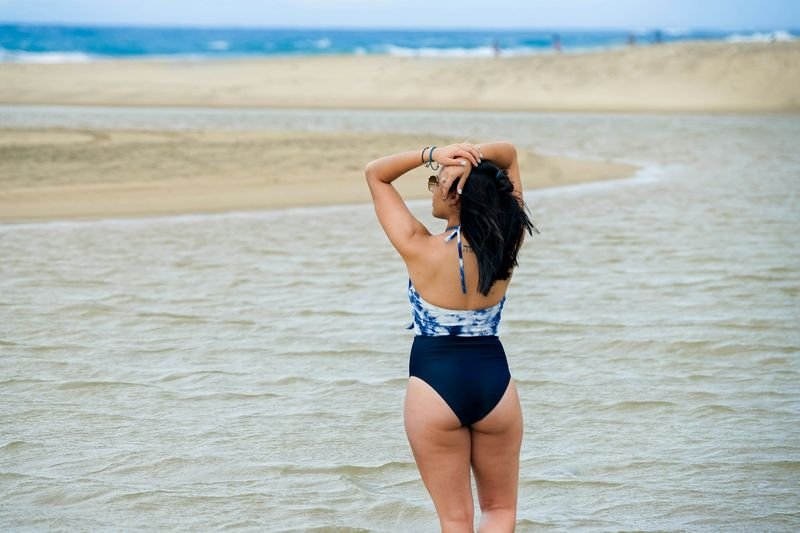
A one-piece won’t be anyone’s first instinct for a sport associated with bikinis on television, but for pickup games, practice, or anyone who’d rather not think about their top at all, it’s the more practical choice. There’s nothing to realign after a dive, no strap tension to check between points, and most built-for-sport one-pieces now come with the same wide straps and UPF-rated fabric as a halter bikini. The honest tradeoff is mobility through the hip on an extreme reach — a one-piece’s higher-cut leg can feel slightly more restrictive than a separated bottom during a full split-step. For most recreational play, that difference is not noticeable.
7 Features to Check Before You Buy
Run any candidate piece of beach volleyball swimwear through this list before you check out:
- Strap width of at least three-quarters of an inch, with an adjustable slider
- A snug underband or halter neckline — not elastic alone holding the top up
- Flat-locked seams, not raised ones that chafe under repeated motion
- A waistband that sits flat against skin rather than a thin drawcord
- UPF 50 fabric, not just “quick-dry”
- Nylon-spandex blend over a heavy polyester-chlorine blend
- A fit you’ve already tested in motion — jumping jacks in the fitting room beats guessing from a size chart

Breaking a New Suit In Before Tournament Day
Never wear a brand-new suit for the first time in a match. Fabric that feels secure standing in a fitting room can behave differently once it’s wet, sandy, and stretched through a full range of motion. Wear it for one practice session first — dive a few times, serve overhead, sit in the sand — and check where it shifts. A top that needs retying after one drill will need retying every ten minutes in a real game. Better to find that out on a Tuesday practice than in the middle of a bracket.

The suit that wins you the match isn’t the one that photographs best standing still. It’s the one you forget you’re wearing by the second set. Get the fit right in practice, not during a tiebreak, and the rest of your game gets to be about volleyball instead of wardrobe management. That’s the entire job of good beach volleyball swimwear — it disappears once play starts. For a broader look at what holds up across water sports generally, this guide to athletic swimwear for women and this rash guard roundup cover the adjacent gear worth packing in the same bag.
Sources
- AVP 101: The Basics of Beach Volleyball — official rules on uniform and team color-matching requirements.
- The Skin Cancer Foundation: Sun Protective Clothing — UPF rating standards and UV-blocking percentages.
- Spandex By Yard: Best Fabric for Swimwear — nylon-spandex vs. chlorine-resistant fabric performance comparison.