Kayaking Swimwear: 7 Best Picks
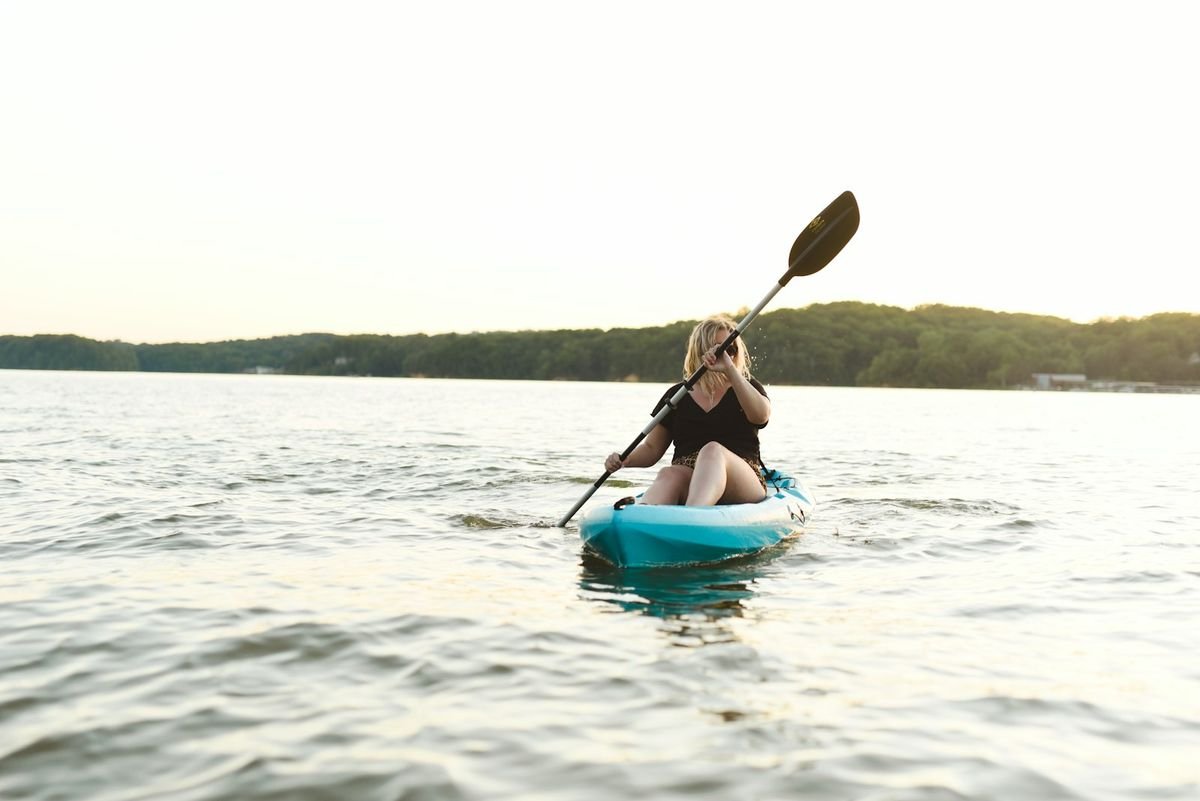
Most swimwear buying guides treat kayaking like it’s beach volleyball with a boat. It isn’t. A paddler sits in one position for two or three hours, gets splashed from below instead of above, and occasionally ends up fully submerged during a wet exit or a roll. Last summer a friend capsized on the Deschutes in a tie-side bikini and came up holding her bottoms in one hand — the current had done what any loose knot eventually does. That’s the gap this guide is built to close: not “what looks cute in the kayak,” but what actually survives being in one.
Kayaking Swimwear That Actually Holds Up on the Water
The short version: skip anything held on by strings, skip cotton entirely, and prioritize fabric that’s at least 80% nylon or polyester blended with spandex. That combination resists stretching out when wet, dries fast enough that you’re not sitting in a damp suit for the drive home, and moves with your shoulders through a full paddle stroke instead of fighting you.

1. Long-Sleeve Rash Guard + High-Waisted Bottoms
This is the default for a reason. A zip-front rash guard covers shoulders that would otherwise burn within an hour of flat-water glare, and high-waisted bottoms stay put when you’re twisting through a torso rotation instead of standing still. Look for flatlock seams specifically — regular stitched seams rub raw against a PFD strap by the second hour.
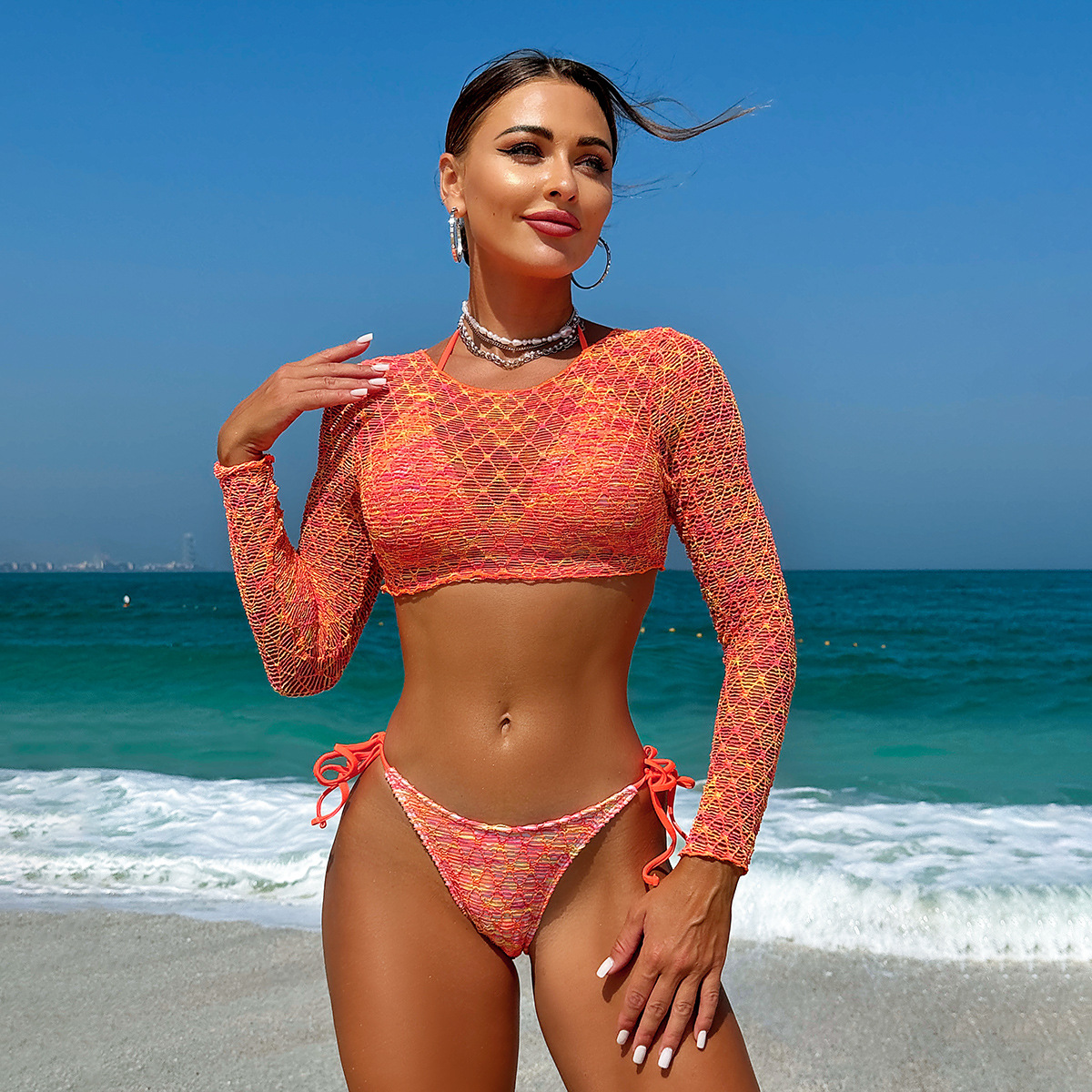
Shop: Mesh Three-Piece Bikini Set, Long Sleeve →
2. Racerback One-Piece
A one-piece solves the string problem outright — there’s nothing to come loose during a brace or a roll. The racerback cut matters more than people expect: a standard halter strap digs into the shoulder under a PFD, while a racerback distributes that pressure across the whole upper back. This is also the pick for anyone who’s capsized once already and doesn’t want to relive adjusting a bikini top mid-current.

3. Swim Tank Top + Compression Shorts
Tank-style tops give more coverage than a bikini without the sleeves of a full rash guard, which some paddlers prefer in hot, humid conditions where airflow matters more than sun coverage. Pair it with compression shorts rather than a loose boardshort — loose fabric catches on the seat edge and bunches uncomfortably after the first hour.

4. Short-Sleeve Sporty Set
A middle ground between a bikini and a full rash guard, a short-sleeve sporty two-piece covers the shoulders and upper arms where sun exposure is worst on a kayak (you’re facing forward and down, not up) while leaving the lower arms free. This is the set to reach for on a shorter, warmer paddle where a full rash guard would be overkill.

Shop: Sporty Three-Piece Bikini Set, Short Sleeve →
5. High-Waisted One-Piece with Cut-Out Detail
For paddlers who want a one-piece’s stability without losing the fitted shape of a bikini, a high-waisted one-piece with side cut-outs splits the difference. The high waist supports the lower back during long sits, and the solid front panel means no readjusting after a splash.
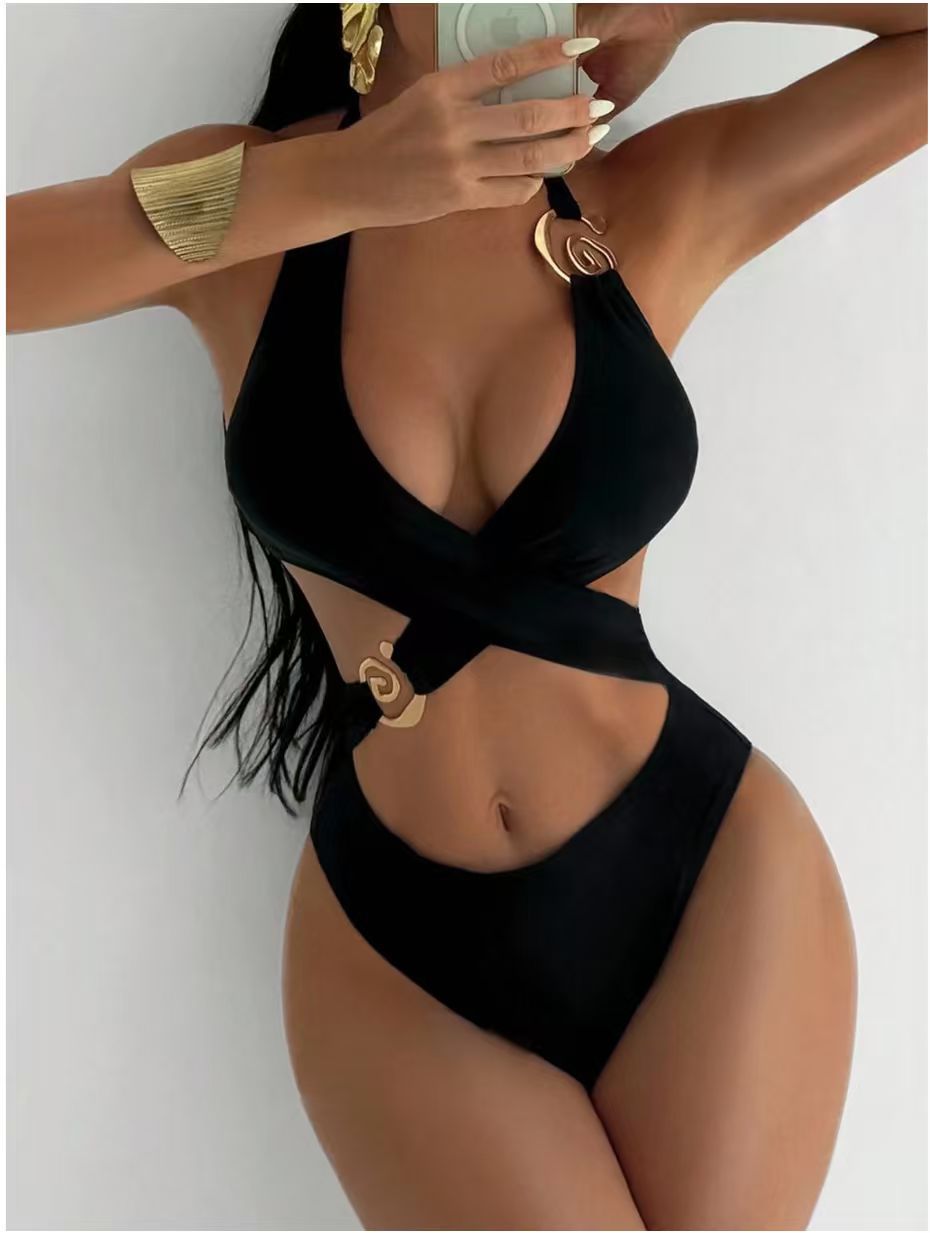
Shop: Lace One-Piece Swimsuit, Cut-Out →
6. Tankini with Secure Bottoms
A tankini earns its spot here for one practical reason: getting in and out of a kayak — especially a sit-inside — involves some undignified wriggling, and a tankini top doesn’t ride up during that process the way a bikini top can. Pair it with a bottom that has a wide waistband, not a string tie.
7. Neoprene Top Layer for Cold Water
Once water temperature drops below about 60°F, swimwear alone stops being enough no matter how well it fits. A thin neoprene top (1-2mm) worn over a swimsuit buys real insulation without the bulk of a full wetsuit, which matters because a capsize in cold water is a cold-shock risk, not just an uncomfortable one.

Fit and Fabric: What Separates a Suit That Works From One That Doesn’t
Three things decide whether a suit survives a full day on the water. Fabric blend comes first — 80/20 nylon-spandex or polyester-spandex outperforms cotton blends every time, because cotton holds water weight and takes hours to dry instead of minutes. Seam construction comes second: flatlock seams lie flush against skin, while standard overlock seams create a raised ridge that saws against a PFD or seat edge. Fit comes third, and it’s the one people get wrong most — a suit should feel slightly snug when dry, because wet fabric always loosens a little under load.
UPF rating deserves its own mention since it’s the one spec most swimwear listings bury in fine print. UPF 50+ blocks roughly 98% of UV radiation, compared to an untreated cotton tee that sits closer to UPF 5. On a kayak, where you’re reflecting sun off water from below as well as taking it from above, that difference adds up fast over a three-hour paddle.
Sun Protection Beyond the Suit Itself
A wide-brim hat with a chin strap handles the one spot swimwear can’t: your face and neck. Buy one rated for wind, not just sun, since a hat that blows off on flat water will absolutely blow off the second a gust hits open water. Zinc-based sunscreen, reapplied every two hours, covers everything the suit and hat don’t.
Legs get overlooked constantly, probably because they’re sitting below the cockpit rim on most kayaks and feel “covered” even when they’re not. They’re still catching reflected glare off the water for hours. A pair of UV protective swim leggings under a one-piece or bikini bottom closes that gap without adding the bulk of a wetsuit, and they’re worth packing even on a forecast that looks mild.

Common Mistakes That Ruin a Day on the Water
- String bikinis on moving water. Ties loosen under current and PFD pressure, and a wet exit can pull them off entirely.
- Cotton anything. It absorbs water weight, stays cold against skin, and takes hours to dry on the drive home.
- Skipping UPF for “just a short paddle.” Glare off water burns faster than direct sun on land, even on an overcast day.
- Loose boardshorts instead of fitted bottoms. Extra fabric bunches against the seat and chafes by hour two.
- No layer plan for cold water. A swimsuit alone under 60°F water is a hypothermia risk, not a style choice.
Stability on a Paddleboard vs. a Kayak
Worth a quick note for anyone splitting time between the two: a paddleboard rewards a suit that moves freely at the hips because you’re standing and balancing, while a kayak rewards a suit that handles prolonged sitting pressure instead. A suit built for one isn’t automatically wrong for the other, but if you’re doing both regularly, the racerback one-piece crosses over better than a bikini does. The same sitting-pressure logic applies if you split paddling days with pool laps or water aerobics swimwear sessions — the suits built for repetitive movement in both cases favor support and flatlock seams over anything decorative.

Watch: A Full Kayaking Gear and Clothing Checklist
For a broader look at how swimwear fits into a full kayaking kit — including what to layer over it depending on conditions — this walkthrough from an experienced paddling crew covers the full checklist end to end.
How to Try a Suit Before You’re on the Water
Before the first trip, do a five-minute dry test: sit on a hard chair in the suit, raise both arms overhead and rotate your torso fully in each direction, then stand up fast. If anything shifts, rides up, or digs in during that test, it will do the same thing worse once wet. This takes less time than reading the rest of this guide and catches most fit problems before they become a problem thirty minutes from shore.

What to Pack Alongside the Suit
Swimwear is the base layer, not the whole kit. A dry bag for a phone and car key matters more on a kayak than almost any other water activity, since there’s no cooler or towel rack within reach once you’re on the water — just a hatch you may or may not be able to reach while seated. Water shoes beat going barefoot or in flip-flops; put-ins are often rocky, and a flip-flop that comes off during a wet exit is one more thing drifting downstream.
A PFD (personal flotation device) goes over whatever swimwear you’ve chosen, and this is the one spot where fit matters more than style ever will. A PFD that’s sized for a regular t-shirt will sit differently over a thin rash guard than it does over bare shoulders in a bikini — try it on over the actual suit you plan to wear, not over a jacket in a store, before you’re on the water for the first time.
Frequently Asked Questions
Can you wear a regular bikini kayaking?
You can, but a tie-side bikini is the least secure option on moving water or during a wet exit. A bandeau or halter with a locking clasp is more stable than string ties, though a one-piece or rash guard combo is still the safer default.
Do you need a wetsuit for kayaking in summer?
Not if the water is above roughly 60-65°F and the paddle is short. A swimsuit with a UPF top layer covers most summer conditions; a wetsuit becomes necessary as water temperature drops, regardless of how warm the air feels.
What should you not wear kayaking?
Cotton clothing, loose jewelry that can snag on gear, flip-flops that fall off on a wet exit, and anything held on by a single string tie all cause problems once you’re actually on the water.
Sources
- Top Swimsuits for Kayaking: Comfort & Performance Reviewed — fabric and fit recommendations for paddle sports swimwear
- What to Wear Kayaking: A Woman’s Quick-Dry Outfit Guide — layering and quick-dry fabric guidance
- Women’s Rash Guard Guide: Styles, Fit & Sun Protection — related internal guide on UPF rash guard sizing