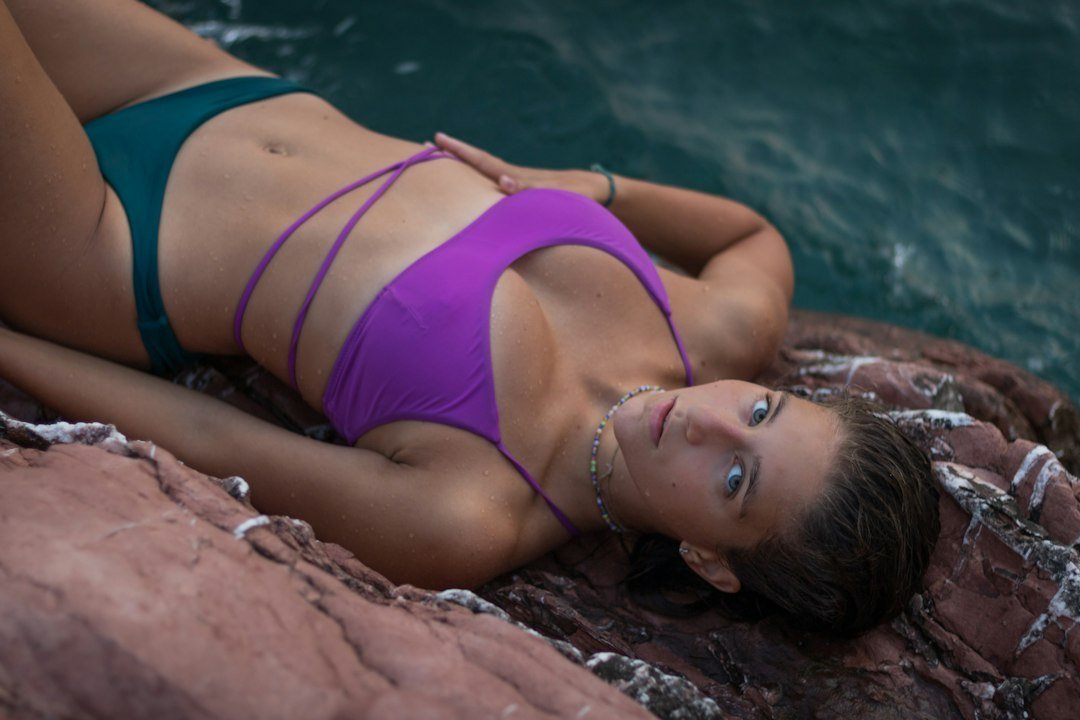
Purple Bikini: 9 Best Styles for 2026
WhoWhatWear called deep purple the surprise color of summer 2026, the shade “It girls” kept reaching for instead of the usual navy-and-white rotation, and swimwear brands followed within a season.1 That is a fast turnaround for a color that was, for most of human history, too expensive for anyone but royalty to wear. Purple only became a cheap, mass-producible fashion color after 1856, when 18-year-old chemist William Perkin accidentally synthesized the first artificial dye while trying to make a malaria treatment.2 Everything below assumes you are shopping the modern, affordable version of that once-unobtainable color — and that getting the shade right matters more than it does with blue or black.

Which Shade of Purple Actually Flatters Your Skin Tone
Purple sits in an unusual spot on the color wheel: it is built from red, which reads warm, and blue, which reads cool, so the ratio between the two decides who it flatters. A purple mixed heavier on the blue side — think lavender, periwinkle, true violet — leans cool and works best against fair, pink, or rosy undertones. A purple mixed heavier on the red side — plum, eggplant, mauve — leans warm and sits better against olive, golden, or deep warm skin.
The quick test stylists use for undertone has nothing to do with the swimsuit itself: check the veins on the inside of your wrist in daylight. Blue or purple-looking veins point to a cool undertone, while green or olive-looking veins point to warm.3 Darker skin tones get an easier pass than almost any other complexion — rich, saturated purples like deep plum or eggplant read as a luxurious contrast rather than a competing color, which is part of why the shade has become a go-to for color consultants working with deeper skin.
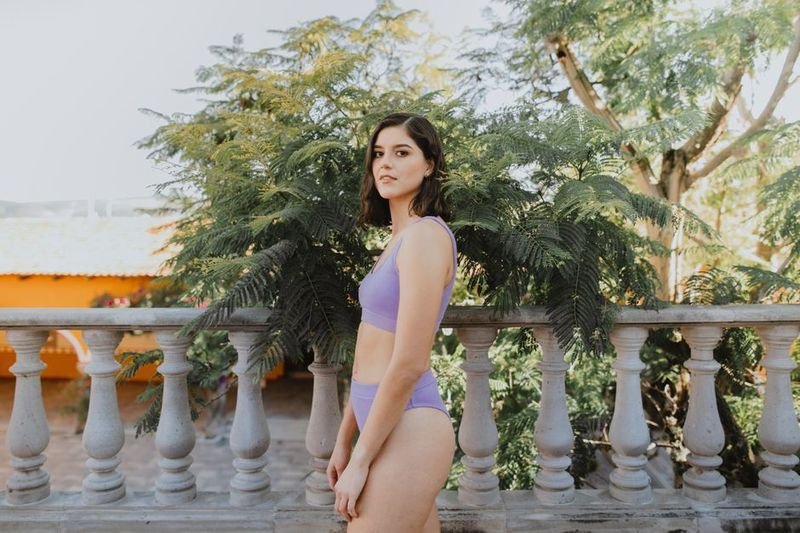
One thing that trips people up: a purple bikini photographs differently than it looks in the store. Indoor lighting tends to push pale lavender toward gray, while direct sun brings out the blue or red base more clearly. If you are buying online, look at the product photo taken outdoors before the one taken in a studio — it is the more honest preview of how the color will actually read on a beach.
9 Purple Bikini Styles Worth Shopping in 2026
Once you know which family of purple suits you, the cut decides how it wears and how long the color holds up. These nine are what is actually moving this year:
- Lavender triangle set: the palest, most cool-toned purple on this list and the one driving 2026’s pastel swim trend — low saturation means it flatters almost everyone, but it also shows chlorine dulling faster than deeper shades.
- Deep plum high-waisted two-piece: the most forgiving purple in the family; reads closer to a neutral than a statement color and hides fading for most of a season.
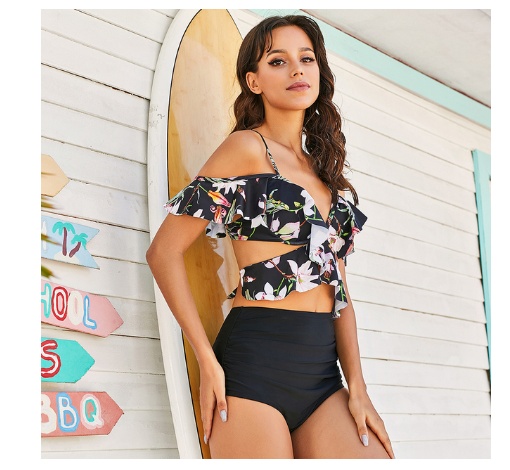
- Lilac off-shoulder ruffle top: the fabric movement catches light in a way a flat triangle cut doesn’t, which is why ruffled tops are outselling plain ones across most swim retailers this year.
- Royal purple one-piece with cutouts: the most saturated, true-to-color option under direct midday sun — built for warm undertones and for anyone who wants the color to actually show up in photos.
- Orchid bandeau: sits closer to magenta than true purple, which makes it the better pick for cool, fair undertones who find lavender too pale. Pair it with a bandeau top in a second color for a two-tone effect.
- Eggplant string bikini: the darkest, boldest cut on the list — a high-cut silhouette in the deepest shade of purple available, and the one that holds its color longest in chlorine.
- Violet-to-white ombré: the gradient is fading by design, which means any sun fading that does happen is far less noticeable than on a solid block of color.
- Lavender and white gingham print: the patterned version of a pale pastel — the check pattern breaks up minor fabric wear in a way a solid color can’t hide.
- Textured crinkle-fabric violet set: the ribbed, crinkled finish that has dominated swim collections for two years running now comes in true violet, and the texture disguises both fading and water spotting better than smooth fabric.
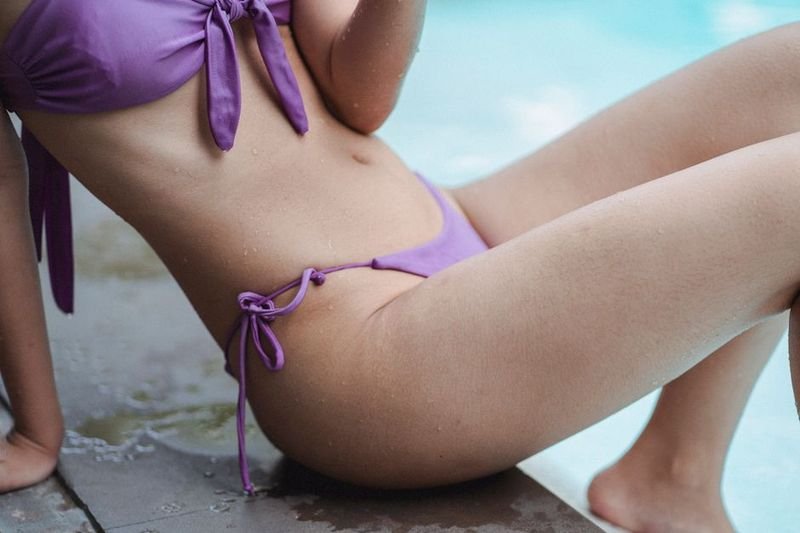

Seeing cuts on a hanger only tells you so much — this rundown of what’s trending for summer shows several of the above styles actually in motion on a body, which matters more for a fitted silhouette like a string bikini than it does for a cover-up.
Why Purple Suddenly Became 2026’s Breakout Swimwear Color
The history here is genuinely strange. Tyrian purple, the original source of purple’s royal reputation, came from the mucus gland of a Mediterranean sea snail — it took roughly 250,000 snails to produce a single ounce of dye, and the finished cloth cost its weight in gold.2 Only emperors, priests, and the extremely wealthy wore it for close to two thousand years. That changed almost overnight in 1856, when Perkin’s accidental discovery of mauveine — the first synthetic dye — made a passable purple cheap enough for anyone to wear within a decade.
What that history explains is why purple still carries a slightly “elevated” read even in a ten-dollar bikini: the color spent longer as an unaffordable luxury than almost any other hue in the visible spectrum, and that association didn’t fully fade just because the dye got cheap. Swimwear brands leaning into deep purple for 2026 are, whether they know it or not, borrowing two thousand years of brand equity for free.
Lavender, Violet, or Eggplant: Picking the Right Purple for the Occasion
Lavender is the easiest sell for everyday beach days — it is pale enough to photograph well against both sand and water without fighting the backdrop, and it pairs with almost any cover-up color. Royal or true violet is the one to pack for a pool party or a trip where the photos matter; the saturation holds up under flash and direct sun in a way pastel shades simply can’t.
Eggplant and plum do the most work of any shade on this list because they function almost like a neutral. A deep plum bikini pairs with gold jewelry the same way black does, but it reads warmer and less severe in beach photos — a genuinely useful swap if your wardrobe already leans heavily on black and you want one piece that still goes with everything. A lavender cover-up over the same bikini keeps a resort look soft instead of matchy.
Travel is where shade choice matters more than people expect. A single carry-on bag rarely has room for three bikinis, so the smarter move is picking one purple that covers the most ground: plum does that better than true violet or pale lavender, since it reads as dressy enough for a hotel pool bar but still casual enough for a daytime snorkeling trip. Pale lavender, by contrast, shows sunscreen and salt-spot staining faster than any other shade on this list, which makes it the better choice for a single beach day rather than a week of repeat wear.


Petite, Plus-Size, or Pool Day: Purple Still Works Beyond the Beach Shot
Petite frames tend to get the most mileage out of a high-waisted plum or eggplant bottom — the unbroken vertical line of a single dark, saturated color elongates the torso the same way a dark denim does. A pale lavender in the same cut tends to visually shorten the leg line slightly because the eye has less contrast to track.
Plus-size shoppers have more flexibility with purple than with almost any other color family: rich, darker shades like deep purple genuinely do bring a more polished finish without flattening the skin’s natural warmth, a point colorists make specifically about jewel tones on deeper or fuller figures.3 A royal purple one-piece with strategic cutouts tends to outperform an equivalent black one-piece in flattering reviews, mostly because black can read as trying too hard to slim while purple reads as simply a color choice.
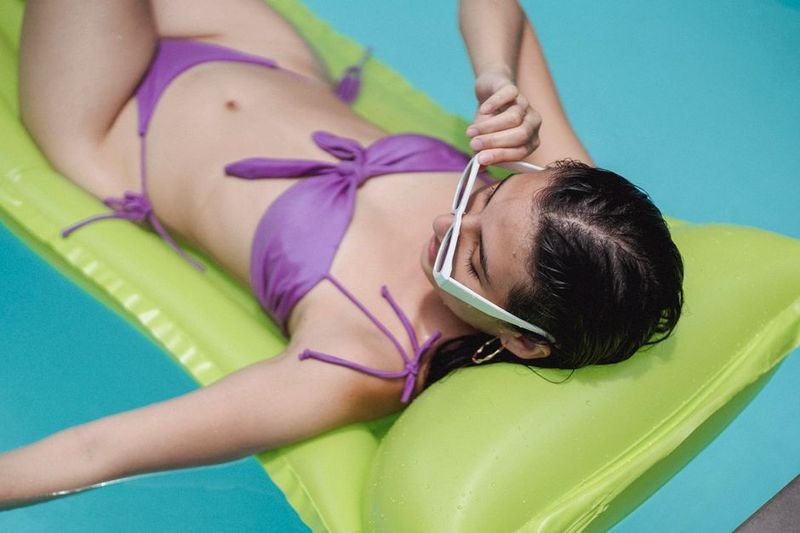
For everyday pool days rather than vacation photos, the practical answer is plum or eggplant over lavender — the darker shade hides the gradual chlorine haze that pale pastels pick up after a handful of swims, which matters if this is a bikini you are wearing weekly rather than packing for one trip.
How to Keep a Purple Bikini From Fading or Looking Muddy in Photos
Darker colors absorb more UV energy than light ones, which is the actual reason black, navy, and deep purple swimwear tend to visibly fade before a pale pastel does — the dye is working harder to stay saturated under the same sun exposure.4 Chlorine makes it worse: it can strip color out of a dark dye in a single pool session if the suit isn’t rinsed in fresh water immediately after. Rinse cold, dry flat in shade rather than direct sun, and skip the tumble dryer entirely — heat is what finishes off the elastane that keeps the color-rich fibers from stretching into a washed-out version of themselves.
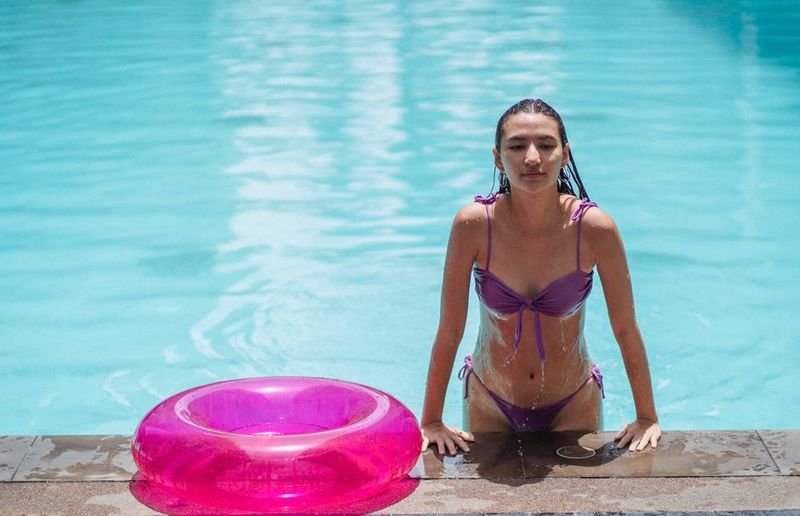
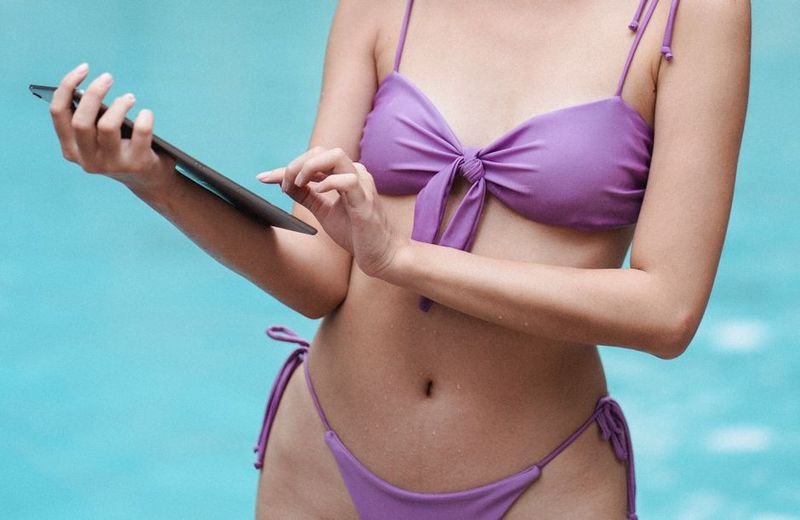
For photos specifically, purple’s biggest enemy is a warm, sandy backdrop at midday — tan sand and a high sun flatten the contrast between skin and fabric, and a pale lavender in particular can read as grayish rather than purple in that light. Purple actually pops hardest against turquoise or teal water, where the hue sits far enough from blue-green on the color wheel to read as a clean, separate color instead of blending into the background. Early morning or late-afternoon light, when the sun is lower and warmer, also brings out the red undertone in plum and eggplant shades that flat midday light tends to wash out.
A quick rundown of what else is trending for 2026 is worth a look if purple isn’t quite your shade — the same undertone logic applies whether you land on lavender or something else entirely.
Sources
- WhoWhatWear: The Unexpected Color It Girls Are Gravitating to This Summer — purple named a breakout trend color for summer 2026.
- All That’s Interesting: The Surprising Story of Tyrian Purple — history and cost of the original royal purple dye.
- Palette Hunt: What Skin Tone Suits Purple — undertone matching guidance for warm vs. cool purple shades.
- Eco Chic Swim: Why Most Swimwear Fades After One Summer — UV and chlorine fading mechanics for dark swimwear dyes.