Yellow Bikini: 9 Best Styles for 2026
Butter yellow was the single most-searched fashion color of early 2026, and that demand has pulled straight through to swimwear — Zara, Mango, and Reformation all added a pale yellow swim piece to their spring lineups within weeks of the trend taking off on runways. That popularity comes with a catch nobody mentions in the styling roundups: yellow sits closer to the natural pigment in human skin than blue, pink, or green, so a shade that looks radiant on one person can look faintly jaundiced on another. Below is what actually separates a yellow bikini that reads as sun-kissed from one that fights your skin tone, plus which cuts are worth buying for 2026.
Which Shade of Yellow Actually Flatters Your Skin Tone
Color analysts are blunt about this one: yellow is the hardest color family to wear well, because its hue sits so close to the yellow pigment already present in skin that a mismatched shade creates an unflattering blend instead of a contrast. Warm, golden-to-olive undertones can wear nearly anything in the deep end of the yellow spectrum — mustard, marigold, amber, and dark gold all read as a natural extension of the skin’s own warmth rather than fighting it.
Cool, pink-or-rosy undertones need to go the opposite direction. A true, bright golden yellow sits too close to a cool skin’s undercurrent of yellow pigment and tends to wash it out; a lemon yellow or a very pale, almost-white butter shade works far better because it reads as a cool, clean contrast instead of a muddy match. The one-line test color consultants give: hold the fabric against your inner wrist in daylight. If your skin looks brighter, the shade is working. If it looks faintly grey or jaundiced, you need to shift either paler and cooler, or deeper and warmer — never stay in the middle bright-gold zone that flatters almost no one.
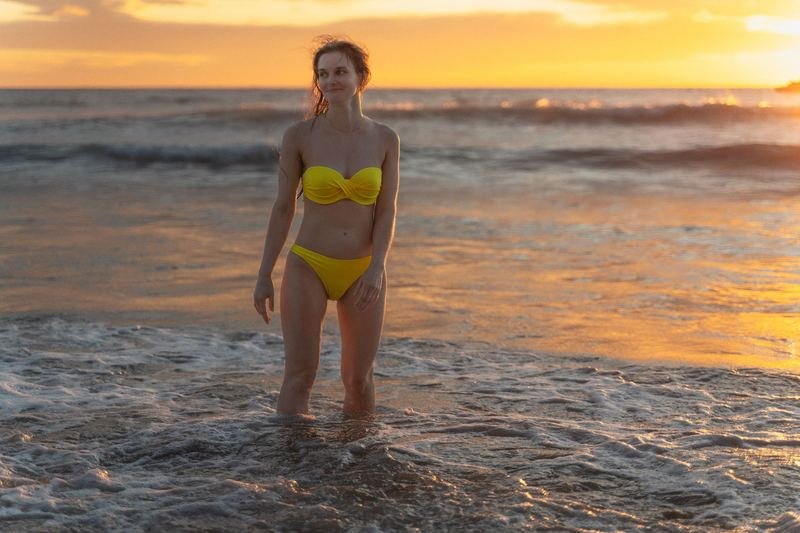
Tan lines complicate this further, more than with almost any other color. A fresh tan pulls skin toward a warmer, more golden cast within days, which is why a mustard bikini bought in April can suddenly look perfect by July even if it looked slightly off against pale spring skin. If you’re buying early in the season and you’re on the cooler-undertone side, size down the saturation — a buttery pastel will carry you through the tan-building weeks in a way a deep marigold won’t.
9 Yellow Bikini Styles Worth Shopping in 2026
Once the shade is settled, the cut decides how it actually photographs and wears. These nine are what’s actually moving this year, not a recycled “best of” list:
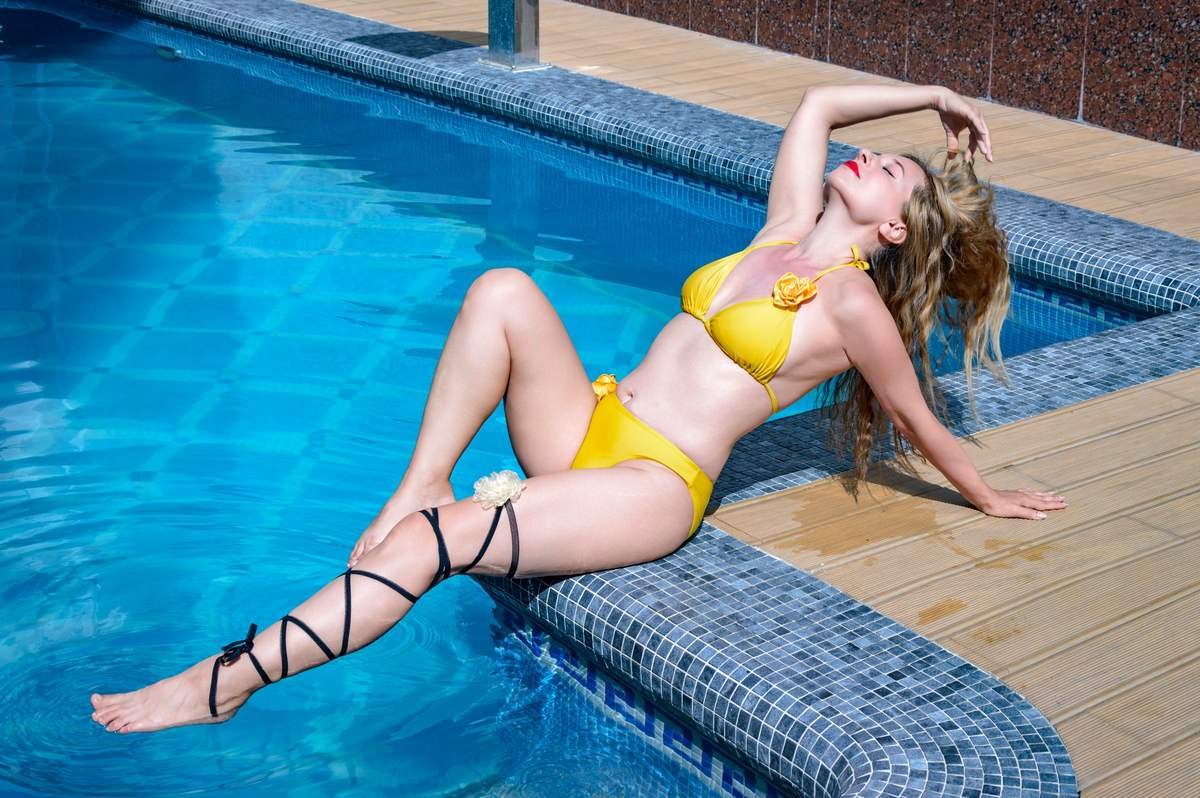
- Butter yellow triangle set: the pale, barely-there shade driving 2026’s biggest swim trend — flattering on cool undertones, nearly invisible fade risk because the base color is already so light.
- Mustard high-waisted two-piece: the deepest, most forgiving yellow in the family; hides chlorine fade for most of a season and reads as a neutral rather than a statement color.
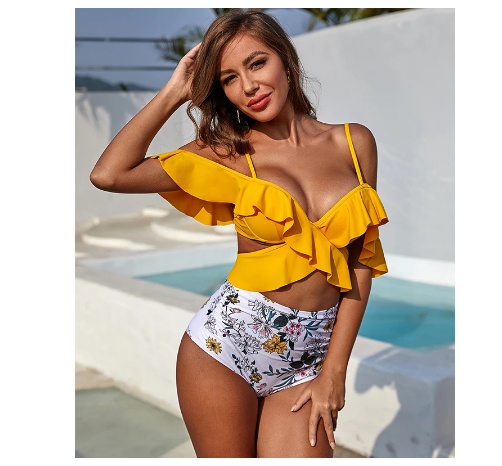
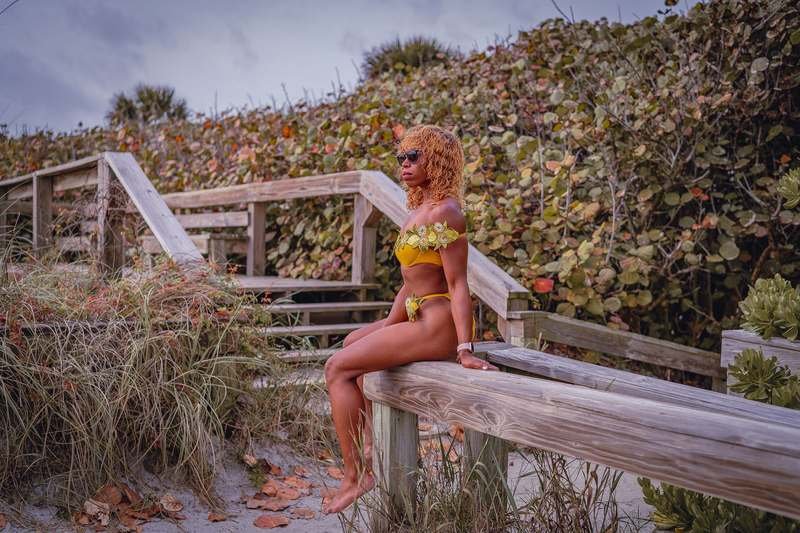
- Off-shoulder ruffle top: ruffled yellow tops are outselling plain triangle cuts on several swim retailers this year because the movement catches light in a way a flat fabric doesn’t.
- Marigold one-piece with cutouts: a deep, saturated gold that works on warm undertones and photographs true-to-color even under direct midday sun, unlike paler shades.
- Lemon bandeau: the single best option for cool, fair undertones — closer to a true cool yellow than anything else on this list.
- Neon yellow string bikini: the highest-visibility color in open water by a wide margin, which is the actual reason lifeguards and rescue-swim brands default to it.
- Tie-dye yellow-to-white ombre: fades the color gradually by design, which means any real sun fading is far less noticeable than on a solid block of yellow.
- Gingham yellow and white check: the print version of mustard — same forgiving depth of color, broken up enough that minor fabric wear doesn’t show.
- Textured or crinkle-fabric yellow set: the ribbed, crinkled fabric finish that’s dominated swim collections for two years running now comes in golden yellow, and the texture hides both fading and water spotting better than a smooth fabric.
Why Yellow Fades Faster Than Almost Any Other Bikini Color
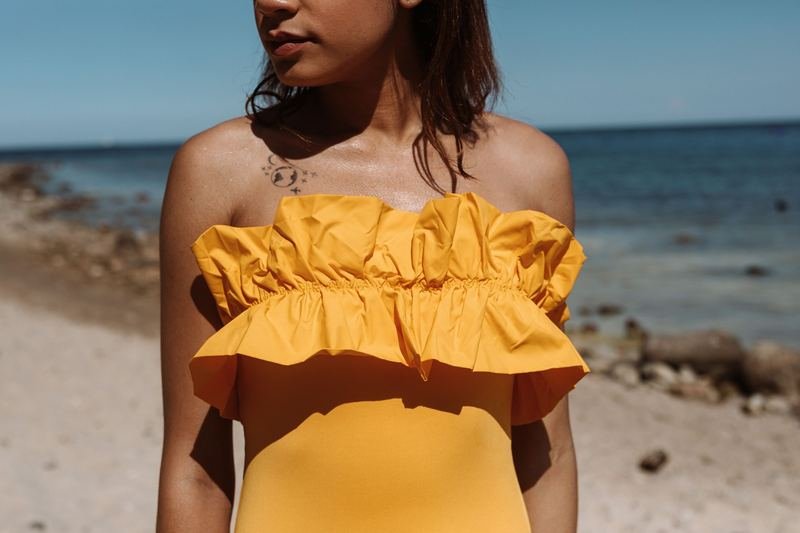
Pale and light colors show chlorine damage faster than dark, saturated, or printed fabrics simply because they have less color depth to lose before the fading becomes visible — and chlorine does more than fade yellow, it actively yellows the bleach byproduct left behind on pale fabric, which means a light buttery swimsuit can develop a dingy, uneven cast rather than a clean fade. Add direct sun on top of chlorine exposure and the two combine to break down both dye and fiber well before a dark navy or black suit would show comparable wear.
The fix is almost entirely about routine, not fabric quality. Rinse a yellow suit in cool fresh water immediately after a swim rather than letting it sit wet in chlorinated water, and dry it flat in shade — never draped over a sun-baked pool chair, which bakes the fading in on both sides at once. A mustard or marigold suit will tolerate a sloppier routine than a butter-yellow one simply because it started with more color depth to spare.
Butter, Mustard, or Neon: Picking the Right Yellow for the Occasion
Butter yellow is the shade to reach for anywhere the suit needs to double as resort wear — it pairs with white, cream, light blue, or even chocolate brown the way a true neutral would, and it photographs softly rather than demanding attention. It’s also the least forgiving of visible tan lines and sun damage, since there’s so little color depth to begin with.
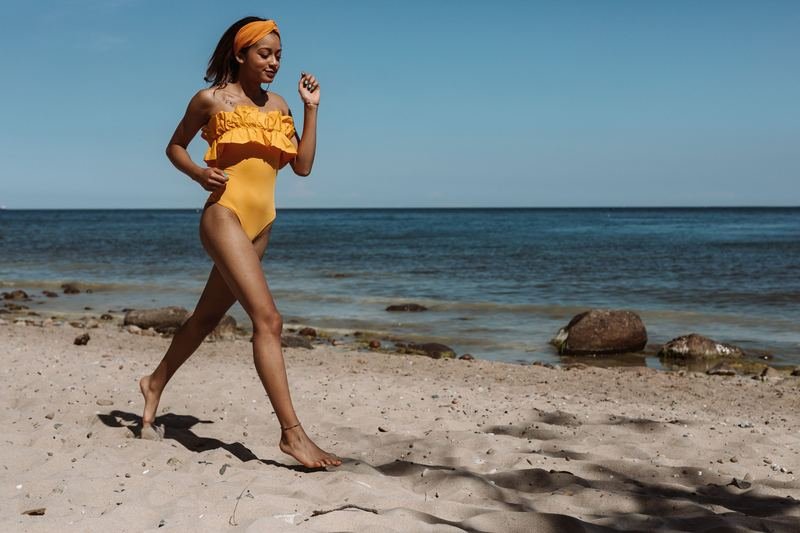
Mustard and marigold are the attention shades, in the sense that they read as deliberate rather than safe. They hide a full season of pool and ocean wear better than butter yellow and work as a genuine style statement against a plain cover-up, but on cool, pink-undertone skin they can tip toward looking muddy rather than warm — test the wrist first. Neon yellow sits in a category of its own: it’s a safety choice as much as a style one, since it’s the single most visible color against both blue water and tan sand, which is exactly why open-water swim brands and rescue services default to it.
One honest note the styling roundups skip: not everyone wants to hunt down fit and cut alone. The YouTube try-on haul below is a useful reference for how different yellow tones and cuts actually move and sit on a real body in daylight, not under a studio ring light.
Maternity, Travel, and Everyday Yellow: It Still Works Beyond the Beach Shot
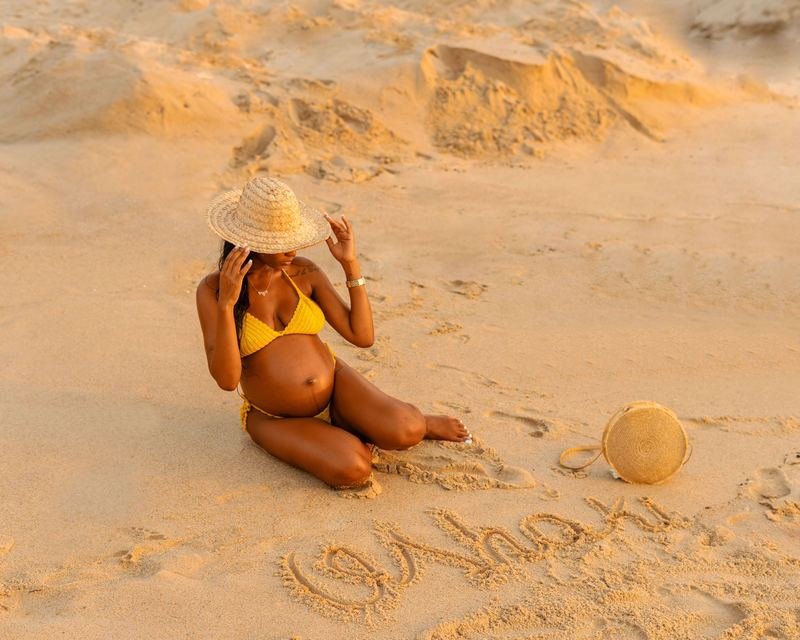
A yellow bikini doesn’t require a flat-stomach, studio-lighting context to work — a deep marigold or mustard shade specifically flatters a fuller midsection and later-pregnancy body better than pale colors do, because the added warmth and saturation reads as intentional rather than washed out against a changing skin tone. Maternity swim buyers consistently report that warm yellows photograph better through the third trimester than cooler pastels, which tend to make already-pale, sun-sensitive skin look washed out rather than glowing.
Travel is the other place yellow earns its keep. It’s one of the few bikini colors that photographs well against nearly every beach backdrop — white sand, black volcanic sand, turquoise water, murky lake water — because it sits at the opposite end of the color wheel from almost all of them. A single mustard or marigold piece will outperform three “safer” neutral suits across an entire trip’s worth of photos for exactly that reason.
How to Keep a Yellow Bikini From Looking Washed Out in Photos
Yellow is unusually sensitive to light temperature compared to blue or red. Under direct, warm midday sun it reads rich and saturated; under overcast skies or indoor lighting, pale yellows especially can flatten into something closer to beige. If a trip is mostly about photos, test the exact piece in the kind of light the destination actually has — a butter-yellow suit that looks perfect in a Zara dressing room’s warm bulbs can look flat and grey on an overcast coastline.
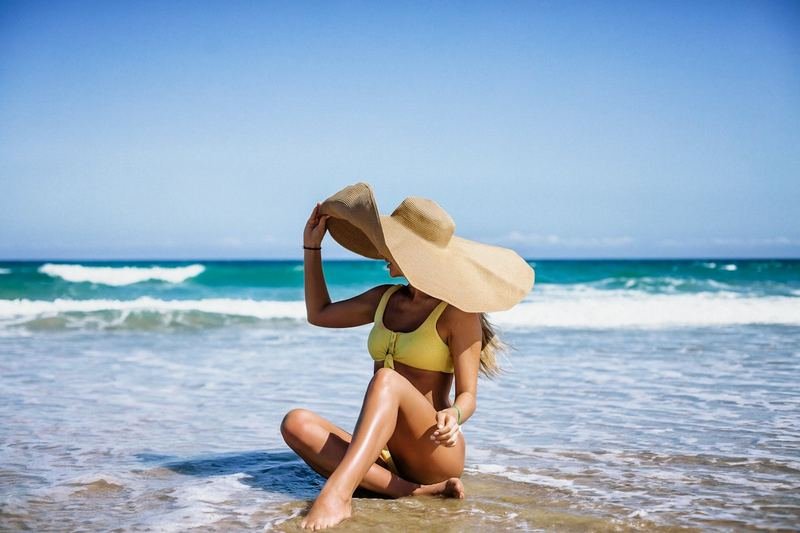
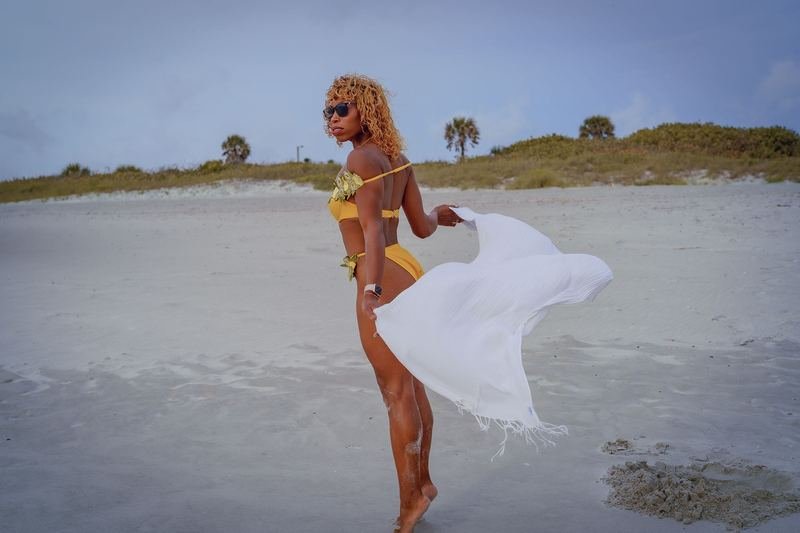
A wide straw hat or a white cover-up does more for a yellow bikini photo than almost any other accessory pairing, because both read as a clean neutral frame rather than competing with the yellow for attention. Gold jewelry works with mustard and marigold specifically; silver tends to look better against butter yellow and lemon, where the cooler metal doesn’t fight the pale warmth of the suit.
If you’ve already built out a blue or red bikini in your rotation, a green bikini or a true red bikini sits at a completely different point on the color wheel than yellow does, which makes any of the three a genuinely different look rather than a near-duplicate. For a broader primer on matching any swim color to your specific undertone before you commit to a shade, the full swimsuit color guide covers the skin-tone logic behind every shade on this site, not just yellow.
Yellow rewards the person willing to actually test a shade against their skin before buying, rather than grabbing whatever “yellow bikini” an algorithm surfaces first. Get the undertone match right and it’s the single most complimented color in a swim rotation; get it wrong and it’s the first piece that quietly stops getting worn.
Sources
- Why Yellow Is Hard to Wear (and How To) — PaletteHunt — breakdown of why yellow is the most undertone-sensitive color family and how to match shade to skin tone.
- Swimwear Materials: Why Most Fade After One Summer — EcoChic Swim — explains how chlorine and UV exposure combine to fade and yellow pale swimwear fabric fastest.
- Summer 2026’s Butter Yellow Trend — Marie Claire — coverage of butter yellow as the defining fashion color driving 2026’s pale-yellow swim pieces.