

Swimsuit Care: 9 Smart Tips to Make Your Suit Last
A well-made bikini or one-piece costs anywhere from $40 to $180, and the fabric that makes it stretch — usually a blend of nylon or polyester with about 15 to 20 percent spandex — starts breaking down the moment it meets chlorine, salt, sunscreen, and heat. Most suits don’t wear out because they’re cheap. They wear out because they get tossed in a gym bag wet, machine-washed on hot, and dried in direct sun. Swimsuit care isn’t fussy or time-consuming. It’s a handful of thirty-second habits that decide whether your favorite suit lasts one season or five.

Swimsuit Care Starts the Moment You Get Out of the Water
The single most damaging thing you can do to a swimsuit is let it sit wet and balled up. Chlorine and salt keep working on the elastane fibers as long as they’re in contact with the fabric, and a damp suit crushed in a beach bag for three hours is basically a slow chemical bath. The fix takes less than a minute: rinse the suit in cool tap water before it even dries.
Rinsing before you swim matters too, and almost nobody does it. Elastane is like a sponge — once the fibers are already saturated with clean water, they absorb far less of the pool’s chlorine. A quick pre-swim rinse in the shower means your suit soaks up plain water first, not a chemical cocktail. It’s the cheapest insurance policy in your beach bag.
Why Chlorine and Sunscreen Are the Real Enemies
Chlorine doesn’t just fade color — it dissolves the stretch. The spandex in your suit is what snaps it back to shape, and chlorine oxidizes those fibers until they go slack and see-through in the seat and bust. That’s why a suit you only wear in the ocean can last years while a pool suit sags in a single season.
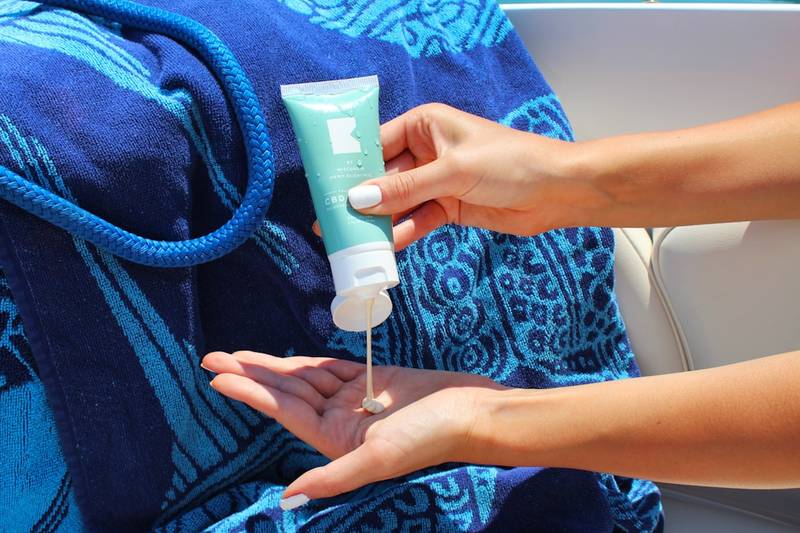
Sunscreen and body oils are the quieter culprits. The avobenzone and titanium dioxide in most sunscreens leave greasy, sometimes yellow stains that regular rinsing won’t touch, and they degrade elastic over time. If you’ve ever seen orange or rust-colored streaks on a white suit, that’s usually sunscreen reacting with pool chemicals — not dirt. Give sunscreen fifteen minutes to absorb into your skin before you put your suit on, and you’ll cut most of that staining before it starts.

Hand Wash Every Time — Skip the Machine
The washing machine is where good suits go to die. The agitator stretches the straps, the spin cycle warps the cups, and even a “delicates” setting is rougher than swimwear elastic is built to handle. Detergent makes it worse — most laundry detergents contain enzymes and brighteners that eat away at elastane and strip color.
Hand washing takes two minutes. Fill a sink with cool water, add a teaspoon of gentle soap (a swimwear wash, baby shampoo, or a drop of mild dish soap all work), and swish the suit around for a minute. Gently squeeze the water through the fabric — don’t wring or twist, which permanently deforms the stretch fibers. Rinse until the water runs clear, then press the suit between a clean towel to pull out the excess water.

Cool water is non-negotiable. Heat is the enemy of elastane — hot water relaxes the fibers so they never fully recover their snap. Same reason you keep suits out of the dryer entirely, which we’ll get to next.
How to Dry a Swimsuit Without Wrecking It
Never hang a wet swimsuit by its straps. Waterlogged fabric is heavy, and gravity pulls the whole suit out of shape while it dries — that’s how straps stretch out and cups lose their structure. Never use the dryer either; the heat destroys elastane faster than anything short of bleach.
Lay the suit flat on a dry towel, in the shade. Direct sun fades color and bakes the fibers brittle, which is ironic given where swimsuits spend their lives. If you have to hang it, drape it over a rack rather than clipping it by the straps. A flat dry in a shaded, breezy spot keeps the shape and prevents the mildew smell that comes from a suit drying slowly in a dark bag.

Rotate Your Suits So No Single One Wears Out
Here’s the tip nobody wants to hear: even with perfect care, elastane needs about 24 hours to fully recover its stretch after a swim. Wearing the same suit two days in a row on vacation is the fastest way to bag out the seat. If you swim daily, own at least two or three suits and rotate them. It sounds like an excuse to buy more swimwear — and honestly, it is — but the math works out. Three suits rotated will each outlast a single suit worn every day by a wide margin.
This is also where fabric quality pays off. A suit with a higher-grade chlorine-resistant blend costs more up front but shrugs off the pool for years. If you’re building a small collection to rotate, it’s worth understanding how fabric and construction actually work for your body before you buy — the right build holds up better and fits better.


Storing Swimwear for the Off-Season
When summer winds down, don’t just shove your suits in a drawer damp from their last wash. Make sure every piece is completely dry — even a little residual moisture invites mildew and permanent musty odor. Fold suits flat rather than cramming them; long-term folding along a hard crease can weaken the fabric where it bends.
Keep swimwear out of direct light and away from heat sources like radiators or hot attics. A cool, dark drawer or a breathable cotton bag is ideal. If a suit has underwire or molded cups, store it so the cups keep their shape instead of getting crushed under a stack of clothes. A little care here means you open the drawer next May to suits that look like you bought them yesterday.

A Poolside Care Routine You’ll Actually Follow
None of this works if it’s a chore. The trick is stacking the habits so they’re automatic. Rinse in the shower before you swim. Rinse again the second you’re out of the water — most pools and beaches have an outdoor shower right there. When you get home, a two-minute hand wash in the sink, a press in a towel, and a flat dry in the shade. That’s the entire system.
Whether you wear a one-piece or a bikini, the routine is the same, and it takes less time than scrolling your phone while your coffee brews. The payoff is real money saved and suits that still look good three summers from now.

Saltwater vs Chlorine: Which Is Harder on Your Suit?
Both take a toll, but chlorine is the clear winner for damage. Chlorine is a chemical oxidizer, so it actively breaks down elastane and strips dye — a pool suit worn twice a week can lose noticeable stretch in a single summer. Saltwater is gentler on the fibers but leaves behind salt crystals that dry stiff and abrasive, sanding at the fabric every time you move. Add sand and it gets worse, working into the weave like fine sandpaper.
The response to both is the same rinse-and-wash routine, which is what makes swimsuit care so simple: you don’t need a different system for the ocean and the pool. Rinse the chlorine or salt out before it dries, hand wash when you get home, and dry flat. One habit covers every kind of water you’ll swim in — lakes and hot tubs included, and hot tubs are especially rough because the heat and concentrated chemicals gang up on the elastic.
When to Let a Suit Go
Even the best swimsuit care has limits. When the fabric goes sheer when stretched, when the elastic in the legs or straps stays crimped and loose, or when the color has gone chalky and thin, the suit is done — no amount of washing brings back degraded elastane. A suit that’s lost its stretch also loses its support and coverage, which nobody wants to discover mid-swim.
The good news is that treating your current suits well makes replacing them a pleasure rather than a scramble. When you’re ready to add to the rotation, a fresh, well-built set is worth investing in — and it’s a lot more fun than replacing the same sad, sagging suit every June. If you want a starting point on cuts and coverage, our guide to a flattering fit walks through what actually works for real bodies.

Your body deserves a suit that fits and feels great every time you wear it — and that suit deserves thirty seconds of care in return. Rinse it, hand wash it, dry it flat, and give it a day to recover between swims. Do that, and the only reason you’ll ever buy a new suit is because you found one you love, not because the last one gave out.
Sources
- The Spruce — How to Wash a Bathing Suit — step-by-step hand washing and drying guidance for swimwear fabrics.
- NYT Wirecutter — Rinse Your Swimsuit Before and After You Swim — why pre- and post-swim rinsing protects elastane from chlorine.
- Speedo — Swimwear Care Guide — manufacturer guidance on chlorine damage, drying, and storage.
Shop our full range of bikinis and swimwear at the BikiniCool store →