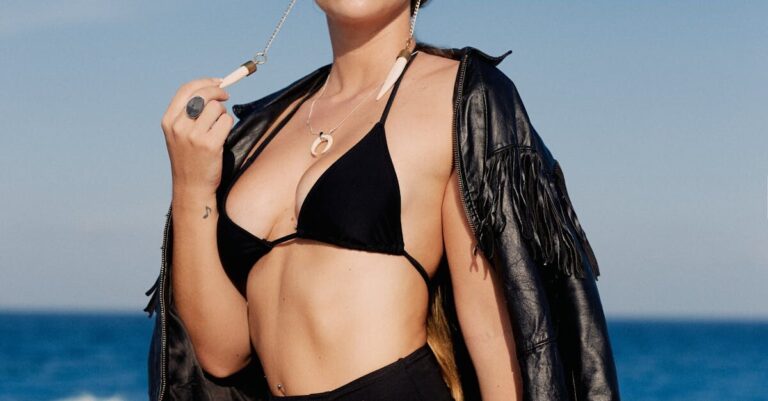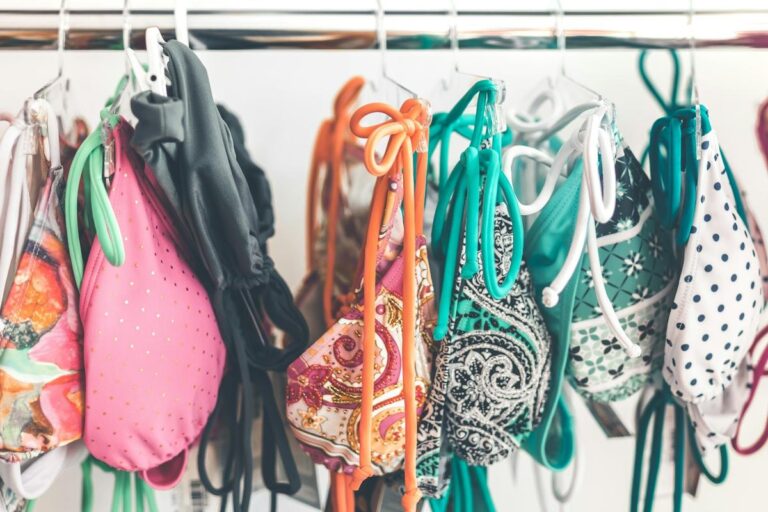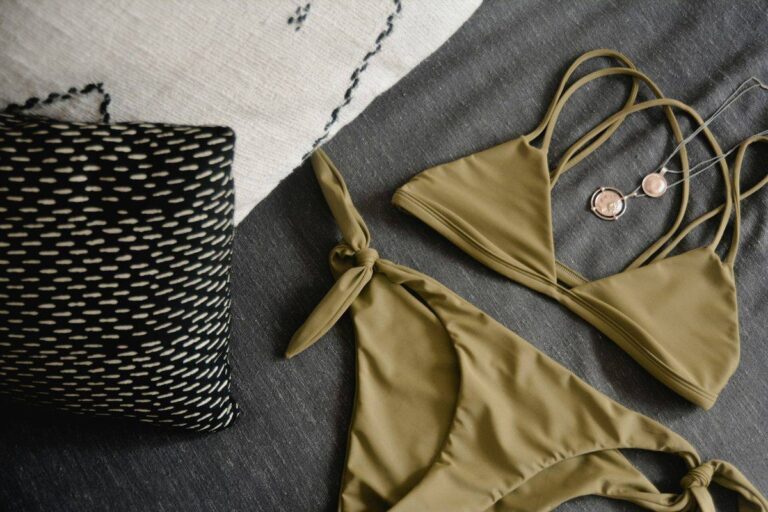

Bikinis for a Rectangle Body Shape: 7 Best Styles for 2026
Roughly a third of women measure out as a rectangle body shape, according to sizing studies used by major swimwear brands, yet it’s the shape swimwear guides talk about the least. Search “bikini for pear shape” and you’ll find hundreds of guides. Search for rectangle, straight, or banana-shaped bodies and the shelf empties out fast — even though the fix is arguably simpler than for any other shape.
A rectangle body shape (sometimes called straight, banana, or H-shaped) means the shoulders, waist, and hips sit roughly in line, without the hourglass’s dramatic waist-in or the pear’s hip flare. There’s nothing to correct here — the goal is just to add visual interest where the body doesn’t naturally curve, and this guide walks through exactly which cuts do that.
What a Rectangle Body Shape Actually Looks Like
If your bust, waist, and hip measurements are all within about two to three inches of each other, you’re working with a rectangle body shape. Shoulders and hips read at roughly the same width, and the waist doesn’t dramatically narrow in between them. It’s the most common shape among fitness-focused bodies and one of the most common shapes overall — swimmers, runners, and dancers tend to build this frame through training, which is exactly why brands quietly rebrand it as “athletic” in their size guides.
None of that makes a rectangle shape a problem to solve. It just means the styling job is different from a pear or hourglass: instead of balancing an existing curve, a rectangle bikini has to invent one.
The quickest way to check is a tape measure, not a mirror. Measure the fullest part of the bust, the natural waist (usually an inch above the belly button), and the fullest part of the hips. If all three numbers land within two to three inches of each other, that’s a rectangle. A five-inch-plus difference between waist and hips usually means pear; a similar gap the other direction usually means apple or inverted triangle. It takes about ninety seconds and settles the question a lot faster than scrolling through five different “which body shape are you” quizzes.

The One Styling Principle That Actually Works
Every guide to rectangle body shape swimwear circles back to the same idea, and it’s worth saying plainly: add detail where the body is straight, and break the vertical line somewhere. That’s it. A plain triangle top in a solid color does nothing wrong, but it also does nothing — it just confirms the straight line the body already has. A ruffled edge, a thick horizontal stripe, or a cut-out at the waist does the opposite. It tricks the eye into seeing a curve that isn’t measured on a tape.
The honest truth is that a lot of “flattering swimwear” advice is really just marketing copy for whatever a brand happens to be overstocked on. But this particular principle holds up because it’s simple geometry, not styling folklore — horizontal and diagonal lines read as width, vertical lines read as length, and ruching or ruffles read as volume. Once that clicks, picking a bikini for a rectangle shape gets a lot less complicated.
Bikini Tops That Add Curves to a Rectangle Frame
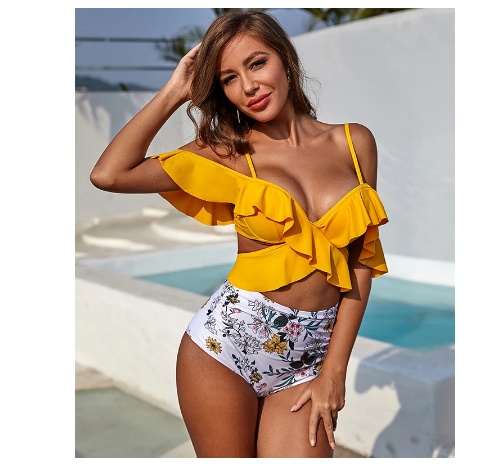
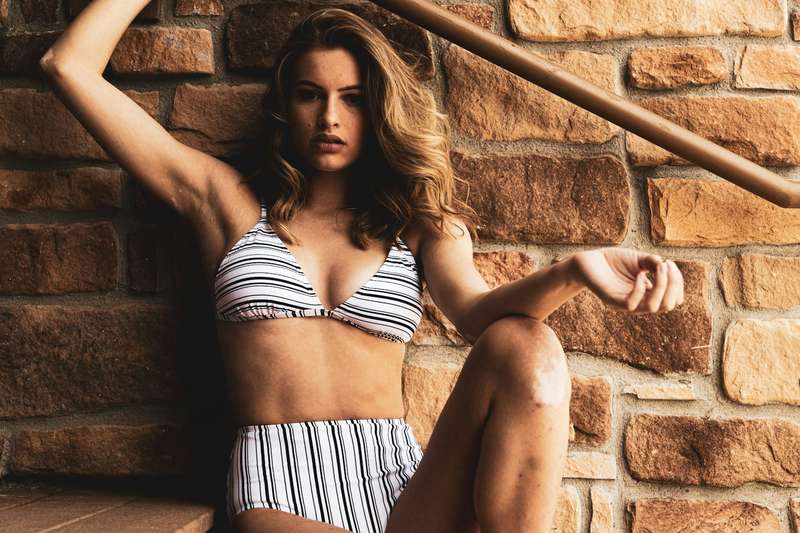
Ruffled and off-the-shoulder tops do the most work here because they widen the shoulder line just enough to set up a waist by contrast, even without any actual waist definition underneath. Halter tops with a bit of embellishment — a ring, a knot, or a cut-out — do something similar by drawing the eye up and in. Bold prints matter more on a rectangle shape than almost any other body type: a large floral, an animal print, or a color-block pattern placed across the bust reads as volume in a way a plain color never will.

Skip the barely-there string bikini top here — not because it looks bad, but because it does nothing to change the line of the body. If the goal is definition, a string top with no shape of its own just isn’t doing the job the rest of the suit is doing.
Bottoms That Define a Waist That Isn’t There Yet
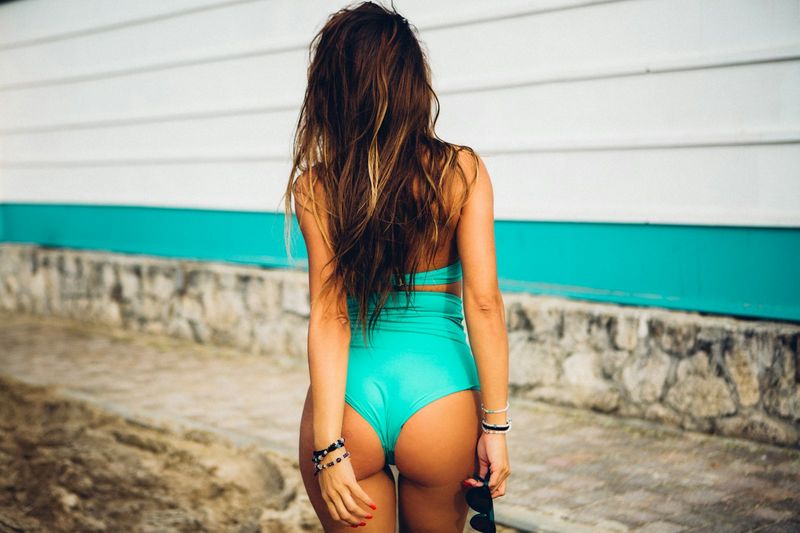
High-waisted bottoms are the single best-performing category for a rectangle body shape, and it isn’t close. Sitting the fabric at the natural waist and cutting it with a bit of shape — a slight curve, a side ruche, a wide waistband — creates an actual indentation where the eye reads “waist,” even on a frame that’s naturally straight through the middle. Belted bottoms or belted one-pieces push this even further, since a visible belt is the most literal way to draw a waistline.
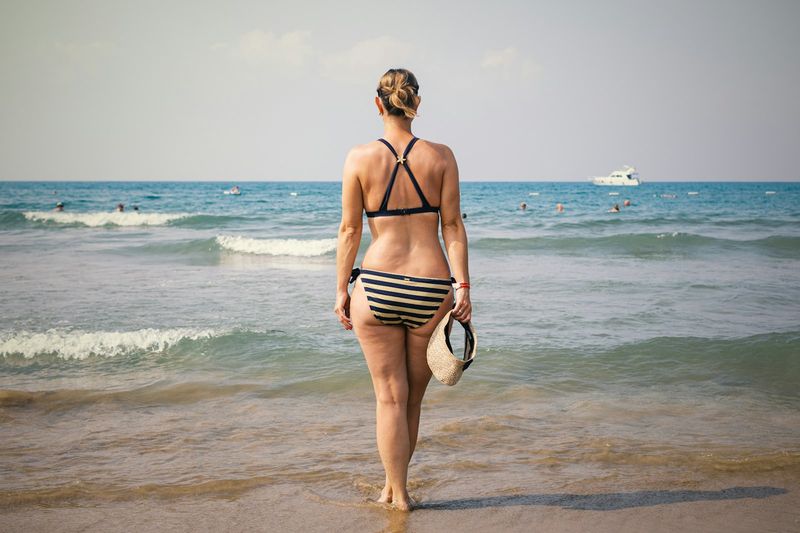
Side-tie and asymmetrical bottoms are worth calling out too. A diagonal tie, a single high-cut side, or an off-center print breaks up the straight vertical line running from shoulder to ankle, which is the exact line a rectangle shape has more of than any other body type.

One-Pieces and Monokinis Worth a Second Look
A plunging V-neck one-piece does for the torso what a ruffled top does for the shoulders — it draws a diagonal line down the center of the body that cuts against the straight rectangle silhouette. Add ruching, a side cut-out, or a color-blocked waist panel and the effect compounds. Monokinis with waist cut-outs are arguably the most efficient single piece a rectangle-shaped woman can own, because the cut-out does the waist-defining work a bikini needs two separate pieces to accomplish.
Structured one-pieces with built-in shelf support or underwire also help, not for lift alone but because the internal structure holds a shape at the bust that soft fabric alone won’t hold on a straighter frame.
Fabric weight matters more than most buyers realize. A thin, stretchy jersey blend moves with the body and shows exactly how straight the silhouette is underneath. A slightly thicker, more structured fabric — the kind used in most higher-end swim brands — holds its own shape independent of the body, which is precisely what a rectangle frame benefits from. It’s the same reason a stiff-collared shirt looks sharper than a soft one on a straight torso: structure does the work that the body isn’t doing on its own.
Styling Details Beyond the Suit Itself
A sarong or cover-up tied at the hip does more for a rectangle silhouette than most people expect — the knot itself creates a focal point exactly where a waist would sit. A wide belt worn over a cover-up or a one-piece works the same way, and it’s one of the fastest ways to reshape an outfit without buying a single new swimsuit.
Layered jewelry — a longer necklace paired with a shorter one, or a stack of anklets — adds the kind of visual detail that breaks up long, uninterrupted lines of skin, which matters more on a rectangle frame than it does on a curvier one. None of this is about hiding anything. It’s the same logic a stylist uses on any body: add interest where the eye would otherwise slide straight past.


Three Mistakes That Undo All of the Above
A plain straight bandeau is the one piece worth actively avoiding on a rectangle body shape. It removes shoulder width, adds no waist detail, and confirms the straight line from top to bottom — it’s the single worst match of any bikini style for this body type, even though it photographs beautifully on other shapes. Skip it here specifically.
Buying a size up “for coverage” is the second mistake. Extra fabric with no shaping just adds more straight line, not less. The fix isn’t more fabric, it’s more structure — ruching, a built-in shelf, a wider waistband.
The third: matching top and bottom in the exact same flat pattern. It’s an easy default, but a solid top with a printed bottom (or vice versa) creates the visual break a rectangle frame benefits from, while a single unbroken pattern head to toe just extends the straight line even further.

None of This Is About Fixing Anything
A rectangle body shape isn’t a flaw to style around — it’s the frame most swimwear is actually designed on, which is part of why it’s so underserved by “flattering fit” content built around curvier shapes. The styling moves above (ruffles, prints, high-waisted cuts, a well-placed cut-out) aren’t corrections. They’re just the fastest way to get more visual interest out of a suit, the same way a plain white t-shirt gets more interesting with a print or a structured collar. Buy the bold color. Skip the flat bandeau. The rest is genuinely optional.
For more on how proportion (not rigid body-shape rules) actually drives a good swimsuit fit, see Swimwear and Proportion: How Balance Builds Confidence, and for a broader look at why generic sizing charts fail so many shapes, read Swimwear for Every Body Type: Why the Old Charts Fail. If “flattering” as a word bothers you as much as it bothers us, The Truth About ‘Flattering’ Swimwear digs into what the word is actually doing.
Sources
- ROXY Expert Guides — Swimsuits for Rectangle Body Shape — styling breakdown on tops, one-pieces, and waist-defining details for straight body types.
- Billabong Expert Guides — How to Choose a Bikini for a Rectangle Body Shape — confirms the ruching, belt, and asymmetrical-cut approach used across major swimwear brands.