Choosing Bikinis for Athletic Builds: A Fit and Style Guide
Shopping for a bikini when you have an athletic build should feel exciting, not like a problem to solve. Broader shoulders, defined arms, muscular legs, a shorter torso, a flatter chest, or narrower hips — these proportions show up differently in every athletic body, and yet the same reductive advice gets repeated: minimize this, balance that, avoid the other. This guide takes a different approach. Understanding how cut, proportion, color, and detail interact gives you real tools for finding bikinis that feel like they were made for you — because, styled correctly, they are.
Understanding What Athletic Build Means for Fit
Not all athletic builds are the same. Some women carry significant width through the shoulders — swimmers, rowers, gymnasts. Others have a straighter waist-to-hip ratio, with minimal inward curve at the waist and narrower hips than average. Many have minimal chest volume, very defined abdominals, or muscular thighs and glutes that affect how standard bottoms sit. Some combine several of these characteristics. Before applying any style advice, it helps to identify which specific proportions you are working with, rather than treating the athletic build as a single uniform category.
The conventional narrative frames these features as problems — things to hide, minimize, or compensate for. The more useful framing is that they are simply proportions that respond differently to different cuts. A wide-shouldered body in the wrong bikini top is not a fashion failure; it is a fit mismatch, and fit mismatches are entirely fixable with the right information.
Bikini Tops for Broad Shoulders and a Defined Upper Body
Necklines and Cut Lines That Do the Work
The most important thing to understand about bikini tops and broad shoulders is that horizontal lines across the upper body visually extend width. A wide, thick strap sitting near the shoulder’s outer edge — or a bandeau that runs straight across without any vertical detail — makes the shoulders read wider. The solution is to redirect the eye toward the center of the body rather than across it.
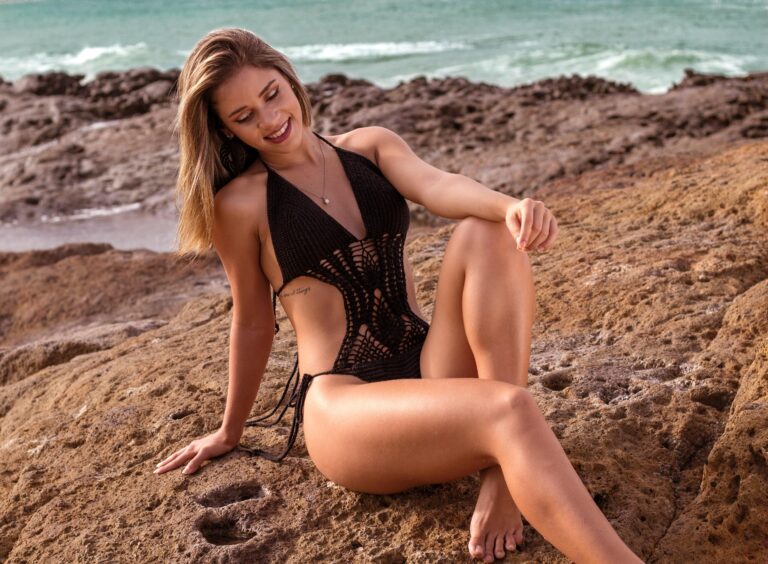
Plunging V-necklines and deep-cut sweetheart shapes pull focus toward the chest and create a vertical line that elongates the upper body. Halter-style tops with ties behind the neck do the same — they create an upward and inward angle rather than a flat horizontal band across the chest and shoulders. Asymmetric cuts such as one-shoulder tops and twist-front styles break the symmetry of broad shoulders and read as intentionally architectural rather than a workaround for proportion challenges.
Triangle tops with adjustable ties work especially well here. Because the cups connect at the center and the straps angle inward toward the neck, the overall line is narrowing rather than extending. The thinner the tie, the lighter the visual impression at the shoulder. This makes the classic triangle one of the most underrated styles for athletic upper bodies — adjustable, lightweight, and naturally proportioning by design.
When shopping online, look closely at where the strap sits relative to the outer edge of the shoulder in product photos. A strap or clasp positioned at or near the shoulder tip points outward; one that angles inward reads differently on the body. This single detail tells you more about how a top will actually look than any style description in the product copy.
Padding, Structure, and Volume at the Bust
Athletic builds with less breast volume often find that bikini tops designed with fuller busts in mind tend to gape at the cup, shift position during wear, or fail to drape correctly. Removable foam padding or molded cups in a triangle or halter top create the volume that makes the top sit as the designer intended. This is a practical fit consideration more than an aesthetic one — the padding fills in the proportions so the garment works the way it was built to.
Ruffle detail at the bust is an alternative that does not require a structured cup. A horizontal tier of ruffles at the chest adds visual texture and dimension without padding, and it moves naturally in the water. For athletic builds that want softness and visual interest at the top without a push-up effect, ruffles serve a genuine functional purpose — not just a decorative one.
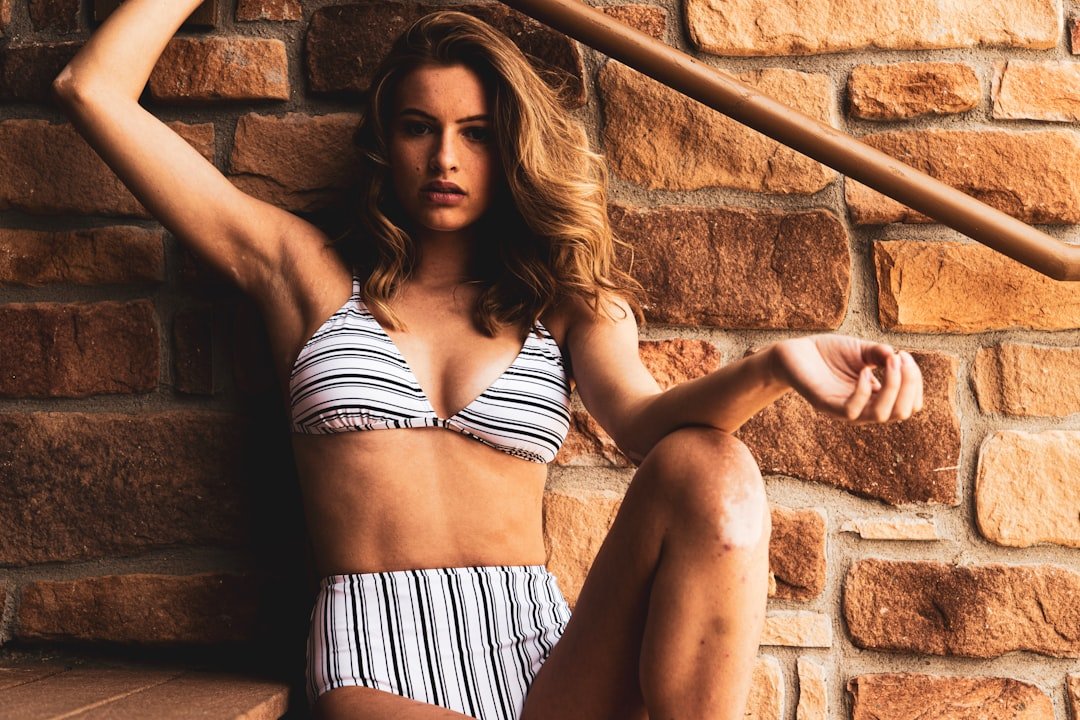
Shop Ruffle Bikini Tops on Amazon →
Bikini Bottoms That Play With Proportion
High-Waisted Cuts for a Defined Waist and Hip
High-waisted bikini bottoms are among the most consistently effective styles for athletic bodies with a straighter silhouette. They work on two levels simultaneously. First, the wide waistband sits at the torso’s narrowest point — even when that narrowing is subtle — and the contrast between the waistband’s upper edge and the fabric below emphasizes that definition. Second, the way the bottom cuts across the hip adds visual width there, creating the impression of curve where the body’s natural contour is less pronounced.
Look for high-waisted styles with structure in the waistband — a firm elastic or gathered ruching that holds its shape rather than rolling down during wear. Full-coverage retro cuts that sit close to the navel tend to maintain their shape best throughout the day. Avoid styles with soft, unstructured waistbands; they lose their effect quickly in the water and need constant readjustment on the beach.
String Sides, Brazilian Cuts, and Hip Geometry
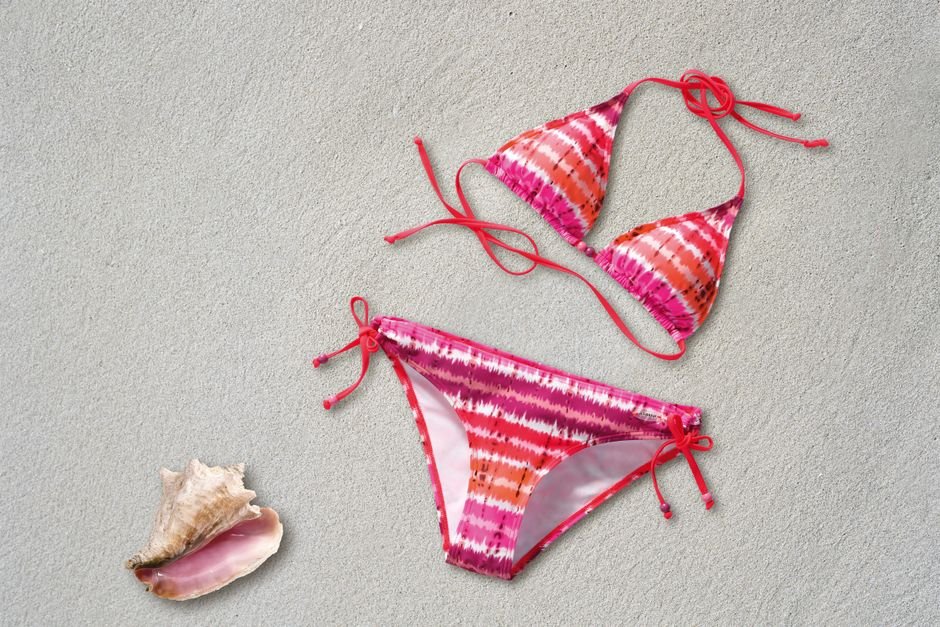
Side-tie bikini bottoms add something visually significant that solid-seam bottoms do not: the knot itself sits at the hip point, creating a small focal detail exactly where the body is widest. For narrower hips, this placement is genuinely useful. The eye catches the tie, and the hip reads wider than it would with a smooth, uninterrupted side seam. The effect is subtle but consistent — a small detail that earns its place in the overall silhouette.
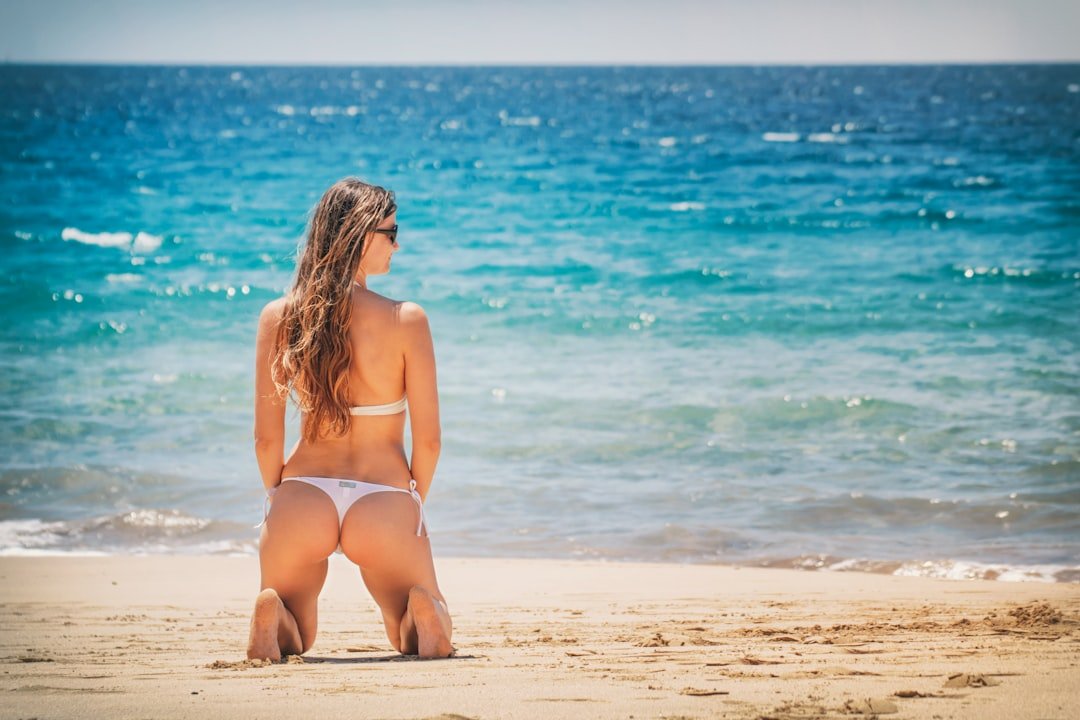
Brazilian and high-leg cuts, which rise toward the hip crease and show more of the back and upper leg, work particularly well for athletic builds with defined glutes and strong legs. These cuts frame the lower body in a way that emphasizes what is actually there rather than covering it. On a muscular frame, a high-cut Brazilian bottom looks powerful and deliberate — not a compromise, but a fully considered choice.
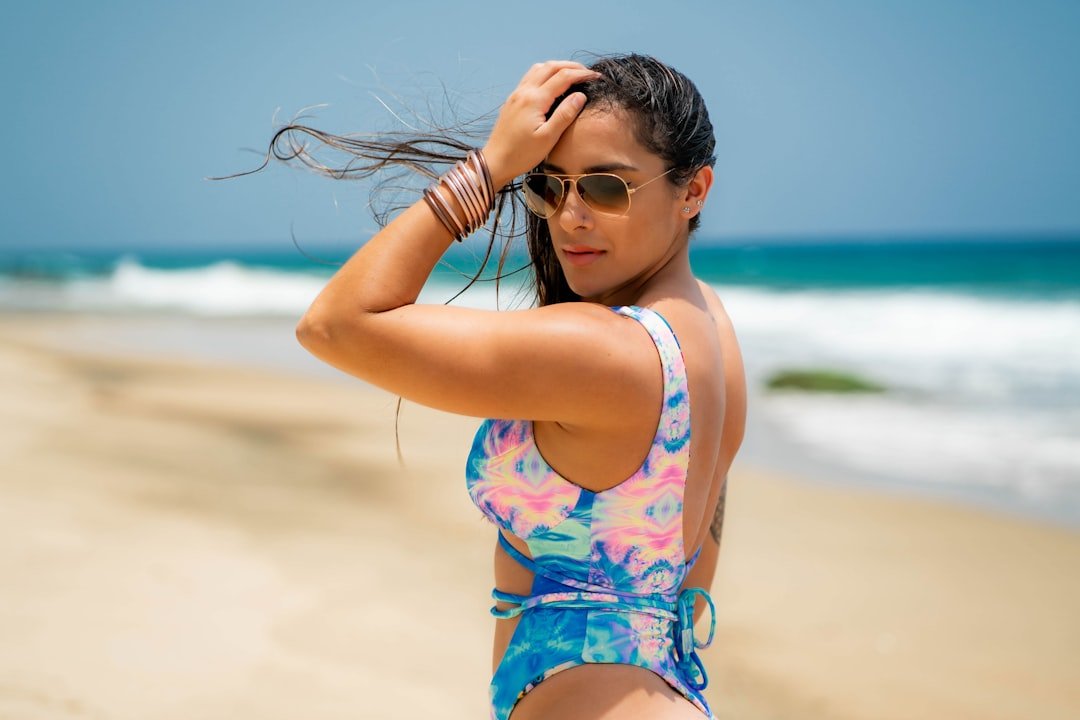
Shop High-Waisted Bikini Bottoms on Amazon →
Using Color, Print, and Pattern as Proportion Tools
Color and print placement do real work in how the eye reads proportion in a two-piece. For athletic builds that want to add visual weight to the hips, a bold-patterned bottom paired with a more minimal top is one of the most effective strategies available. The eye moves toward the most visually complex part of an image, and a print or bright color at the hip draws attention there — and in doing so, adds visual mass precisely where you want it.
Color blocking at the waistband — a contrasting stripe or a different color at the top edge of the bottom — creates a visual break that the eye reads as a waist point, even when the actual waist-to-hip ratio is fairly uniform. Two-piece sets that deliberately build this contrast into the design are worth seeking out. The geometry of the color division does the proportioning work, so no style compromise is necessary.
If you want to embrace strong shoulders rather than minimize them, reverse the logic entirely: a patterned or brightly colored top with a solid bottom makes the upper body the focal point. Athletic shoulders in a bold-printed bandeau top look like a design statement. Strong, wide, defined — these are features that can anchor a look rather than something to work around.
Getting the Right Support for Active Time in the Water
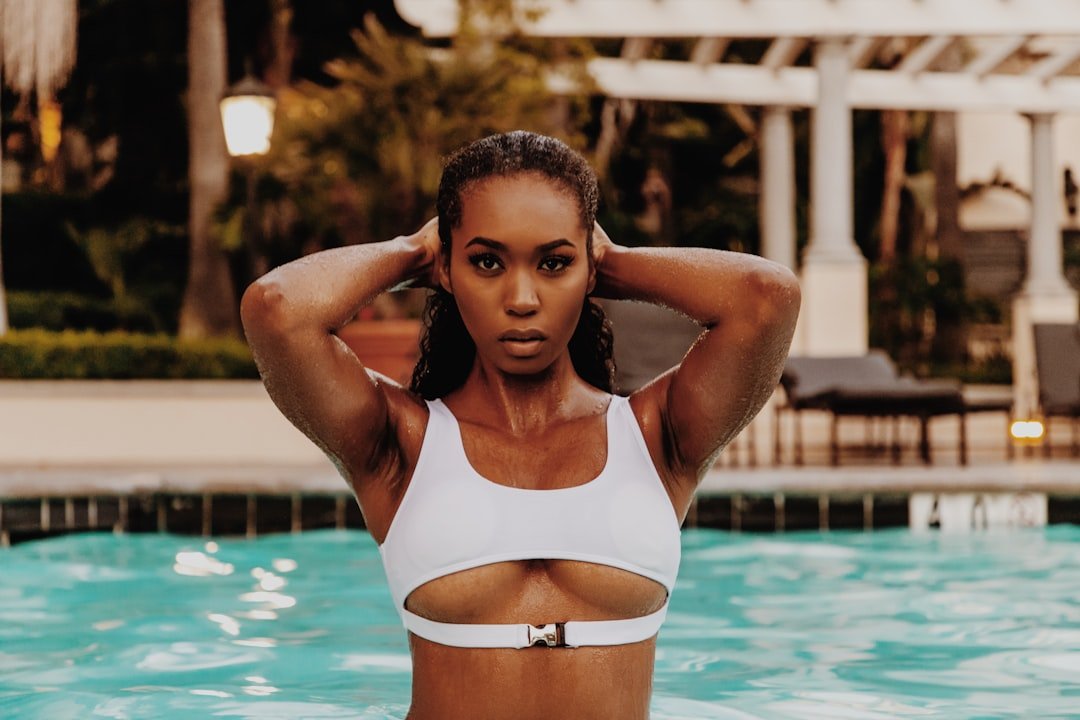
Athletic builds often include women who actually swim, surf, or play water sports rather than primarily wearing their bikinis poolside. For this group, fit and function converge in ways that matter. An underwire bikini top — particularly styles designed for active use — provides structured support that holds position during movement. Wider bands at the base of the cup, secure hook-and-eye closures, and denser chlorine-resistant fabric are the markers of a top built for real water activity rather than decoration.
Active-cut bikini tops often feature thicker side panels that wrap around the torso, improving stability and preventing the top from twisting or riding up when swimming. Many brands now bridge the gap between performance and style, offering underwire tops in solid colors or clean minimal patterns that look elegant while functioning well in the water. If sustained swimming is part of your plan, these are worth the investment over a softer fashion-forward style.
For bottoms, a style with sufficient seat coverage and moderate fabric weight holds position through water activity. Side-tie bottoms can loosen with sustained water exposure, so for genuinely active wear, either choose a solid side-seam bottom or double-knot any ties securely before you go in. A little attention to this detail prevents a lot of mid-session adjusting.
Wearing What You Actually Want
Every guideline in this piece is a tool, not a rule. The honest answer that proportion guides often avoid is that athletic builds look striking in almost anything. Strong shoulders in a barely-there string bikini, muscular legs in a high-cut bottom, defined arms in a strapless bandeau: all of these work — and they work not in spite of the athletic build but because of it. These bodies carry swimwear well precisely because of their definition and presence.
The purpose of understanding cuts and proportions is to expand your options, not to narrow them to a pre-approved shortlist. If you have spent years avoiding a particular style because someone told you it does not work for your body type, the most useful thing to take from this guide is simple: try it. On your body, you are the one who gets to decide what works — and you might find that the original advice was wrong from the start.

Shop Athletic Bikini Sets on Amazon →
Sources
- SELF Magazine — Swimwear fit and body confidence coverage
- Vogue — Seasonal swimwear trends and editorial style guides
- Women’s Health — Active swimwear reviews and performance fit guides