Triathlon Swimwear: 7 Best Picks
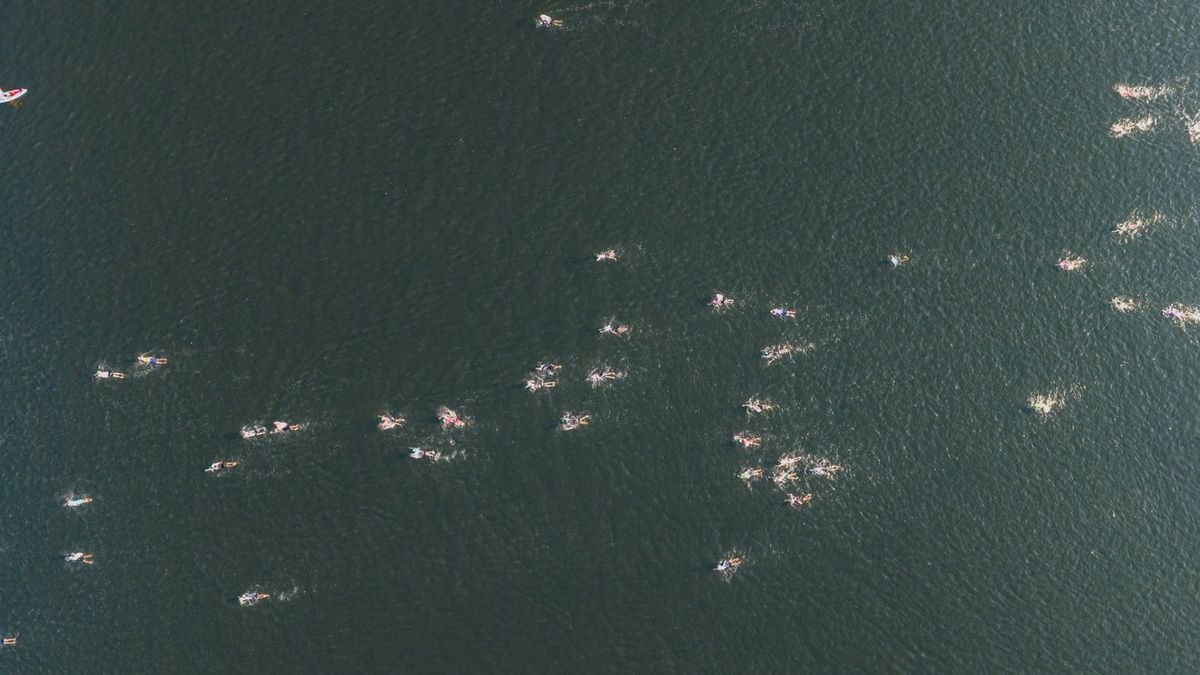
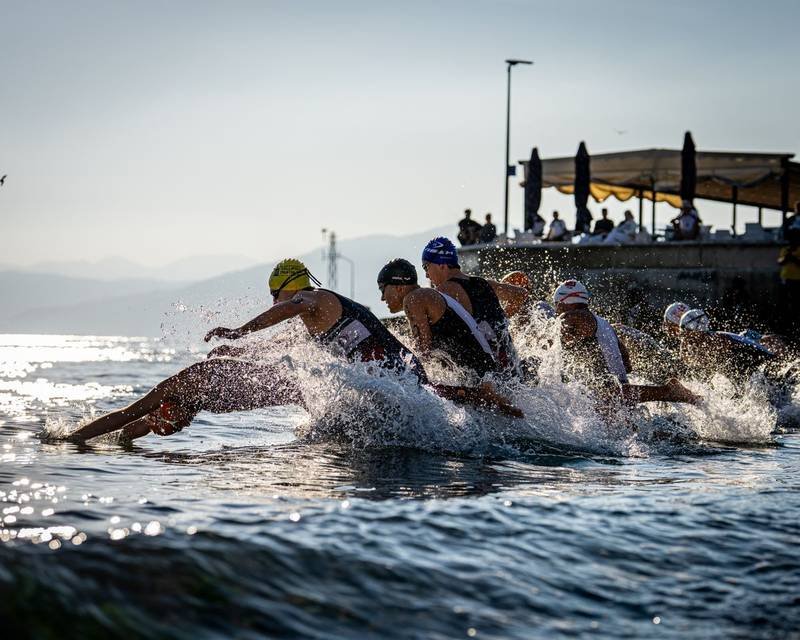
A sprint-distance swim is 750 meters. A full Ironman swim is 3.86 kilometers — over five times longer, in open water, before the athlete even touches a bike. That gap is the reason a regular swimsuit and triathlon swimwear aren’t the same product wearing two names. One is built to survive an afternoon at the pool. The other has to survive a mass open-water start, a transition where seconds matter, and a bike-then-run block where the suit never comes off.
Why Triathlon Swimwear Has to Do a Job No Other Swimsuit Does
Most swimwear only has to handle water. Triathlon swimwear has to handle water, then a bike saddle, then pavement, often without a wardrobe change in between — age-group racers in sprint and Olympic events routinely swim, bike, and run in the same suit to save transition time. That means the fabric has to dry fast enough that a wet one-piece doesn’t chafe for 20 kilometers of pedaling, the seams have to sit flat enough that they don’t rub raw under a bike short, and the cut has to stay put through a dive start, a 1,500-meter swim, and a dead sprint to the bike rack.
The wetsuit question makes this harder, not easier. A suit that’s too thick or textured bunches under neoprene and creates pressure points that only show up at kilometer two. A suit that’s too loose does the opposite — it floats, drags, and adds resistance a wetsuit is supposed to remove. The fix isn’t a specialized $200 tri-suit for a first-timer. It’s picking the right category of suit for the specific demand: speed in the water, a clean transition, or all-day coverage once the sun’s out.
1. Racerback One-Piece for the Swim Leg and the Transition
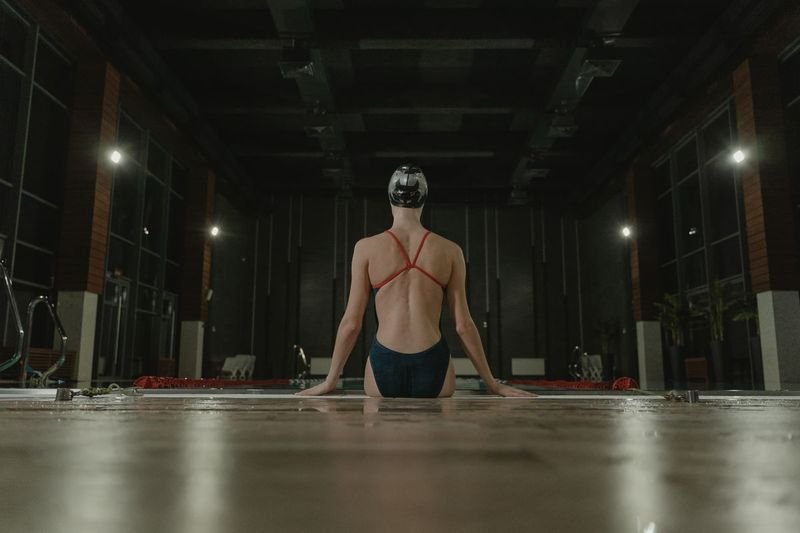
A racerback cut locks the shoulder straps in place through a flip turn or a open-water sighting stroke, which a standard crossback or halter tie can’t do once it’s soaked. That matters more in a triathlon than a lap swim, because nobody is stopping mid-race to re-tie a strap that’s slipped. The wide back panel also means one less thing to fuss with at the swim exit, where every second between the water and the bike rack is timed.

2. Smooth-Seam, Wetsuit-Compatible Suit for Cold-Water Starts
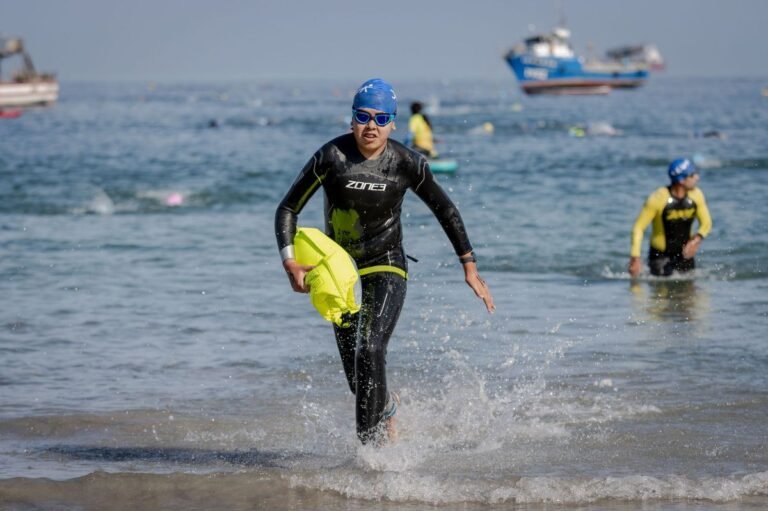
Under 60.6°F, USA Triathlon mandates a wetsuit for safety, and from there up to 78°F it’s legal without penalty — which covers most spring and fall race mornings. A wetsuit means the swimsuit underneath is doing a different job than usual: it’s not fighting water resistance, it’s fighting friction against neoprene. Raised seams, metal clasps, or anything with texture becomes a hot spot by the first buoy turn. A flat-seamed, smooth-fabric suit disappears under the wetsuit instead of fighting it.
This is also where a locked-down one-piece beats a string-tie bikini for the same reason it does on a ski boat — anything with a bow or a tie is a failure point the moment it’s compressed under rubber for an hour.
3. High-Support Suit That Won’t Chafe on a Long Swim
A sprint swim is over in 10 to 20 minutes for most age-groupers. A full-distance 3.86-kilometer swim can run past an hour, and that extra time is exactly when a seam that felt fine on a short swim starts to rub. Underarm seams and side panels take the most repeated friction from the freestyle stroke, so the longer the race, the more a suit’s construction — not just its coverage — decides whether the swim leg ends in a PR or a welt.
This is the pick worth trying on and moving your arms through a full freestyle rotation before race day, not just before buying it. A suit that feels fine standing in a fitting room can still rub after 60 minutes of continuous stroke — the only real test is motion, not stillness.
4. Quick-Dry Suit for Brick Workouts
A brick workout — swim straight into a bike session, sometimes the same day — is standard training for anyone past their first few months in the sport, and it punishes slow-drying fabric. A suit that’s still damp 20 minutes after the swim means a cold, clammy saddle and chafing that has nothing to do with race intensity and everything to do with wet fabric against skin for an hour. Quick-dry synthetic blends solve this in training the same way they solve it on race day.

It’s worth pairing this with a short-sleeve rash guard for outdoor brick sessions — the swimsuit handles the water, the rash guard handles the sun exposure on the ride, and neither one has to do both jobs badly.
5. Close-Fitting Competition Suit for Open-Water Sighting
Loose fabric doesn’t just slow a swimmer down — it also makes it harder to sight the next buoy, because a suit that shifts with every stroke pulls focus away from navigation. A snug, higher-compression cut keeps the body line clean through the water and keeps the swimmer’s attention on the course instead of on readjusting a strap mid-stroke. This is the category most pool-trained swimmers already own, which makes it the easiest first triathlon suit to start with.
6. Sun-Smart Suit for the Run Leg
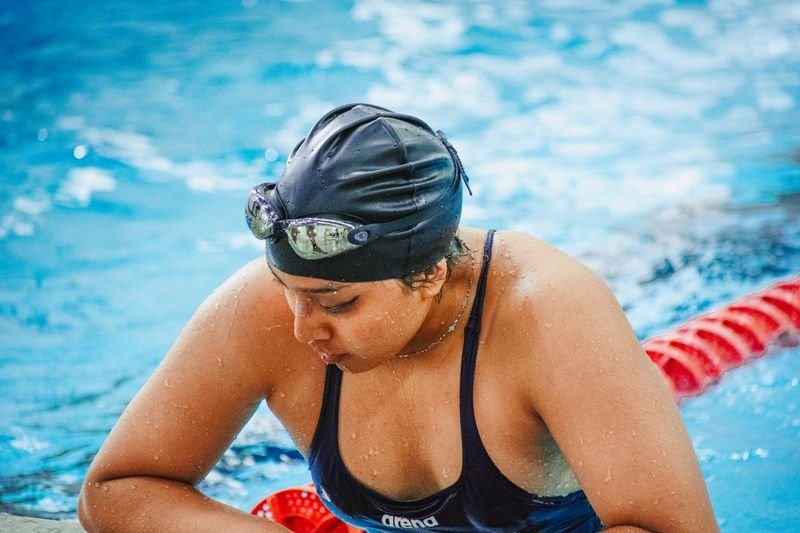
Above 84°F, wetsuits are banned outright because of heat illness risk, which means the swim, bike, and run all happen in open sun with no neoprene buffer at any point. A short-sleeve or higher-coverage cut earns its place here — not as a fashion choice, but because the run leg of a summer triathlon can last 30 minutes to several hours with zero shade and a suit that’s already been wet for an hour.


A longer-sleeve rash guard layered over a base suit covers the same need for athletes who burn fast, without adding the bulk of a full tri-top.
7. Budget Pool-Training Suit for Off-Season Base Building
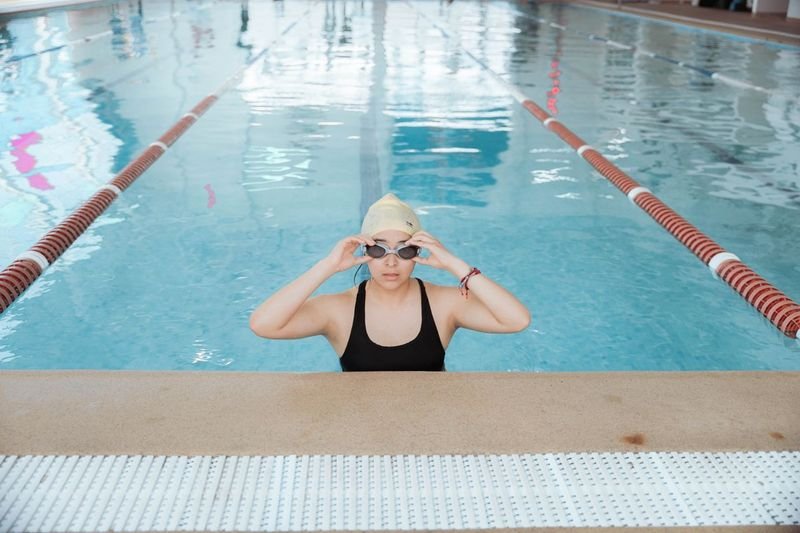
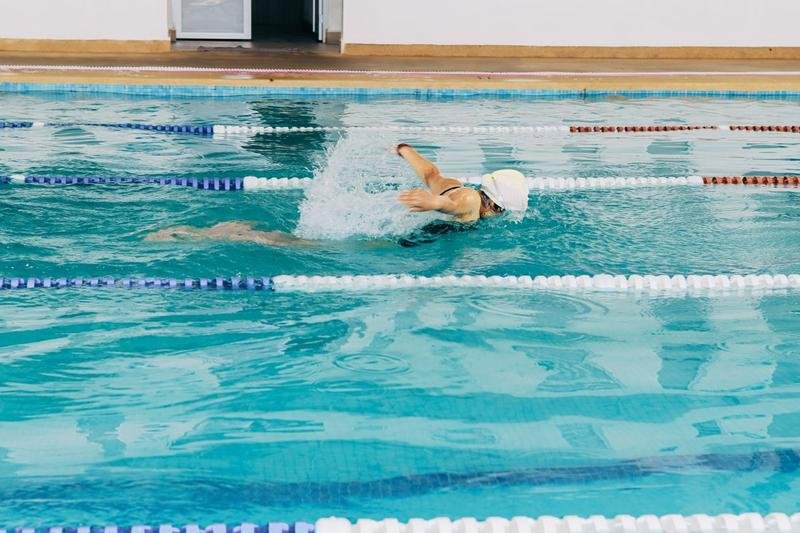
Nobody needs a race-day suit for a Tuesday-night masters session. Most of a triathlete’s swim hours happen in a chlorinated pool, not open water, and chlorine breaks down spandex faster than saltwater or lake water does — which means a dedicated, inexpensive training suit saves the better suit for race day and actually extends both suits’ lifespans. A zip-front one-piece makes this an easy on-and-off for back-to-back pool sessions during base-building months.

Matching the Suit to Your Race Distance
Four standard distances cover almost every triathlon on a calendar: Sprint (750m swim), Olympic (1,500m), 70.3 or Half Ironman (1.9km), and full Ironman (3.86km). The swim leg quintuples from Sprint to full distance, but a lot of first-time triathletes shop for swimwear like the distance doesn’t matter. It does. A Sprint swimmer can get away with whatever suit they already train in. A 70.3 or full-distance athlete is making a seam and fit decision that affects over an hour of continuous friction, and that’s worth treating as its own purchase, not an afterthought to the wetsuit.
Here’s the video breakdown most new triathletes watch before their first race-day kit decision:
What to Check Before You Buy
Run your fingers along every seam before paying for a triathlon swimsuit, not just the size tag. Flat, bonded seams beat sewn ones for anything over a Sprint distance. Check the strap width too — thin straps look better on a hanger but dig in faster over an hour of continuous arm rotation than a wider racerback. And if the suit is going under a wetsuit, test the combination in a pool before race week. The two together can fit completely differently than either one alone, and race morning is the worst time to find that out.
Chlorine resistance matters more than most shoppers expect. A suit marketed for swim-specific use will usually list a polyester or PBT blend rather than pure spandex, because spandex degrades under repeated chlorine exposure within a season of regular pool training. Saving the race-day suit for open water and race day — and using a separate, cheaper suit for weekly pool sessions — is the simplest way to make both last.
Can You Wear a Regular Swimsuit for a Triathlon?
Yes, for a first Sprint or Olympic-distance race, a regular swimsuit works fine as long as it’s secure and doesn’t have loose ties. Nobody is disqualified for showing up in a one-piece from the department store. What changes as the distance and the race calendar grow is the cost of a bad fit — a strap that slips on a 10-minute pool swim is an annoyance, but the same slip on a 30-minute open-water swim means stopping mid-race to fix it while treading water in a crowd of other swimmers. Most triathletes don’t buy a dedicated tri-suit until after their first race, once they know whether they’re doing one event a year or training for a 70.3.
The other common question is whether to swim in the suit alone or add a top layer. For water above 78°F, where a wetsuit isn’t worth the heat load, a snug one-piece or a one-piece paired with a thin rash guard covers both the swim and the sun exposure that follows on the bike and run. There’s no rule requiring a specific brand or style — only that whatever’s worn stays on through three disciplines without needing a mid-race fix.
Sources
- XTERRA Wetsuits — Wetsuit & Speedsuit Rules — USA Triathlon wetsuit temperature thresholds by age-group category
- TRI247 — Triathlon Distances Explained — official swim/bike/run distances for Sprint, Olympic, 70.3, and Ironman
- USA Triathlon — Feel Good About Open Water Swimming — open water swim preparation guidance