

Swim Caps: 7 Best Picks for 2026
I bought my first swim cap because a lifeguard pointed at a “caps required” sign and waved me out of the lap lane. Six months and three caps later, I’d learned the expensive way that the $4 latex cap from the gift shop and the $22 silicone one from a swim shop are not interchangeable products — they solve different problems. This guide breaks down which cap fits which head, which hair type, and which pool.
What a Swim Cap Actually Does
A swim cap has two jobs: reduce drag and protect hair. The drag part is real but modest — researchers at the Portuguese Journal of Sport Sciences measured roughly a 15% reduction in frontal drag at swimming speeds of 1.5 to 2.5 meters per second when comparing capped to uncapped swimmers. That’s a competitive edge for racers, not a reason for a casual lap swimmer to panic about going bare-headed.
The hair-protection part matters more for most people. Chlorine strips natural oils and binds to the proteins in hair shafts, which is why over-bleached blonde hair sometimes turns faintly green after a summer of pool time — that’s oxidized copper from algaecide, not the chlorine itself, but the two go hand in hand. A tight-fitting cap doesn’t make hair “waterproof,” but it meaningfully cuts how much pool water actually reaches your scalp and strands.

Latex vs. Silicone vs. Lycra: Which Material Fits You
Latex caps are the cheapest option on any pool deck, usually $3 to $8, and they stretch the most of the three materials — which makes them easy to get on but also the most likely to pull hair at the hairline. The bigger issue is allergy risk. A 2015 study in the Journal of Occupational Health put natural rubber latex sensitization at around 4.3% of the general population, and anyone in that group should skip latex caps entirely rather than find out at the pool.
Silicone caps cost more, typically $15 to $30, but they’re thicker, more durable, and don’t degrade from sunscreen oils or pool chemicals the way latex does over a season. They also create a better seal, which is why nearly every competitive brand — Speedo, TYR, Arena, Zone3 — builds its racing line in silicone. The tradeoff is a tighter, harder-to-stretch fit that some swimmers find takes two or three tries to put on without tearing.
Lycra and fabric caps are the loosest of the three. They don’t seal against water at all, so hair gets wet underneath, but they keep long hair contained and out of the way during aqua aerobics or recreational swimming. If your goal is “stop my ponytail from floating into my face,” not “keep my hair dry,” a lycra cap is the right tool and the most comfortable one.
Best Swim Caps for Dreadlocks, Locs, and Natural Hair
Most swim cap guides treat hair as one uniform thing, which is exactly why so many swimmers with thick, curly, or locked hair give up on caps altogether. A standard racing cap is cut for a smooth, flat head shape — it simply doesn’t have the internal volume for box braids, locs, or natural curls without crushing them or popping off mid-stroke.
Soul Cap built its entire brand around this gap, offering an extra-large silicone shell with roughly 40% more internal volume than a standard cap, enough room for braids, locs, twists, and natural afro-textured hair without flattening them against the scalp. Swim2000’s buying guides mention the brand in passing, but almost nobody explains why the extra volume matters: a cap that’s too shallow doesn’t just feel tight, it creates pressure points that give some swimmers headaches within ten minutes.
If a deep-shell cap still feels snug, doubling up — a thin lycra cap underneath a silicone one — adds a layer of cushioning and grip that stops the outer cap sliding off during flip turns. It’s not elegant, but it works, and it costs less than replacing a cap that keeps popping loose.

Swim Cap Sizing: How to Measure for a No-Slip Fit
Swim cap sizing charts are almost useless on their own because brands don’t standardize “small, medium, large” the same way. The number that actually matters is your head circumference, measured with a soft tape just above your eyebrows and ears, around the widest point of your skull.
Most adult silicone caps are built for a 21 to 23-inch circumference and stretch to accommodate a couple of inches beyond that — but stretch isn’t the same as comfort. A cap that’s technically large enough but was designed for a shorter hair volume will still ride up at the back of the neck. If you’re between sizes or have thick hair, size up rather than relying on the material’s stretch to compensate.
A fit test takes thirty seconds: pull the cap on dry, run two fingers under the front edge above your forehead, and press down. If it springs back into place without you holding it, it fits. If it stays lifted or you can feel it sliding backward, go up a size or switch materials.
Pool vs. Open Water Caps: What Actually Changes
A pool cap and an open-water cap solve different problems even when they look identical. In a chlorinated lap pool, the cap’s job is hair protection and a marginal drag reduction — color barely matters because lifeguards can already see you.
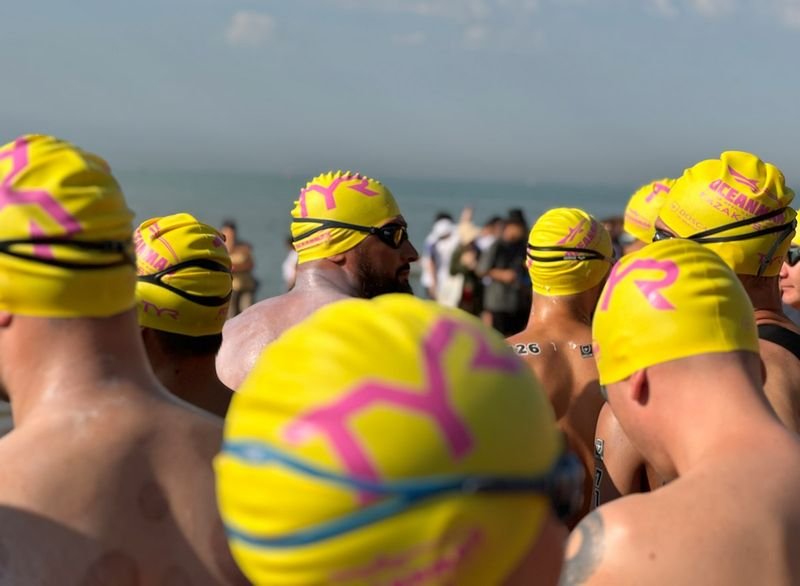
In open water, the cap becomes a visibility tool first and a thermal layer second. Race organizers for open-water events typically require bright caps — neon orange, yellow, or pink — specifically so safety boats and kayakers can track swimmers against dark or choppy water; a black or navy racing cap that looks sleek in a pool becomes a real safety liability in a lake or ocean swim. For cold water, neoprene caps add a layer of warmth that silicone alone doesn’t provide, trading a little speed for a meaningful jump in core temperature retention during long swims.
FINA (now World Aquatics) competition rules also restrict cap size and prohibit anything that could be mistaken for an aid to buoyancy, which is part of why deep-shell caps for natural hair aren’t yet standard at the elite competitive level — the rules were written before brands like Soul Cap existed to serve that need.
How to Put On a Swim Cap Without Ripping It
Most torn caps happen in the first thirty seconds, not from wear over time. Wetting your hands and the inside of the cap first lets it glide over hair instead of grabbing and stretching unevenly, which is where small tears start. Bunch the cap into a loose ring with both hands, hook your thumbs inside the back edge, and roll it forward from the crown rather than trying to stretch it open and drop it on like a shower cap.
Speedo’s own fitting demonstrations for the Fastskin3 racing cap show a two-handed roll technique rather than a one-handed yank — worth watching once even for a casual swimmer, because the motion transfers directly to any silicone cap, not just that model.
7 Best Swim Caps for 2026, by Use Case
There’s no single “best” swim cap — there’s a best cap for what you’re actually doing in the water. These seven cover the range worth knowing about.
- Speedo Silicone Moulded Cap — the default racing cap at most swim shops; snug seal, widely available, built for short-to-medium hair.
- TYR Wrinkle-Free Silicone Cap — thicker silicone that resists the creasing cheaper caps develop after repeated stretching, good for daily lap swimmers.
- Arena Smart Cap — a looser recreational fit designed for comfort over race-day drag reduction, a solid first cap for new swimmers.
- Soul Cap — the deep-shell option for locs, braids, twists, and natural afro-textured hair; roughly 40% more internal volume than a standard cap.
- Zone3 High Visibility Silicone Cap — built in safety-orange and yellow specifically for open-water races and triathlons.
- Sporti Lycra/Fabric Cap — the budget pick for aqua aerobics and recreational swimmers who just need hair contained, not sealed dry.
- FINIS Neoprene Cap — the cold-water choice, adding thermal insulation for open-water swimmers training into fall and winter.


Caring for Your Swim Cap So It Lasts
Sunscreen oil is the real enemy of swim cap longevity, not chlorine. Petroleum-based sunscreens break down latex and degrade the surface tackiness of silicone, which is why a cap that sat in direct sun on a towel for an afternoon ages faster than one used strictly indoors. Rinse the cap in fresh water after every swim, let it air dry fully inside and out before folding, and store it loose rather than tightly rolled — a cap left rolled in a gym bag for months develops permanent crease lines that eventually crack.
A light dusting of talc-free cornstarch powder on a silicone cap before storage keeps the material from sticking to itself, the same trick swim teams use on full-body racing suits. Skip this with latex caps; the powder can accelerate breakdown of that material instead of protecting it.



None of this makes a cap mandatory gear for a casual beach swim. But if you’re doing laps three times a week, training for an open-water race, or just tired of smelling like a pool for the rest of the day, the right cap for your hair and your water — not just the cheapest one at the gift shop — is worth the extra five dollars. For fit and care questions that overlap with the rest of your swimwear, our guides on measuring yourself for a bathing suit that truly fits and chlorine skin care after swimming cover the same no-slip-fit, chemical-exposure logic from a different angle. If you swim often enough to care about a cap, our rash guard guide is worth a look too — sun and chlorine exposure don’t stop at the hairline.
Sources
- Portuguese Journal of Sport Sciences — hydrodynamic drag and swim cap use — measured frontal drag reduction with swim caps at race-pace speeds.
- Journal of Occupational Health — natural rubber latex sensitization prevalence — estimated population-level latex allergy rate used for material comparison.
- World Aquatics (FINA) — competition swimwear and equipment rules — cap size and buoyancy-aid restrictions referenced for open-water and pool competition.
- Speedo — official Fastskin3 swim cap fitting demonstration — two-handed roll technique referenced in the how-to-wear section.