Water Skiing Swimwear: 7 Best Picks
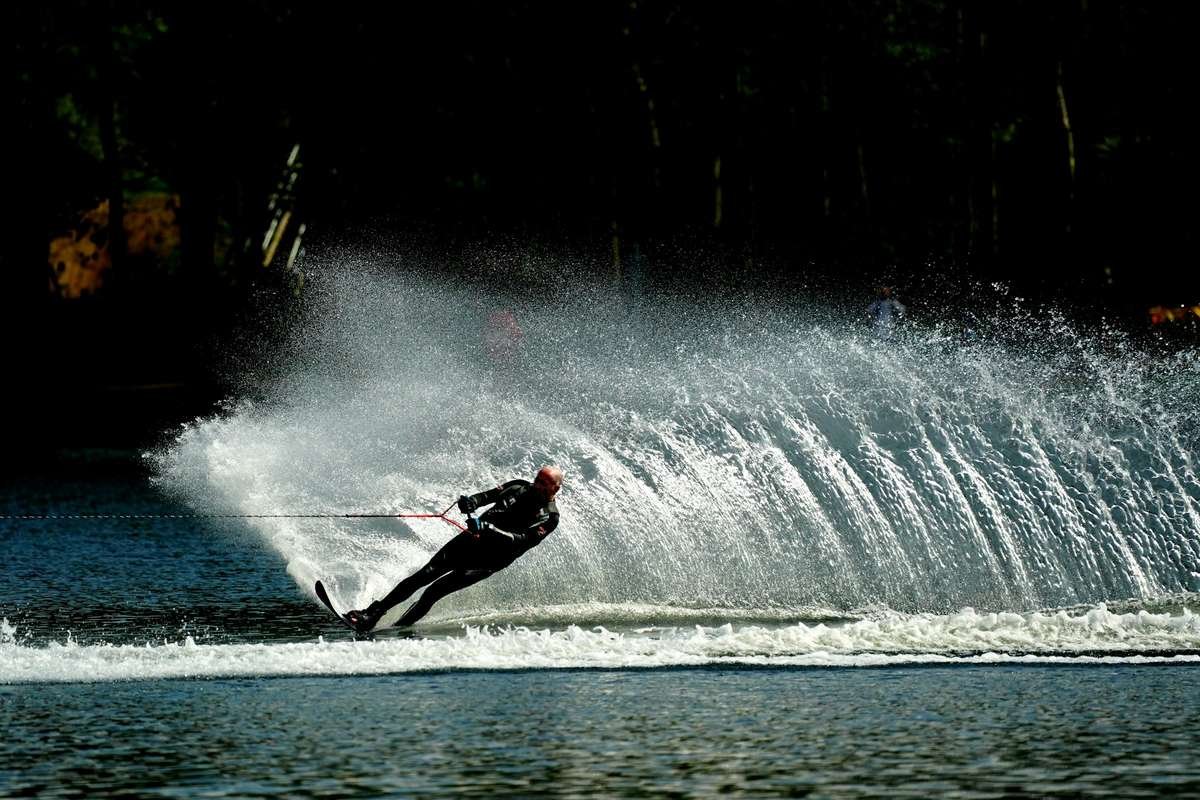
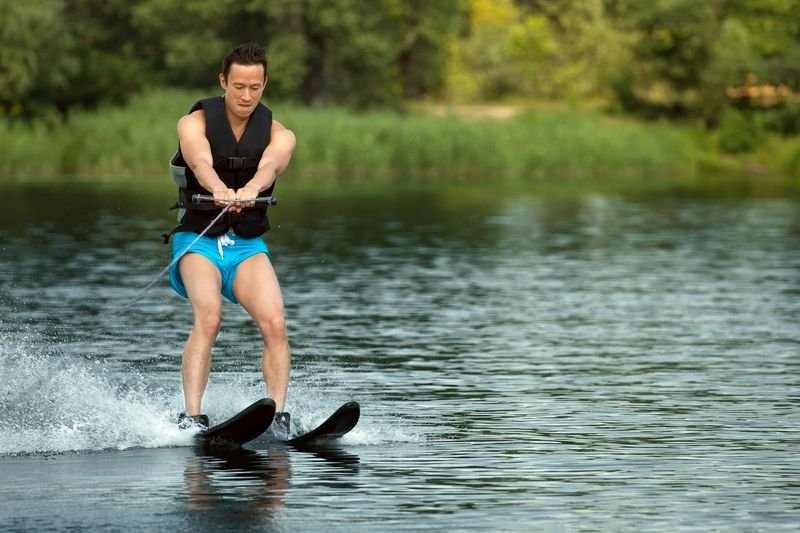
A water skier spends the first two seconds of every run submerged to the shoulders, arms locked straight, skis pointed up, waiting for 300-plus horsepower to go from idle to full throttle in under a second. That’s the deep-water start, and it happens before a single turn is made — the boat accelerates, the rope goes tight, and the skier gets yanked up and forward while still half underwater. A loose waistband or a string-tied top gets tested right there, before the skier has even found their balance, which is a different kind of stress than a wakeboarder gets stepping off a dock or a surfer paddling into a wave.
Why Water Skiing Stresses a Swimsuit Differently Than Wakeboarding or Tubing
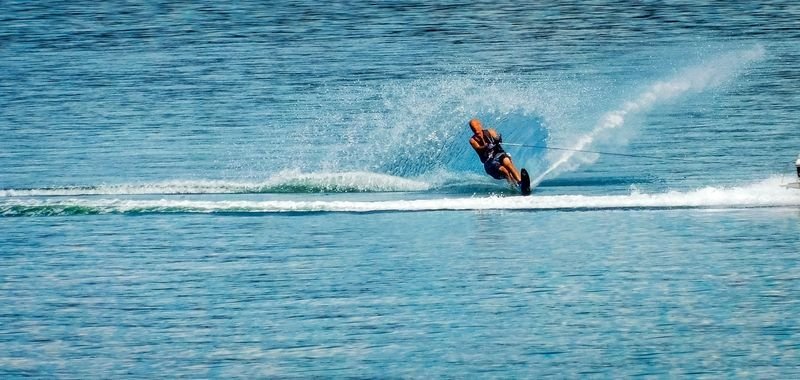
Most swimwear guides lump every tow sport into one “watersports” category, but the physics don’t match. A wakeboarder rides at 16 to 24 mph and starts from a dock or the boat’s swim platform, already standing, already balanced. A water skier starts from the water itself, gets pulled through the deep-water start at speed, and — in slalom — carves hard turns around the wake on a single ski with both feet locked into one binding instead of spread across a board. That single-ski stance puts a twisting, rotational load through the hips on every turn that a two-footed wakeboard stance doesn’t produce the same way.
Competitive slalom only makes the gap bigger. The 2017 World Games women’s slalom and current tournament rules run the boat at a fixed 34.2 mph for men and 30.4 mph for women — roughly 10 to 15 mph faster than a typical wakeboard pull. At that speed, a hard fall doesn’t just tug at a loose tie, it can strip it clean off. None of this means a bikini is off the table. It means the bikini needs a clasp instead of a bow.
1. One-Piece Swimsuit for the Deep-Water Start
A one-piece is the safest default for anyone still working on their deep-water start, and it’s what most instructors recommend for beginners regardless of skill level later on. There’s no tie to come loose and no gap for water pressure to find during that first violent pull out of the water. Look for a compression-weight nylon-spandex blend with a high-cut leg so it doesn’t ride up under a life vest, and a scoop or racerback top that won’t slip off the shoulder when the rope snaps tight. The flatter profile under a vest also means the vest straps grip fabric instead of sliding on it, which matters more here than on a surfboard.
2. Underwire Halter Two-Piece With a Hook-Closure Bottom
If a one-piece feels like too much coverage, a two-piece with real hardware closes the gap. A molded or underwire halter top holds its shape through impact better than a soft-cup triangle top, and a bottom with a side hook-and-eye closure instead of a tie stays put through a hard fall the same way a weightlifting belt stays put — because it’s buckled, not knotted. Pair a high-waisted bottom with the top for extra coverage during the deep-water start, when the suit is briefly doing all the work before the skier’s legs are in a position to help.

3. Rash Guard Over a Secure Bikini for Sun and Rope Burn
A full lake day means hours of sun exposure with almost no shade, and a short-sleeve rash guard worn over a bikini set solves two problems at once: it blocks UV on the shoulders and upper arms, and it stops the tow rope handle from chafing skin on a tight grip during a long pull. A sporty, belly-covering short-sleeve set with a built-in top layer does the same job without needing to add a separate rash guard, which is one less thing to pack in the boat bag.

4. Competition-Style Tournament Suit for Slalom Courses
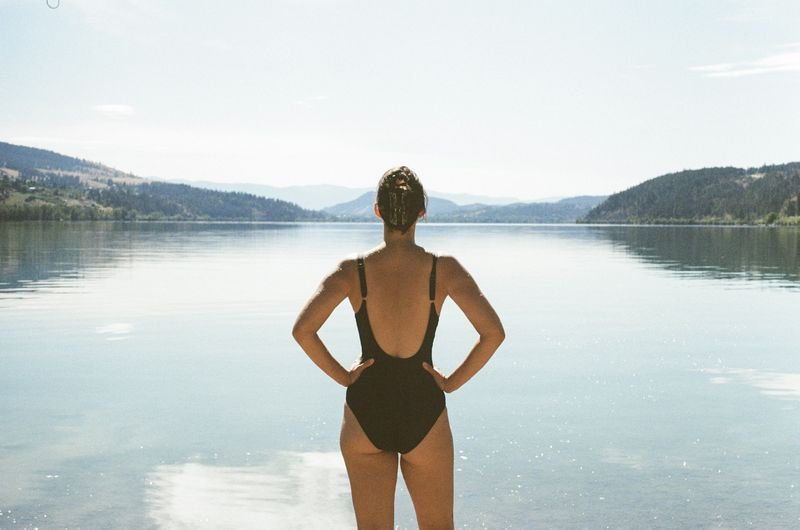
Skiers running an actual slalom course at tournament speed — that 30 to 34 mph range — often move to a purpose-built tournament suit rather than general swimwear. These are cut close to the body in a thick, chlorine- and UV-resistant Lycra, with reinforced seams at the hip and a built-in compression panel that doubles as light buoyancy. They’re not cheap and they’re not necessary for a casual Saturday pull behind the boat, but if you’re buoy-chasing at tournament speed every weekend, a general-purpose bikini is the wrong tool for that specific job.
5. Short Wetsuit or Neoprene Jane for Early-Season Lakes
Lake water before early summer can sit in the low 60s even when the air feels warm, and a short-sleeve wetsuit or a neoprene “Jane” (sleeveless, shorts-length) solves the cold without sacrificing range of motion the way a full wetsuit does. Neoprene also adds a layer of padding against the deep-water start and hard falls, which is a nice side benefit for anyone still learning. Save the full wetsuit for genuinely cold water — anything below 65°F — and a Jane or shorty for everything in between.
6. High-Visibility Color for the Boat Spotter
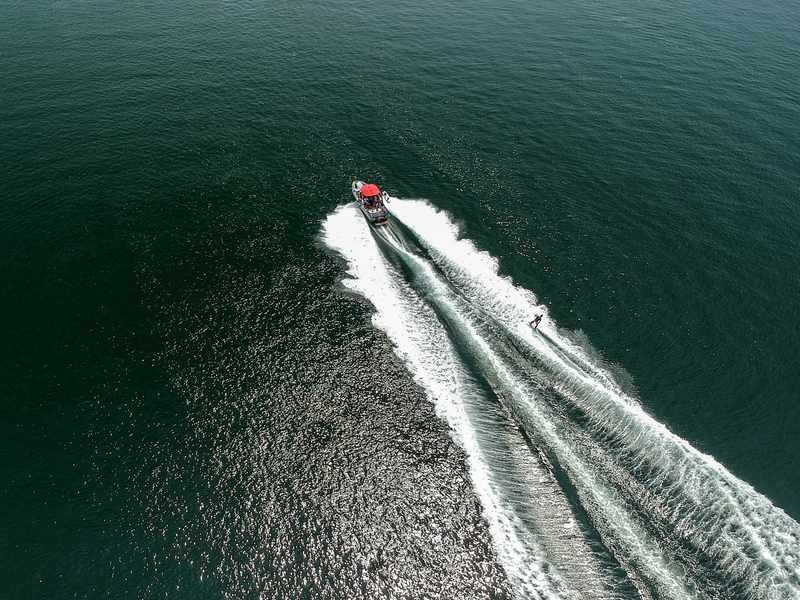
Most swimsuit guides treat color as a styling question. On a ski boat, it’s a safety one. Water safety researchers at 10 Tampa Bay tested how swimsuit colors actually look underwater and found that common suit colors — navy, black, pale blue — blend into the water within a few feet of depth, which matters directly to the spotter in the boat whose entire job is to keep eyes on a skier after a fall. Neon orange, bright yellow, and hot pink stay visible far longer. If you already lean toward bright colors for sun protection gear, apply the same logic to the suit itself.
7. Secure-Closure Two-Piece If You Still Want a String Bikini
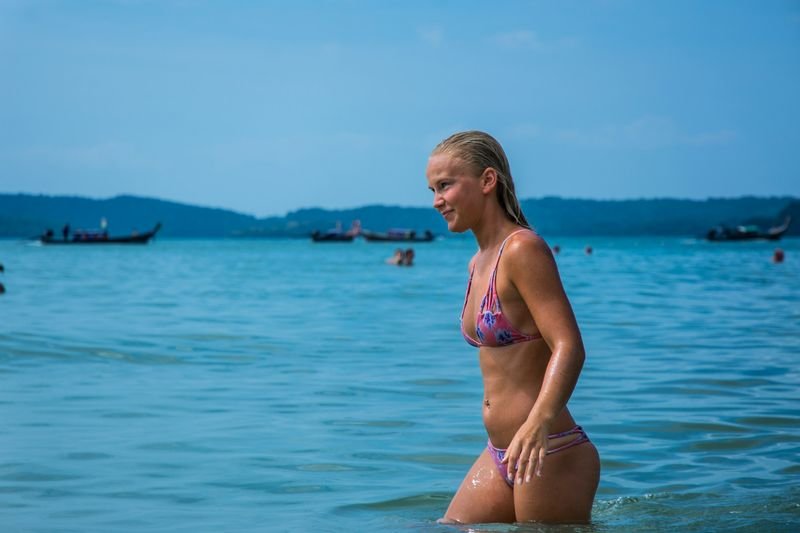
A classic string-tie bikini, like the one most people picture when they think “bikini,” is the single most common thing to come loose during a hard fall at speed — the drag on wet fabric mid-tumble is enough to work a bow free in one rotation. That doesn’t rule out a two-piece entirely. It rules out the tie. Look for the same silhouette in a version with side clasps, snap closures, or a wide elastic band instead of two strings, and keep the string-tie version for the dock and the sandbar instead of the actual run.
Water Skiing Speeds Compared to Other Tow Sports
Here’s the number most swimwear guides skip entirely, and it’s the one that actually explains why skiing wears suits differently than other tow sports:
| Activity | Typical Speed |
|---|---|
| Barefoot skiing | 30–40 mph |
| Tournament slalom (men) | 34.2 mph |
| Tournament slalom (women) | 30.4 mph |
| Jump skiing | 24–35 mph |
| Recreational slalom | 19–36 mph |
| Shaped/combo skiing | 20–30 mph |
| Wakeboarding | 16–24 mph |
| Trick skiing | 11–21 mph |
| Tubing | 8–25 mph |
Barefoot skiers run faster than almost anyone else behind a boat, which is part of why barefoot competitors near-universally wear tournament-style suits rather than standard swimwear — at 35-plus mph, fabric drag alone can do real damage to loose-fitting gear. Recreational slalom has the widest range of the group because it covers everyone from a first-timer at 19 mph to an intermediate skier pushing 30, which is exactly why “just wear a regular swimsuit” is bad advice for the sport as a whole. The right suit depends on where in that range you’re actually skiing.
Fit-Check Before You Leave the Dock
Run through this before the boat pulls away from the dock, not after the first fall. Stand up, raise both arms overhead, and twist at the hips — if a top shifts or a bottom rides up from that alone, it will move far more under load. Tug the waistband; it should resist without pinching. If the suit has any tie at all, check that it’s double-knotted, not just looped, and consider swapping it out entirely if you’re planning an aggressive session.
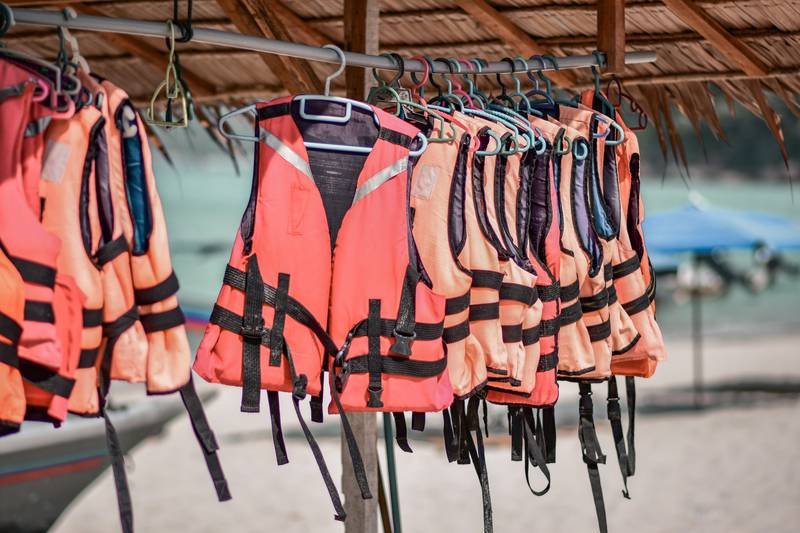
Pair the suit with the rest of your setup before you get in the water. A life vest or impact vest needs to sit flush against the suit, not over bunched folds of fabric, so try the vest on over the suit at the dock and adjust both together. A wide waistband that fights with vest straps is a fit problem you want to catch on dry land, not three pulls into the set.

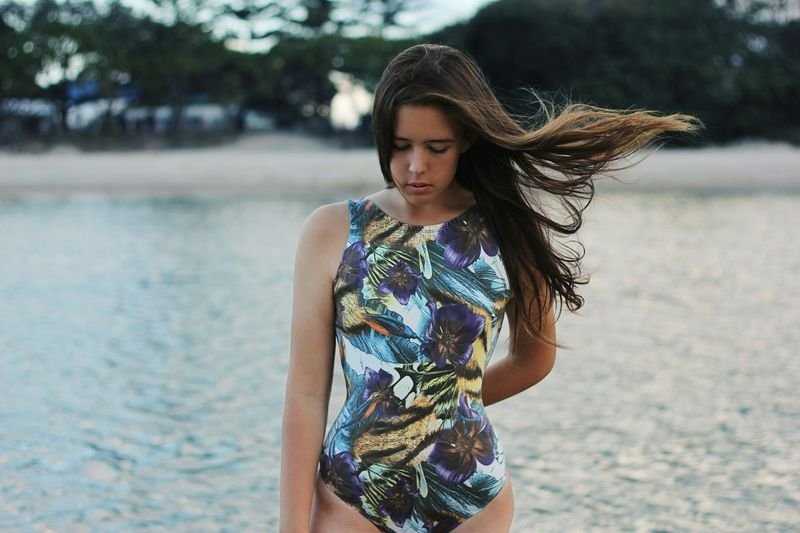
None of this is about buying the most expensive suit in the shop. A $20 one-piece with a solid racerback and no ties outperforms a $90 designer bikini with string closures the moment the boat hits 30 mph. Fit and hardware beat price every time the rope goes tight.
Common Water Skiing Swimwear Questions
Can you wear a bikini water skiing? Yes, but skip the string ties. A bikini with a clasp closure, a wide elastic band, or a high-waisted bottom handles a deep-water start and a hard fall the same way a one-piece does — it’s the hardware, not the amount of fabric, that decides whether it stays on.
Do you need a wetsuit to water ski? Only when the water is cold. Above roughly 70°F, most skiers are comfortable in a swimsuit alone, and plenty of recreational skiers never own a wetsuit at all. Below 65°F, a shorty or a Jane earns its keep, and a full wetsuit only makes sense for genuinely frigid early-spring or late-fall lake sessions.
What should beginners wear for their first time? A one-piece or a high-waisted two-piece with a locking closure, paired with a properly fitted life vest. First-timers fall more often and spend more time in the deep-water start position than experienced skiers, so the suit needs to survive repeated resets, not just one clean run.
Why do tournament skiers wear different suits than recreational skiers? Speed and repetition. A tournament slalom skier is running a course at 30-plus mph multiple times in a session, compared to a recreational skier who might ski at 20 mph for a few passes. The fabric, seams, and closures on a tournament suit are built for that repeated, higher-speed load in a way a standard swimsuit isn’t designed to handle.
Sources
- Water skiing at the 2017 World Games – Women’s slalom — tournament slalom boat speeds
- British Water Ski and Wakeboard – Tournament Disciplines — slalom, trick, and jump event structure
- MotorBiscuit – What Is the Best Speed for Water Skiing? — speed ranges by discipline