
Open Water Swimming Swimwear: 7 Best Picks
A lap pool tells you exactly where the walls are. A lake or an ocean doesn’t, and neither does the boat that’s about to cross your line fifteen feet off your left shoulder. The U.S. Swim School Association’s visibility research, which draws on CDC drowning data, found that neon yellow, bright orange, neon green, and bright pink swimsuits consistently rank highest for visibility in pools, lakes, and oceans — while blue “essentially disappears” underwater and white mimics surface glare. That’s not a style note. It’s the single easiest change an open water swimmer can make before ever touching a wetsuit or a tow float. Here are seven ways to put that color science to work, plus the gear that backs it up.

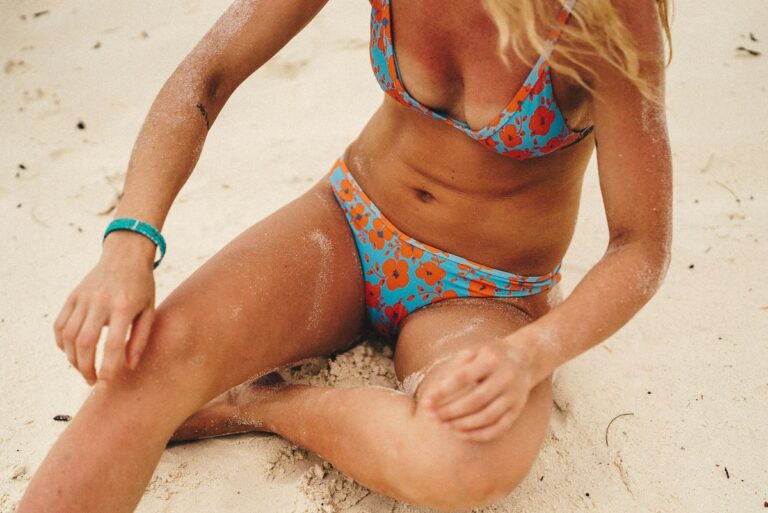
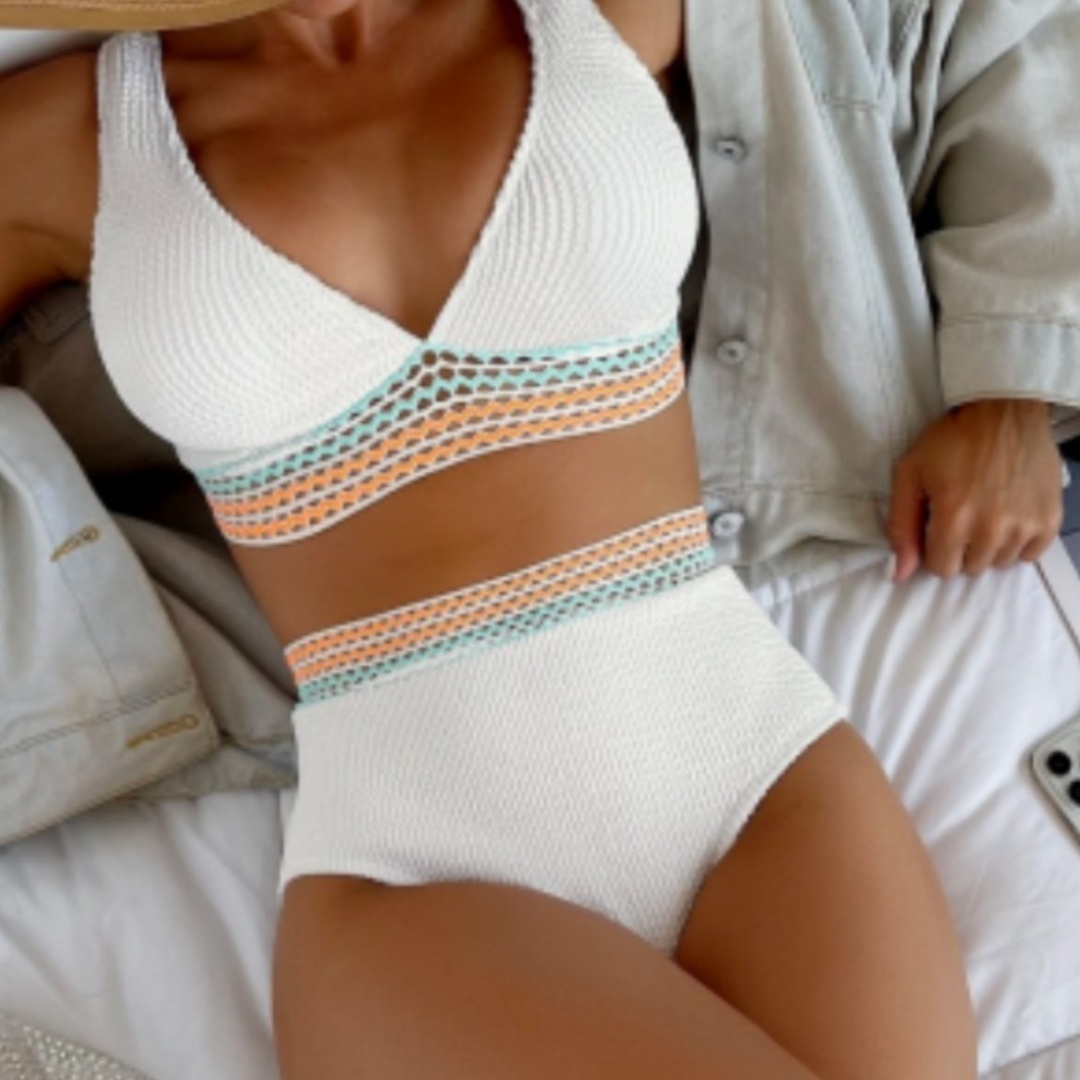
A soft sunset palette looks great on the sand, but it’s the wrong call for an unsupervised open water swim.
Why Color Is the First Safety Decision You Make
Most swimmers think about open water risk in terms of currents, cold shock, or distance. Color rarely makes the list, and that’s a mistake. A human head bobbing in wind chop looks almost identical to a dark wave crest from a boat or a kayak forty meters out — which is exactly why the U.S. Masters Swimming community recommends neon green, pink, yellow, or orange caps over anything dark or white. The UK’s National Water Safety Forum data, compiled by the Outdoor Swimming Society, found that swimmers made up 22 percent of accidental drownings in 2021, even though an estimated 5 million people complete roughly 270 million open water swims a year there without incident. Swimming itself is low risk. The incidents that do happen cluster around exactly the conditions a bright suit and cap are built to address: low light, choppy water, and traffic that doesn’t expect a person to be where you are.
A twenty-dollar neon rash guard does more for your safety margin than another month of base training. It won’t make you faster. It will make you the thing a boat driver notices half a second sooner, which is the half second that matters.
7 Best Open Water Swimming Swimwear Picks for Visibility
1. A Solid Blaze-Orange or Safety-Yellow One-Piece
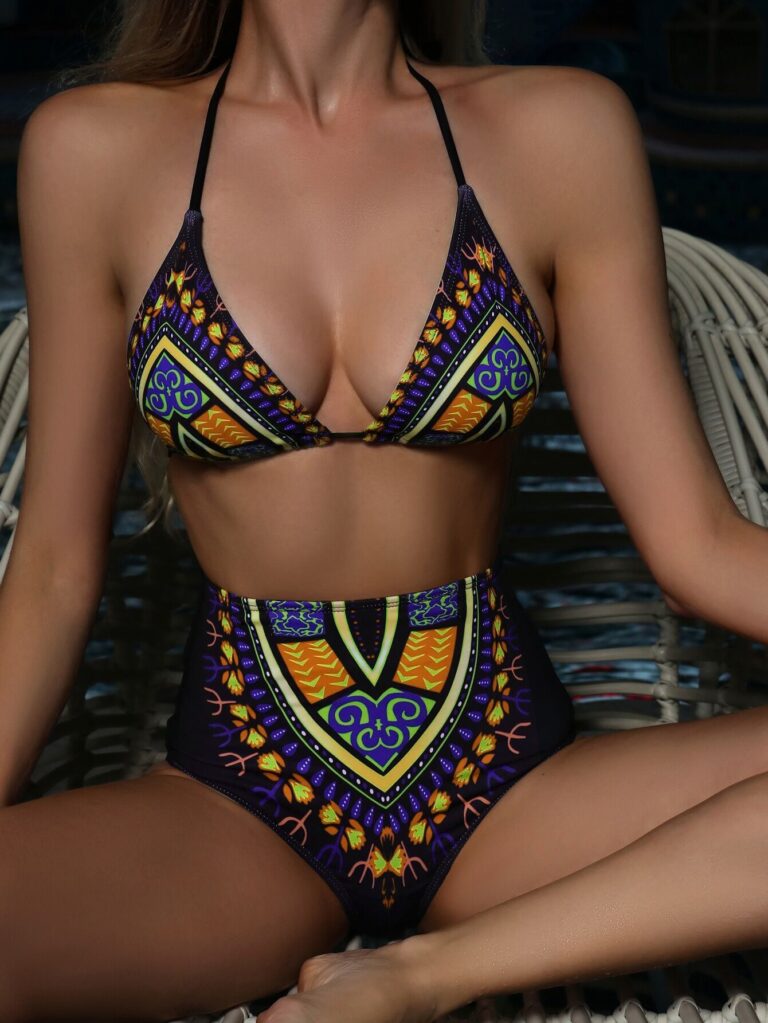
Skip the print. A single saturated block of color reads from further away than a busy pattern does, and blaze orange or safety yellow are the two colors boat operators are trained to notice on the water. If you only change one piece of gear, make it the suit itself rather than an accessory layered on top of a suit that still blends in underneath. A patterned suit might photograph well on a beach towel, but from forty meters out on choppy water, the pattern disappears and all that’s left is whatever the dominant color happens to be.
2. A High-Vis Rash Guard Over Your Existing Suit
If you already own swimwear you like and don’t want to replace it, a neon rash guard solves the visibility problem without touching your wardrobe. This is also the pick for triathlon swimwear setups, where a rash guard can go on and off quickly between the swim leg and transition without disrupting a tri suit built for the bike and run.
3. A Color-Blocked Bikini With a Bright Panel
A full neon suit isn’t for everyone, and it doesn’t have to be. A color-blocked set with a wide pink or green panel still reads as bright from a distance, especially against blue or grey water, while giving you more styling range on the beach before and after the swim.
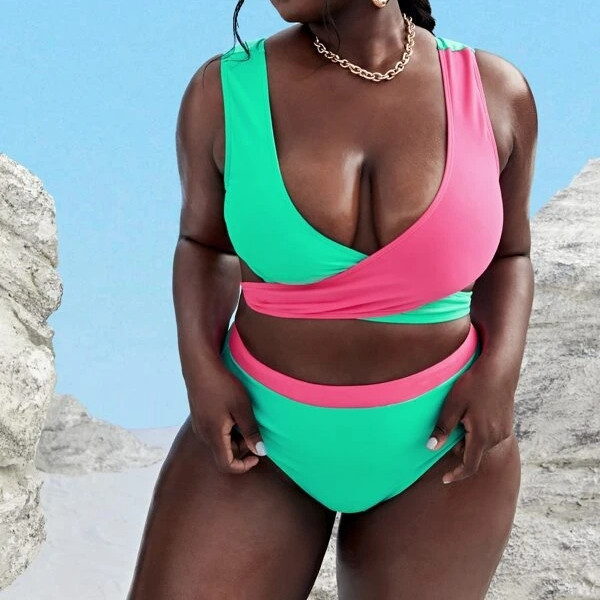
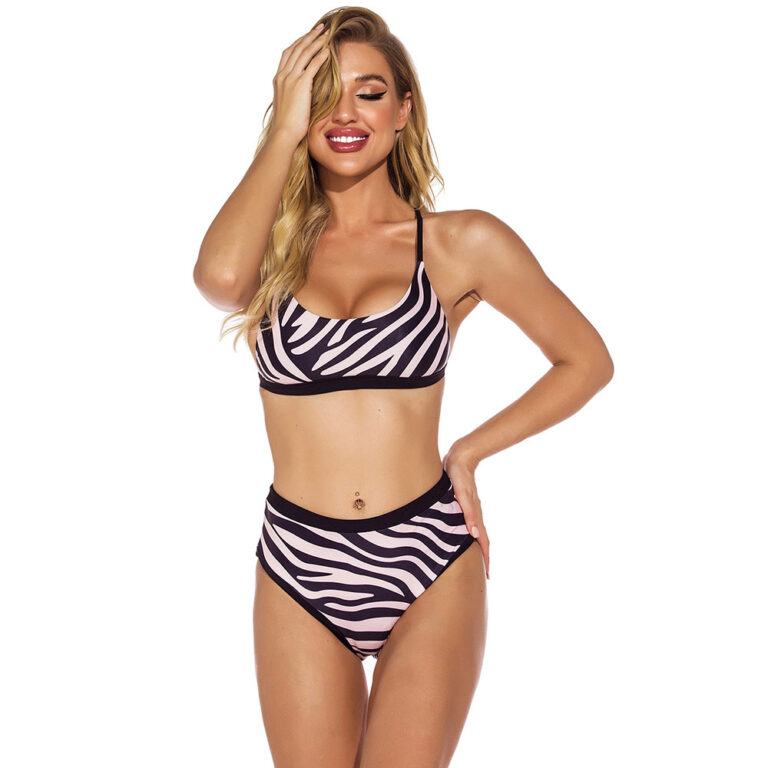
4. A Hot Pink or Magenta High-Waist Set
Pink is one of the four colors that consistently test best for visibility, and a saturated magenta or hot pink holds up in both bright midday glare and the flatter light of early morning swims — the two conditions where open water visibility problems happen most.


Pink and bright caps hold their contrast against both clear and murky water in a way dark colors don’t.
5. A Suit With a D-Ring or Loop for a Tow Float
Some athletic and lap swimming swimwear styles come with a small waist loop meant for clipping on a tow float or whistle. It’s a small detail, but it means you’re not threading a belt over a suit that wasn’t built to carry one, which matters more once you’re thirty minutes into a swim and adjusting gear one-handed.
6. A Neon UV Long-Sleeve Swim Shirt
For distance swims where you’re in the water an hour or more, sun exposure becomes its own problem. A long-sleeve rash guard in safety yellow or orange does double duty — UPF sun protection plus the visibility boost of a bright, high-surface-area garment that shows more color to a spotter than a bikini top alone.
7. A Contrast-Trim Suit for a Middle-Ground Option
Not every swimmer wants to go full neon, and that’s fair. A black or navy suit with bright piping, straps, or side panels in orange or yellow still adds a visible accent without changing your whole look. It’s not as effective as a solid bright suit, but it’s meaningfully better than an all-dark one.
Caps and Tow Floats: The Visibility Layer Your Swimsuit Can’t Replace
Swim England’s official open water kit guide treats a tow float as safety equipment, not an accessory — it floats behind you on a short leash, doubles as a flotation aid if you need to rest, and in its own words, “makes you more visible to boats, lifeguards and other water users.” Brands like Orca and TYR build dedicated high-vis neoprene caps in pylon orange specifically because a swim cap covers more surface area than hair does and holds its shape better in chop than a bare head.

A neon cap holds its contrast even when the rest of your body is submerged.
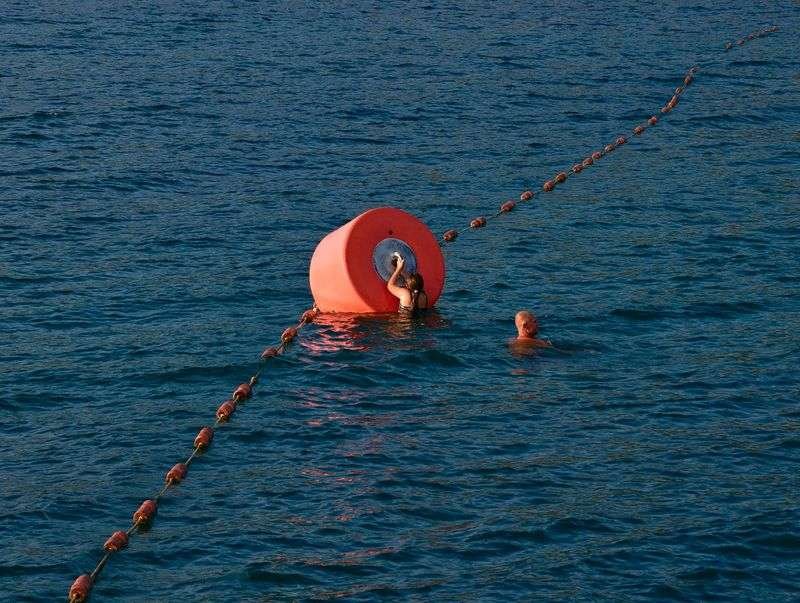
A tow float stays above the surface even when you’re mid-stroke, unlike a cap that dips in and out of view.
Swim England also recommends clipping a pealess whistle to the float for anyone swimming an unsupervised route — it floats, stores easily, and works wet, which a standard pea whistle doesn’t. None of this replaces swimwear color. It stacks on top of it. A bright suit gets you noticed at a distance; a tow float and whistle give you a way to be found and heard once someone’s already looking.
Where Visibility Actually Saves You
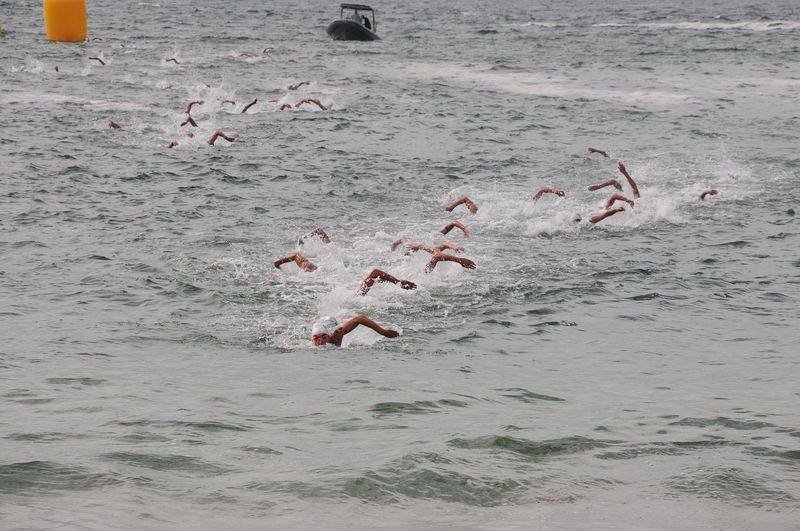
Open water risk isn’t evenly distributed. It concentrates at dawn and dusk swims, in water with active boat or jet ski traffic, and anywhere chop or glare breaks up the water’s surface enough to hide a swimmer’s head. A motorized boat moving at even modest speed covers ground fast enough that a few extra seconds of recognition time is the entire safety margin — which is why organized open water races mark the field with a safety boat and require bright caps as a condition of entry, not a suggestion.
Picture the two scenarios side by side. In a permitted race, a safety boat crew is actively scanning for swimmers, the course is roped or buoyed, and every cap in the water is the same approved color. In a Tuesday evening lake swim with no event, no roped lane, and no one specifically watching for you, a jet ski operator has zero expectation that a person might be in that stretch of water at all. The second scenario is the one where color does the most work, precisely because nobody’s looking for you yet.

Race organizers require bright caps for exactly this reason — a safety boat has to find swimmers fast.
Recreational lakes and rivers are the harder case, since there’s no safety boat and often no marked swim area at all. If you’re swimming a route that crosses a boat channel or a spot where boating traffic is common, treat visibility gear as non-negotiable rather than optional. The same color science that gets you noticed from a race boat works just as well — or better, since nobody out there is specifically looking for you — on an unmarked lake.
Unmarked lakes and rivers carry more risk than organized races, since boaters aren’t expecting swimmers at all.
What a Bright Swimsuit Can’t Fix
A neon suit doesn’t fix bad sighting technique — you still have to lift your head and look every six to ten strokes to hold a straight line. It doesn’t replace a swim buddy or a plan for who knows you’re in the water and when you’re expected out. It won’t make you visible in fog, heavy rain, or after dark, conditions where color stops mattering and reflective or lit gear takes over instead. And it’s not a substitute for checking local conditions — currents, water temperature, and posted advisories — before you get in. Color is the cheapest, easiest upgrade in your open water kit. It’s not the whole kit.

Check conditions before you go in — no suit color substitutes for knowing what the water’s doing that day.
Building a Visibility-First Open Water Kit
Start with the suit, since it’s the largest block of color in the water and the one piece you’re already planning to buy. Add a cap in a contrasting neon — not the same color family as your suit, since contrast against both the water and your own gear matters more than matching. Clip on a tow float if you’re swimming anywhere without a lifeguard or safety boat, and put a pealess whistle on it. That’s the full list. It costs less than a single pair of running shoes and it’s the difference between being a shape in the water and being the swimmer someone spots from the dock.
Budget for it the way you’d budget for any piece of gear that only does one job but does it well. A neon cap runs ten to twenty dollars. A basic tow float lands in the thirty to fifty dollar range, less if you catch an off-season sale. Neither replaces the suit — they stack on top of it, and the three together cost less than most swimmers spend on a single wetsuit. If money is the constraint, buy the cap first. It’s cheapest, it’s the easiest to swap between swims, and it sits highest above the water of anything you’ll wear.
One more practical note: wash a new neon suit or cap before its first open water swim. Dye can bleed slightly in the first few cycles, and a faded cap six months in loses some of the saturation that made it visible in the first place. Check your gear for fading each season the way you’d check a wetsuit for cracks at the seams — it’s a small habit that keeps the visibility math working the way it’s supposed to.
The swim leg of your next open water race or lake session starts with what the safety boat sees before it starts with your stroke count. Build the kit first.
Sources
- U.S. Swim School Association — Which Swimsuit Colors Can Help Reduce Drowning Risk — visibility testing data on swimsuit colors, citing CDC drowning statistics
- Swim England — Open Water Swimming Kit Essentials — official guidance on tow floats, caps, and pealess whistles for open water safety
- Outdoor Swimming Society — Understanding Drowning Statistics — National Water Safety Forum data on open water swimming risk