Green Bikini: 9 Best Styles for 2026
Green overtook coral as the color buyers searched for most in early 2026 swimwear drops, according to trend trackers watching the pre-season collections. Three shades are doing the heavy lifting: pistachio, emerald, and mint. None of them behave the same way on skin, in water, or in photos, which is the part most roundups skip past.
Which Shade of Green Actually Flatters Your Skin Tone
Darker greens carry more pigment, and pigment reads as richness against warm skin. Emerald and forest green make olive and deep undertones look lit from within rather than just tanned — the green pulls out the gold already in the skin instead of fighting it. If your skin leans warm or deep and you’ve only ever reached for black or navy, emerald is the easiest swap to make.
Lighter, cooler greens work the other direction. Sage, olive, and mint sit close to neutral on the color wheel, which is why they read as “universally flattering” more often than almost any other shade family. Fair skin and warm undertones both wear sage well because it doesn’t compete with pink or gold undertones the way a saturated color would.
If you’re not sure which camp you’re in, check the veins on the inside of your wrist in natural light. Blue or purple veins usually mean a cool undertone — lean toward mint or sage. Green or olive-looking veins mean a warm undertone — emerald and olive will do more for you than mint will. If you genuinely can’t tell, you’re probably neutral, and sage is the shade least likely to clash either way.

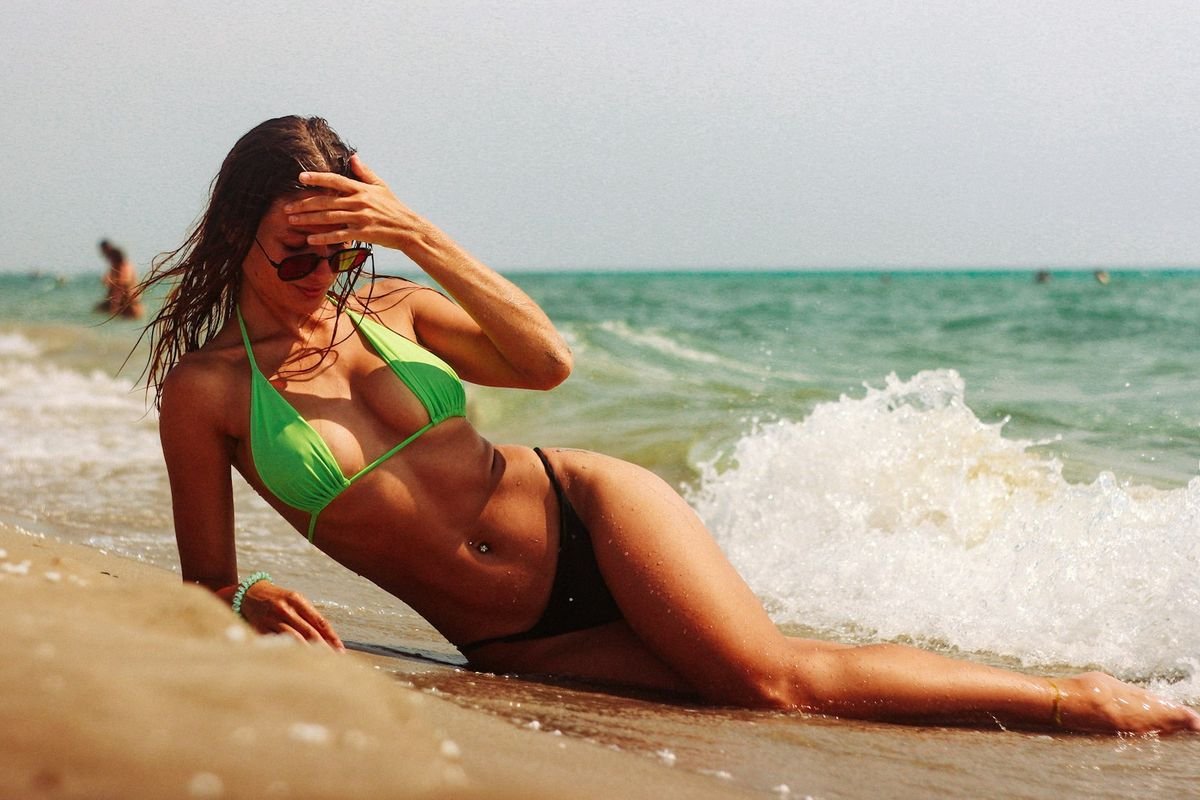
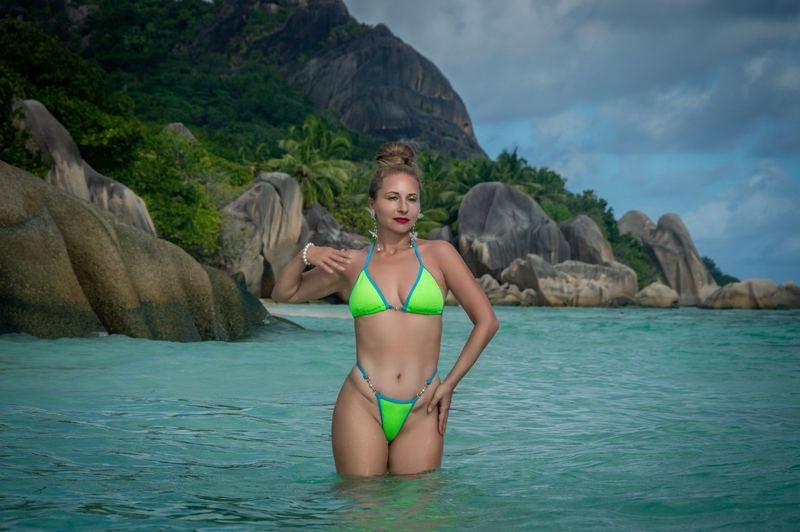
Bold, high-chroma greens — lime, chartreuse, neon — need contrast to work. They look best on deeper skin tones where the brightness has something to bounce off of. On fair skin, the same shade can wash out the face in daylight photos, which is the opposite of what a vacation bikini is supposed to do. If you love neon green but have fair skin, keep it to the bottoms or a trim detail rather than the whole top.
9 Green Bikini Styles Worth Shopping in 2026
Green shows up differently depending on the cut. A few of these are new for the season, a few are proven sellers that just happen to come in green this year.
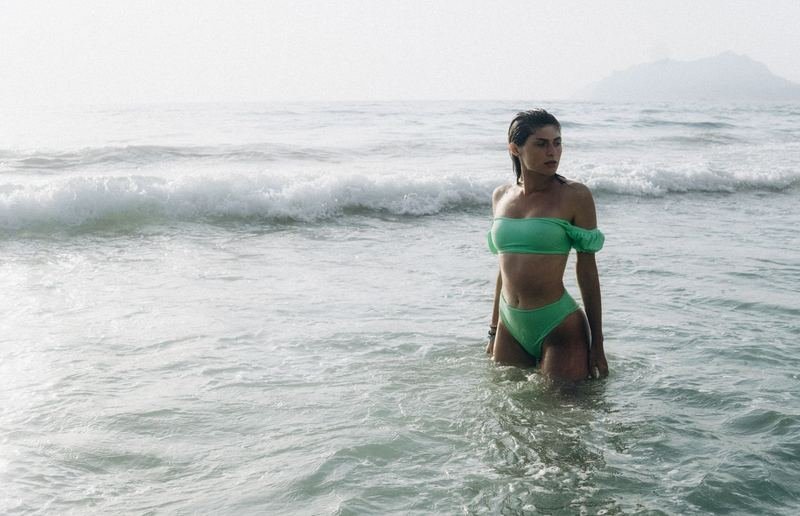
- Emerald triangle top — the easiest entry point if you’ve never worn green before. Pairs with almost any bottom.
- Sage green high-waisted set — the retro silhouette that’s dominated 2026 so far, now in a color that doesn’t scream “trend.”
- Mint bandeau with adjustable straps — a cooler-toned option for pool days, less intense than emerald under direct sun.
- Neon lime string bikini — built for a deep tan and a statement entrance, not for subtlety.
- Olive textured two-piece — a crinkle or ribbed fabric in olive reads more “resort” than “pool party.”
- Green ombre one-piece — fades from deep forest to pale sage, forgiving for anyone who wants coverage without going matte.
- Forest green underwire top — the structured option for anyone who wants more support than a triangle top gives.
- Pistachio three-piece with cover-up skirt — this season’s breakout shade, paired with a matching wrap for in-between moments.
- Chartreuse cut-out one-piece — the boldest pick on this list, works best with minimal jewelry so the suit stays the focal point.

If you only buy one green suit this season, make it something in the sage-to-olive range. It’s the shade that moved the least between the “flatters everyone” claim and what actually showed up in the research — square necklines in emerald and chocolate brown were called out specifically as the season’s sleekest cut, which tells you the darker greens aren’t just a safe choice, they’re the directional one.
Picking the Right Green for the Occasion
A pool day and a reef snorkeling trip call for different greens, and it’s not about style — it’s about what the water and the lighting do to the color. Chlorinated pool water is harder on bright, high-chroma shades like neon lime because the bleaching effect shows up fastest where there’s the most contrast to lose. Saltwater and sun are a different problem: UV breaks down dye molecules regardless of color, but it shows first on saturated shades because there’s more pigment to break down.

For a week at a resort pool, sage or mint holds up visually better across repeated chlorine exposure because the color has less distance to fade before it looks “off.” For a one-off beach day where photos matter more than longevity, emerald or neon lime earns its keep — you’re not wearing it daily, so fade risk matters less than how it looks against sand and water in the moment.
Beach volleyball, paddleboarding, or anything with a lot of movement is better in a darker green. Lighter mint and sage show sand and sunscreen marks more visibly than emerald or forest green, which is a small detail nobody mentions until the suit is already streaked halfway through the day.
Packing for a trip that covers both a pool and open water? Bring two greens instead of one. A darker olive or forest for the pool days where chlorine exposure adds up, and a lighter mint or emerald for the one or two beach days where the photos matter more than the fabric’s long-term condition. It’s the same logic behind packing both a red bikini and a blue bikini for a trip instead of betting everything on one color working for every setting.
Styling a Green Bikini: Pairings, Cover-Ups and Accessories
Green is one of the few bikini colors that pairs better with neutrals than with other brights. White, tan, beige, and black all let the green do the work instead of competing with it. Gold jewelry reads warmer against green than silver does, which matters more on emerald and olive than it does on mint.
- Cover-ups: linen skirts, crochet pants, or an oversized button-down in white or tan
- Accessories: gold hoops, a straw hat, tan sandals, tortoiseshell sunglasses
- Texture pairings: raffia bags and woven sandals read more intentional with green than smooth leather does
One thing most styling guides skip: if you’re wearing two different greens at once — say, an olive cover-up over a mint suit — keep at least one of them muted. Two saturated greens next to each other can look more like a costume than an outfit. The contrast between a bold suit and a neutral wrap is what makes the color read as styled rather than accidental. The same principle shows up in our color block swimwear guide — one dominant shade reads intentional, two competing ones read busy.
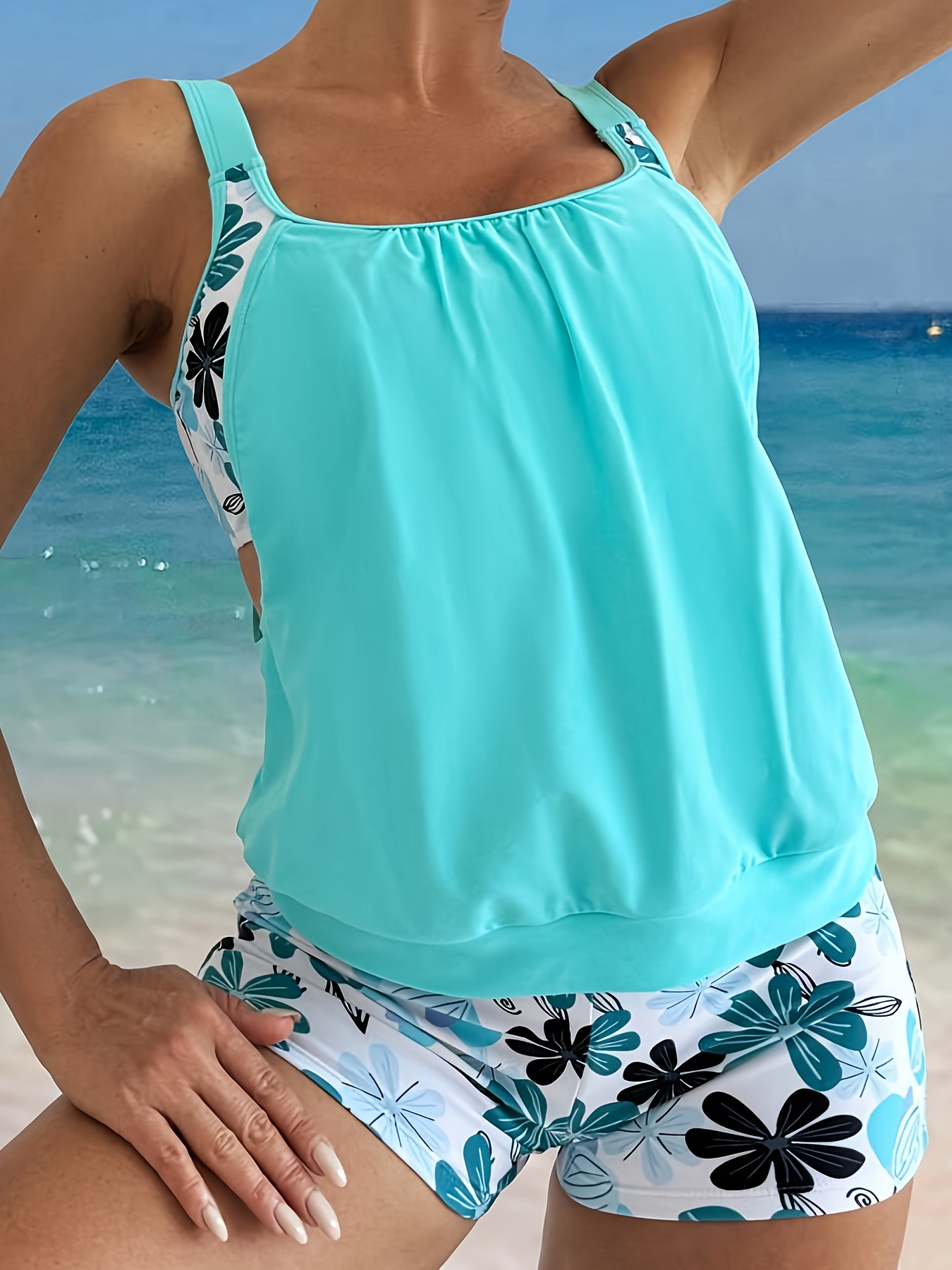
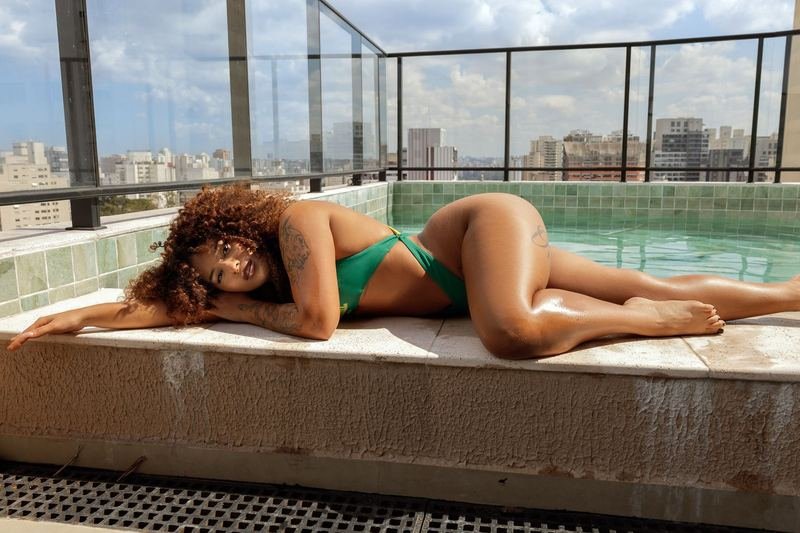
Mint and sage both work across body types without the styling gymnastics some bold colors require — that’s part of why they’re showing up on more size-inclusive swim lines this season than neon or chartreuse are. If you’re shopping a fuller bust or a plus-size cut, a muted green gives you more flexibility in cover-up and accessory choices than a high-contrast neon does.
Does Green Fade Faster? What Actually Happens in Chlorine and Sun
No, not inherently. The idea that green dye is chemically weaker than other colors isn’t backed by anything — what actually determines how visible fading looks is contrast and saturation, not the hue itself. Dark, saturated colors like forest green, navy, and black hide chlorine and UV damage better because there’s more pigment depth to lose before the eye notices a change. Light and bright colors — mint, neon lime, pale pistachio — show the same percentage of fade much sooner because they started with less pigment to begin with.
Chlorine and strong detergents are consistently named as the fastest fabric killers for any swimsuit color, working alongside sunlight rather than separately from it. Pre-soaking a new suit in a mild vinegar solution before its first wear is a real technique swimwear sellers recommend to help set the dye before chlorine gets to it — it won’t make a neon suit chlorine-proof, but it slows the first wave of fading that happens in the first few swims.
The practical takeaway: if you’re buying green for a pool-heavy trip, lean darker. If you’re buying it for a handful of beach days with rinse-and-dry care, the lighter shades are fine — you’re just not giving chlorine enough repeated exposure to matter.
Green Bikini vs. the Rest of the Color Wheel
Against red or coral, green is the cooler, calmer option — better for someone who wants to stand out without looking loud. Against blue, green skews warmer and pairs more naturally with gold jewelry and tan skin, where blue leans toward silver and cooler undertones. Black still wins on “safest choice,” but green is the shade most likely to get a second look in photos without requiring a bold cut to do it.
If you already own a black or navy suit and you’re deciding what to add next, green is a stronger pick than another neutral. It photographs differently in every lighting condition — warmer at golden hour, brighter at midday — which is more range than most single-color suits give you.
Sources
- 9 Bikini Trends of 2026 — BeachLife — pistachio, emerald, and mint named as the season’s lead green shades.
- Summer 2026 Swimsuit Trends — Marie Claire — square necklines in emerald green and mint’s celebrity moment.
- How to Style a Green Bikini or Swimsuit — FindAWaybyJWP — skin tone shade matching and neutral pairing guidance.
- Protecting Swimsuits from Chlorine — Performance Pools — chlorine, detergent, and sunlight as the three fastest fabric fade causes.