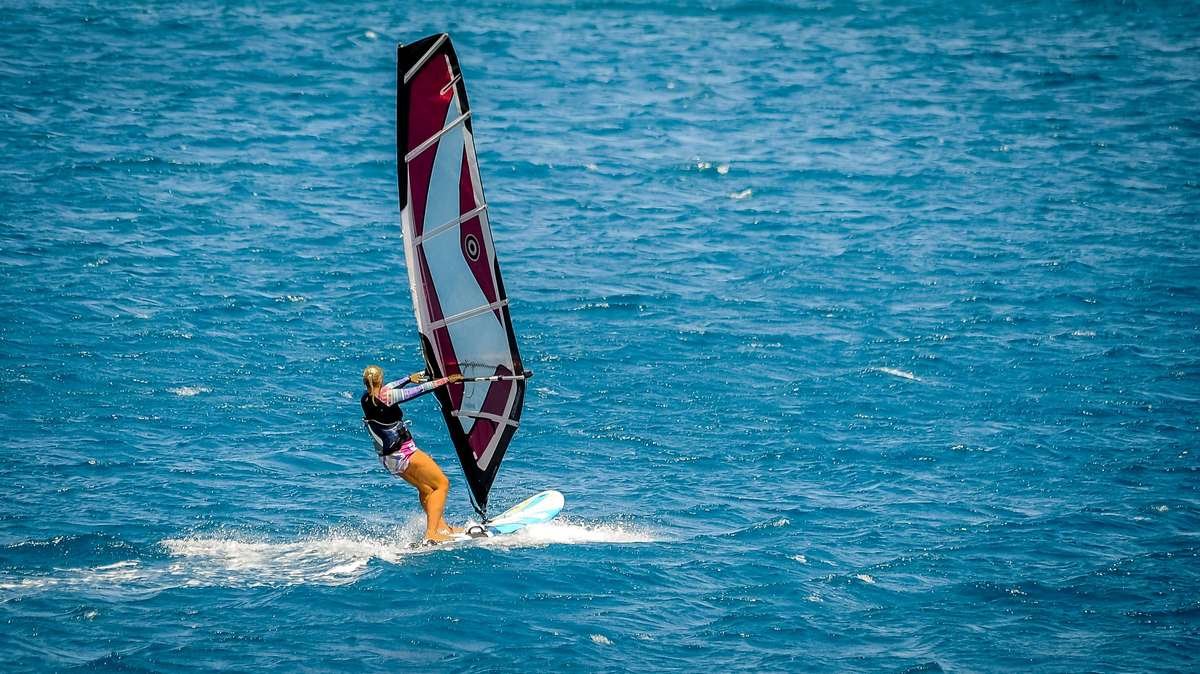
Windsurfing Swimwear: 7 Best Picks
A recreational windsurfer spends almost no time sitting down. Unlike a surfer who paddles prone between waves or a kayaker braced in a seat, a windsurfer stands the entire session, leaning back against sail tension with a harness line taking the strain off their arms. That line runs from the boom to a hook on a harness worn at the hip or between the legs, and it carries real, sustained load — not a quick tug like a wakeboard pull, but a continuous pressure point that rides directly against whatever swimwear is underneath it.
Why Windsurfing Stresses a Swimsuit Differently Than Other Watersports
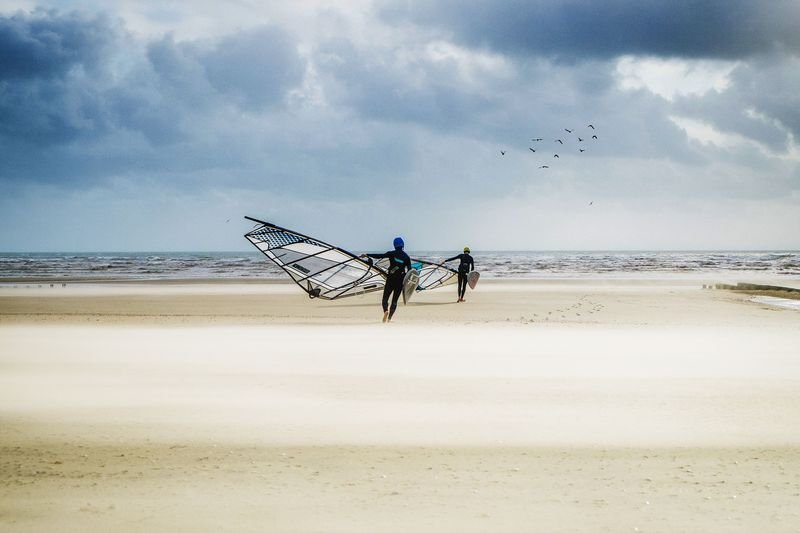
Most swimwear guides treat windsurfing as just another board sport and recommend the same suit they’d push for wakeboarding or water skiing. That misses the two things unique to wind-powered sailing: the harness, and the wind itself. A wakeboarder gets yanked by a cable in short bursts between jumps. A windsurfer hooks into a harness and stays loaded against it, standing and leaning, for most of an hour or more at a stretch. That’s a sustained diagonal load across the hip and waistband, not a momentary one, and it happens on dry land as well as water the moment the rider sheets in the sail.
Wind changes the math too. A windsurfer planing at 25 mph is standing in a constant 25-mph headwind blowing straight across wet skin and fabric, and evaporative cooling from that airflow can knock the effective skin temperature 10 to 15°F below the actual air temperature. Surfers and wakeboarders get wet in short intervals between rides; windsurfers stay wet and exposed to that wind chill continuously, for the length of the session. Combine that with water that reflects UV back up at the rider and sessions that commonly run 60 to 90 minutes, and the sun and cold-exposure math looks nothing like a 20-minute surf set.
1. One-Piece Swimsuit With a Low, Anchored Back
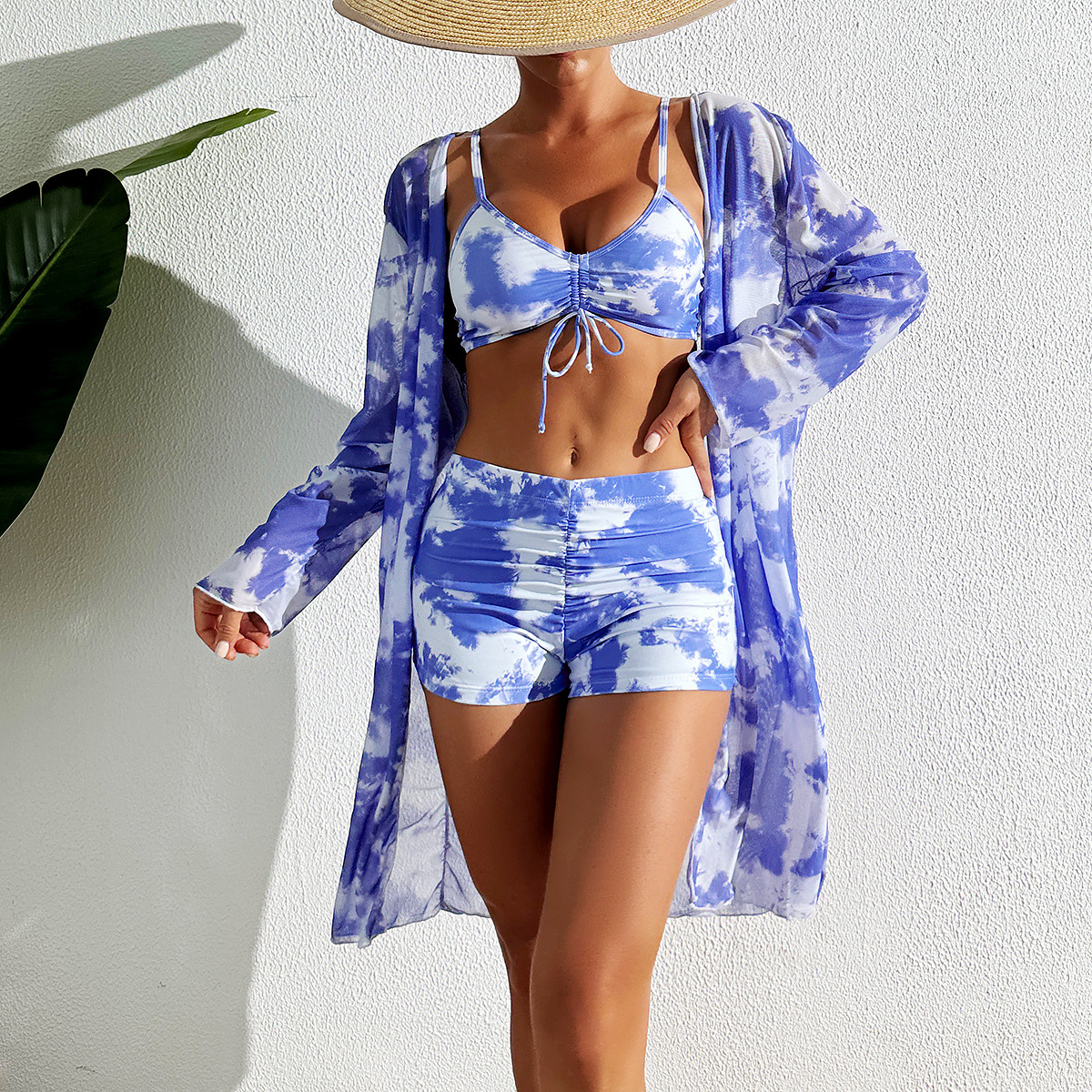
A one-piece with a low-cut, wide back panel is the safest default for anyone running a waist harness, because the hook sits low on the spine and a standard high-back suit bunches and digs in exactly where the harness line pulls. Look for a suit with a secure, wide waistband rather than a thin elastic edge — the waistband is what keeps the suit from riding up when the harness bar levers against the hip on every turn. A racerback or crossback style also keeps the shoulder straps from slipping during the lean-back stance that windsurfing requires for the entire time the sail is sheeted in.

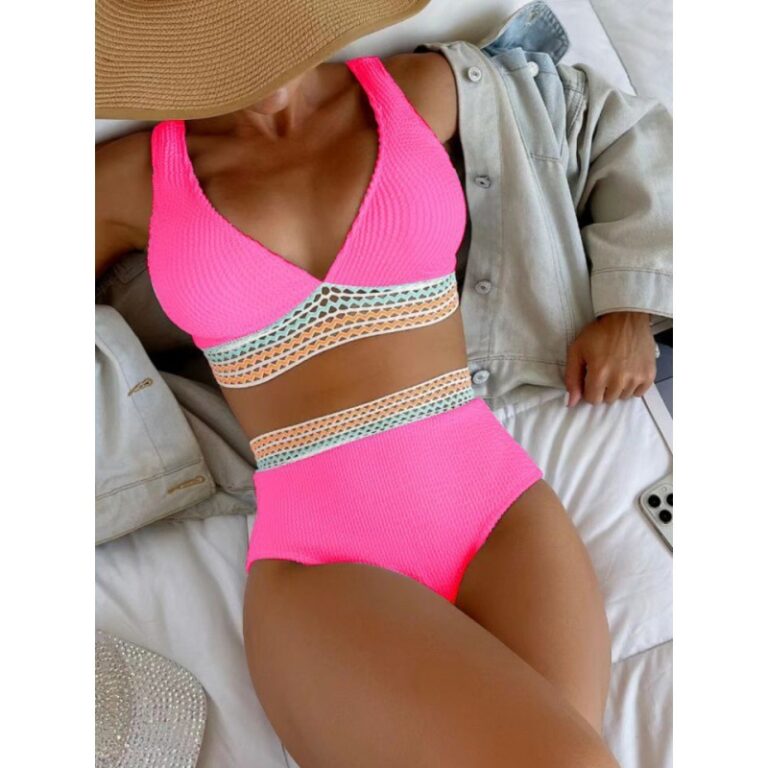
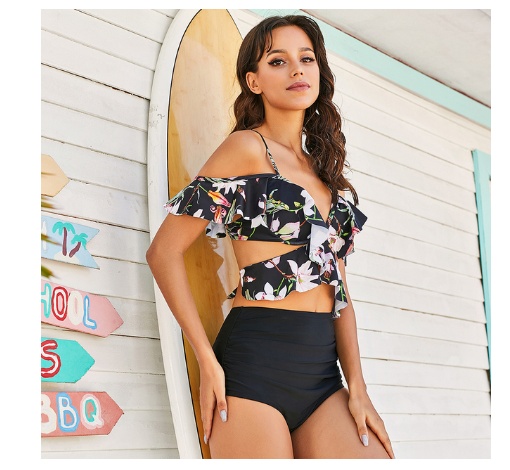
2. High-Waisted Bikini Bottoms That Sit Above the Harness Line
If a one-piece isn’t the goal, high-waisted bottoms are the next-best option, because they sit above the point where a waist harness clips in instead of right at it. A low-rise bottom gets trapped and compressed every time the harness hook takes weight, which means it slides, twists, or digs in over the course of a session. A waistband that sits a few inches higher stays clear of the hardware entirely and holds its position through repeated hook-ins and hook-outs.

3. Secure-Clasp Bikini Top, Not String Ties
A recreational windsurfer planing at 23 to 35 mph who catches a gust wrong and gets launched off the board is falling at real speed, the same way a water skier does on a hard release. String ties that would hold up fine on a beach towel can slip or come loose under that kind of impact. A top with a secure hook-and-eye clasp or a wide underband stays in place through a fall, a water start, and the repeated climbing back onto the board that every windsurfing session involves.
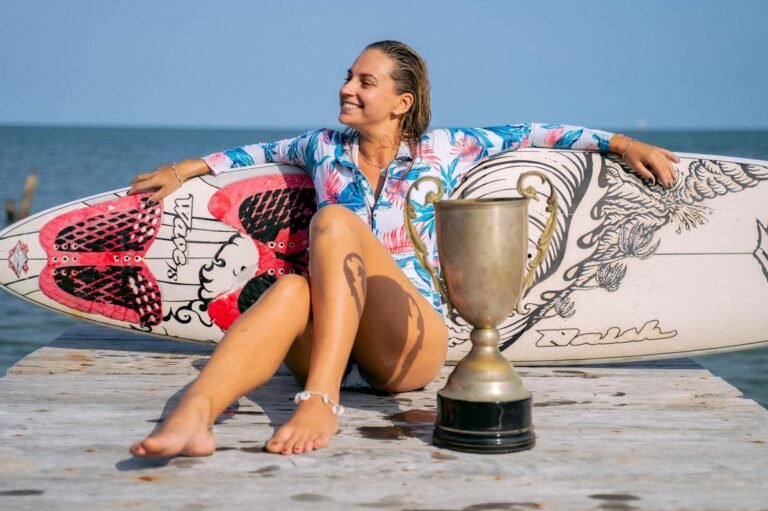
4. Long-Sleeve Rash Guard for Wind Chill and All-Day Sun
The constant 10 to 15°F wind-chill effect from planing, combined with a session that often runs well past an hour, makes a long-sleeve rash guard worth the coverage even on a warm day. It blocks the evaporative cooling that a bare midriff and arms take the full force of, and it adds sun protection for a sport where the sun reflects up off the water as well as down from above. Pair it over a secure bikini or one-piece rather than wearing it alone against the harness — the rash guard handles wind and UV, the suit underneath handles the harness load.
5. Neoprene-Paneled Swimsuit or Wetsuit for Cooler Water
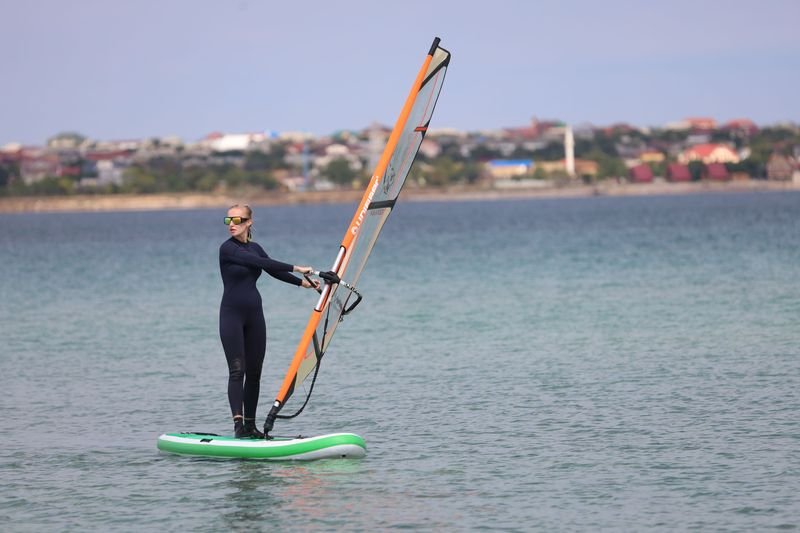
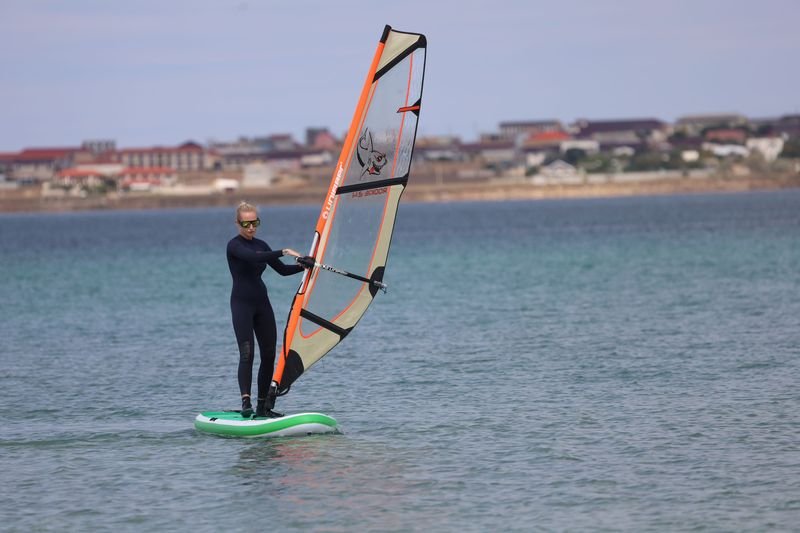
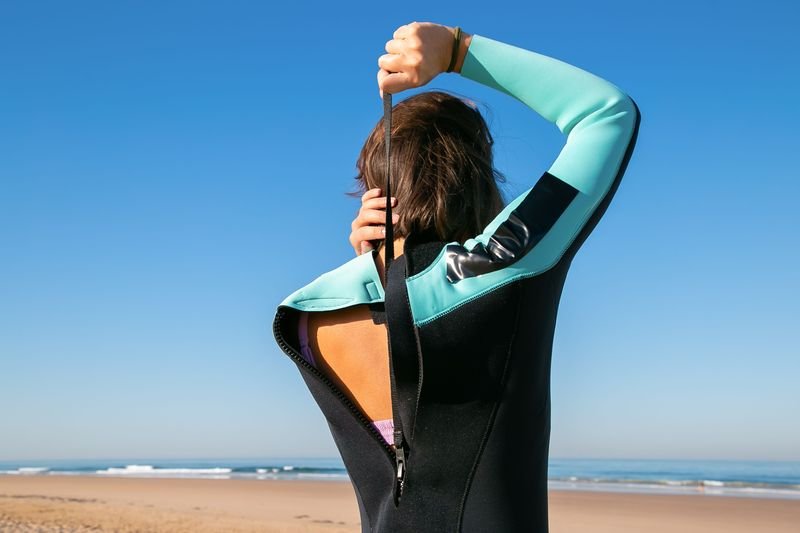
Water temperature decides this one more than preference does. A swimsuit alone is comfortable in water above roughly 24 to 25°C (75–77°F); below that, a 3mm wetsuit can stretch a comfortable session from about 10 minutes in a swimsuit to 60 minutes or more. Because windsurfing sessions run long and the wind chill compounds whatever the water temperature already is, a swimsuit with neoprene panels at the core, or a true wetsuit worn over swimwear, is the difference between a 20-minute session and the full hour on anything but warm tropical water.
6. UPF 50+ Swim Leggings for Multi-Hour Sessions
A windsurfing session in steady wind rarely stops after one run — riders tend to stay out as long as the wind holds, which on a good day means hours, not minutes. Water reflects a meaningful share of UV back up at the rider on top of direct overhead sun, and most people reapply sunscreen on a schedule that doesn’t survive repeated dunking. UPF 50+ leggings remove that variable entirely below the waist, and they double as a layer between skin and any seat-harness strap that would otherwise rub bare thighs raw.
7. Secure Bikini With a Rigging-Ready Fit
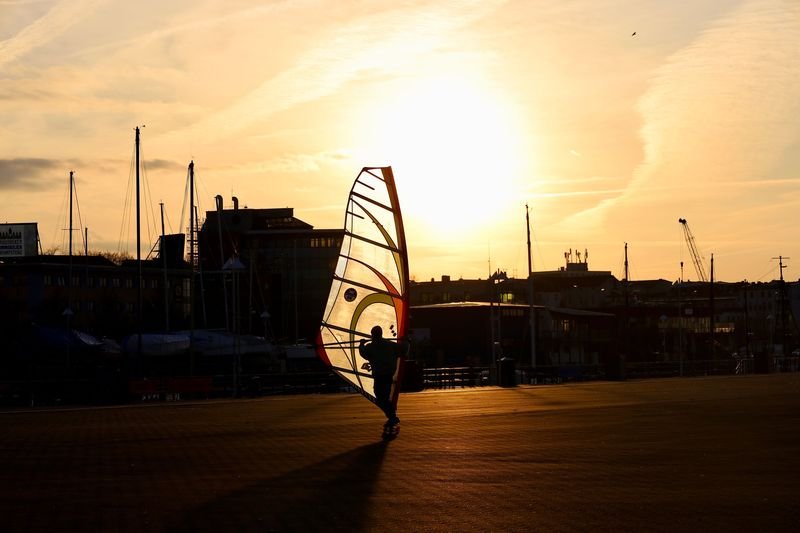
Rigging a sail happens on the beach before a single wave is touched — pulling the mast up, hooking the boom, walking the rig down to the water — and that’s all done standing, often bent over the board. A bikini that shifts or needs adjusting every time the wearer bends down is a problem before the session even starts. Look for a two-piece built for actual movement, with bottoms that sit secure through bending and a top that doesn’t need resetting after every gust check.
Harness Types and Where Each One Rubs
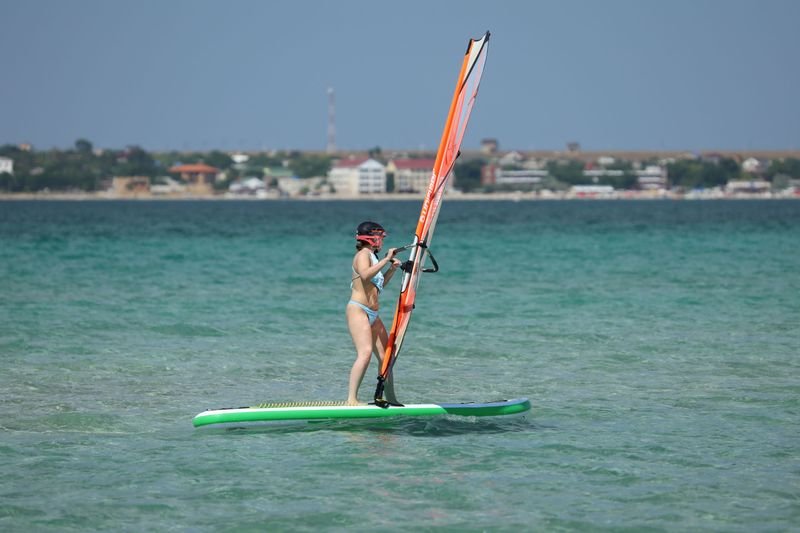
Not all harnesses load a swimsuit the same way, and knowing which one you’re using changes what to prioritize. A waist harness sits around the lower back and hips, offers the most freedom of movement, and is the standard choice for freeride and wave sailing — its main contact point is the hip bone and waistband. A seat harness wraps lower, with straps running between the legs to a lower hook point; it’s more stable at speed and common in slalom and speed sailing, but those leg straps sit directly against inner-thigh and crotch seams, which is exactly where thin fabric or a loose seam will chafe first. A chest harness, used mostly by wave sailors who want extra buoyancy, interacts with bikini-top straps and the underband rather than the bottoms. Match the suit to the harness: seat-harness riders get the most benefit from compression shorts or leggings as a barrier layer, while waist-harness riders should focus on a wide, secure waistband.
How Fast Windsurfing Actually Goes

Recreational planing speeds generally fall between 23 and 35 mph depending on wind and gear, which already puts windsurfing in the same range as tournament water skiing. The sport’s outer edge is far beyond that: French windsurfer Antoine Albeau set the current windsurfing speed-sailing record at 53.27 knots (roughly 61 mph) at the Lüderitz Speed Canal in Namibia in 2015, a run recognized by the International Speed Windsurfing Class. Nobody plans a beach session around record-run numbers, but the gap between a casual plane and the sport’s ceiling is a reminder that the gear — including what’s worn underneath a wetsuit or under a harness — gets tested at speeds most other watersports never approach.
Fit-Check Before You Rig Up
Before walking the rig down to the water, do the same check every time: sit in the harness hook position and pull against it the way the boom will. If a waistband rolls, a bottom shifts, or a strap digs in standing still on the beach, it will only get worse once the sail loads up on the water. Bend forward as if rigging the mast and confirm nothing rides up. If running a seat harness, walk a few steps with the leg straps clipped in to feel for any seam that catches — that’s the seam that will chafe by the end of an hour-long session, not the first five minutes.
Watch: Windsurfing Basics
If you’ve never hooked into a harness or felt a sail load up, watching the motion helps more than reading about it — especially the standing, leaning-back stance that puts constant pressure through the hips the whole session.
Common Windsurfing Swimwear Questions
Can I windsurf in a regular bikini?
You can for a short, easy session, but a string-tie bikini is more likely to shift or come loose under harness pressure and at planing speed. A secure-clasp bikini or one-piece holds up far better once the wind picks up.
Do I need a wetsuit to windsurf?
It depends on water temperature. Above roughly 24–25°C (75–77°F), a swimsuit alone is usually fine. Below that, even a thin 3mm wetsuit extends a comfortable session from around 10 minutes to an hour or more.
What should I wear under a windsurfing harness?
Match it to the harness type: a wide-waistband suit or high-waisted bottoms for a waist harness, and compression shorts or UPF leggings as a barrier layer for a seat harness, since its leg straps sit directly against inner-thigh seams.
Is windsurfing swimwear different from surfing or wakeboarding swimwear?
Yes. Surfing and wakeboarding load a suit in short bursts between waves or jumps. Windsurfing loads a suit continuously through a sustained harness hook-in, plus constant wind-driven evaporative cooling that those other sports don’t produce the same way.
Sources
- Windsurfing harness — Wikipedia — harness types and how they’re worn
- International Speed Windsurfing Class — Wikipedia — Antoine Albeau’s 53.27-knot windsurfing speed record, Lüderitz 2015
- Fastest speed sailing (male) — Guinness World Records — speed-sailing record context